Last updated November 17, 2026

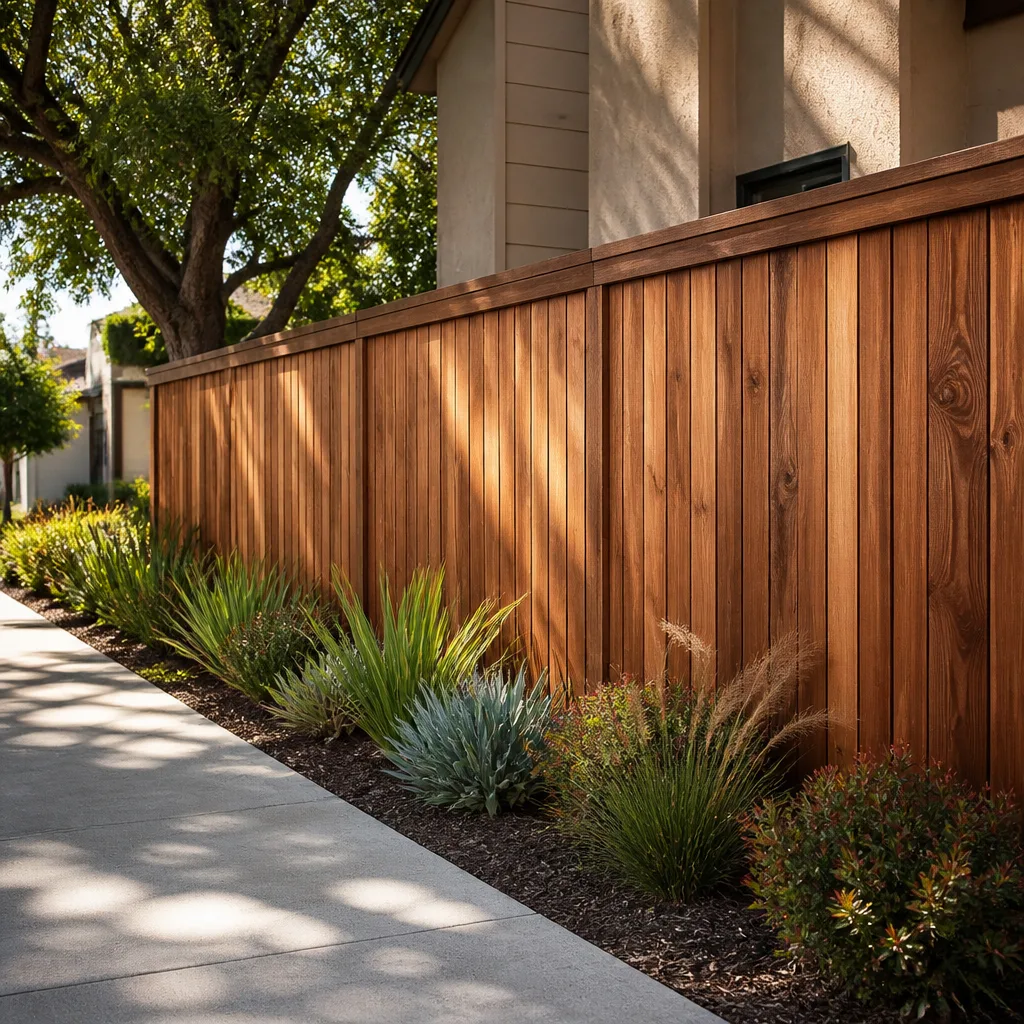
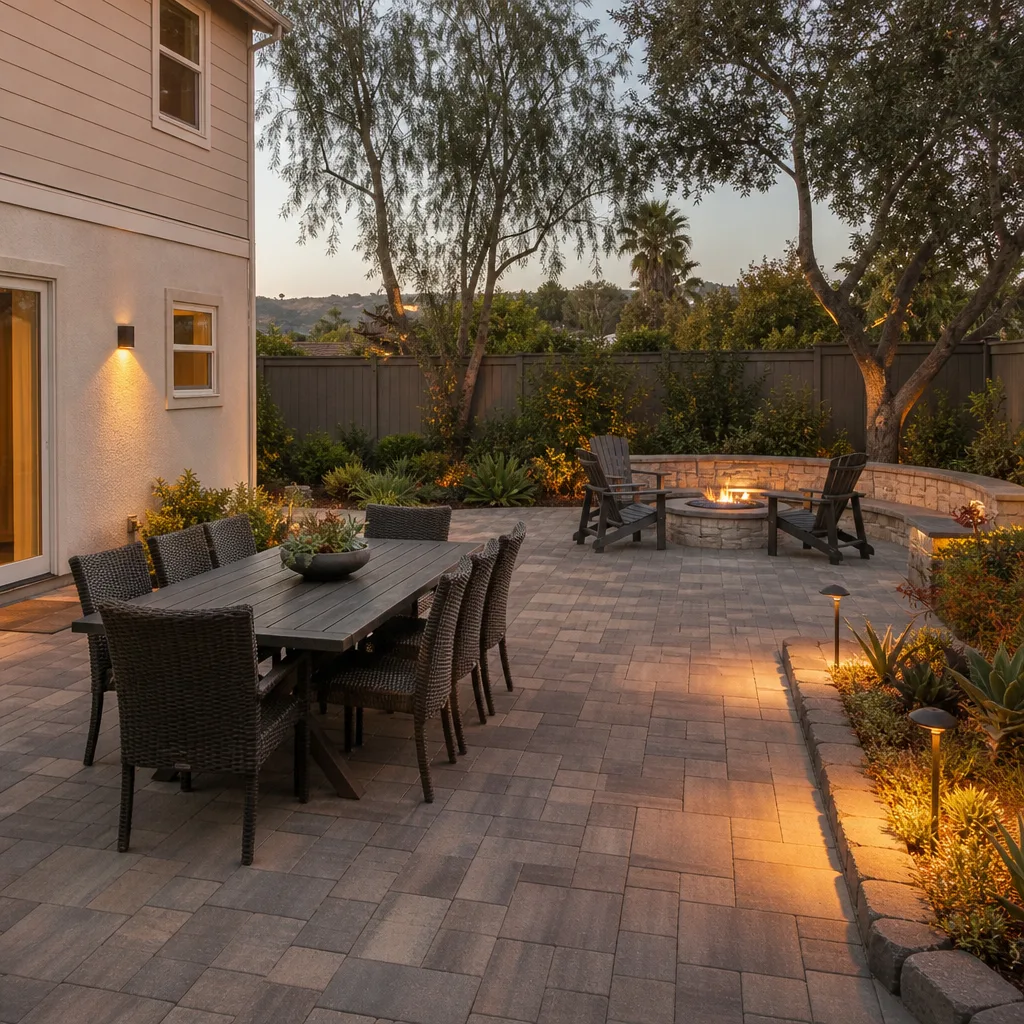

Free written scope consultation - allowances, timeline, and change-order rules on paper before a single trade is scheduled
Seasonal Construction Care for Downey: Year-Round Homeowner’s Guide
Downey gets about 13 inches of rain a year, and that number fools a lot of homeowners into thinking there’s nothing to prepare for. In our experience, the opposite is true. A dry year doesn’t remove moisture risk; it lets small failures sit unnoticed until the first heavy storm finds every compromised caulk joint along the fascia. This guide walks through what actually needs attention in Downey across all four seasons, from Santa Ana wind prep in the fall to UV damage checks in summer. By the end you’ll have a rolling 12-month log you can maintain yourself, one that surfaces deferred maintenance before it compounds into structural repair.
Quick Answer
Seasonal construction care in Downey means four things: checking roof fasteners and perimeter vegetation before Santa Ana wind season, calibrating drainage and caulk inspection to the November-March wet window, looking for efflorescence and moisture staining on hardscape after spring rains, and inspecting exposed wood and attic ventilation through the summer UV and heat months. The point isn’t a checklist you do once. It’s a rolling log you keep current so deferred maintenance never surprises you.
Styles & brands we work with
- Kitchen remodeling
- Bathroom remodeling
- Home additions & ADU
- Roofing
- Windows & doors
- Driveway & pavers
- Fence
Table of Contents
- Why Downey’s Mild Climate Demands a Different Maintenance Calendar
- Fall Prep: Getting Ahead of Santa Ana Wind Season
- Winter: Moisture, Drainage, and the Wet Season Window
- Spring: Reading Post-Rain Damage Before It Spreads
- Summer: UV, Heat, and Attic Ventilation Checks
- Building a Rolling 12-Month Maintenance Log
- Trade-by-Trade: What Each System Needs Season to Season
- Common Mistakes to Avoid
Why Downey’s Mild Climate Demands a Different Maintenance Calendar
Most seasonal maintenance advice is written for places with hard winters. That advice doesn’t fit Downey. There’s no freeze to worry about, no snow load, no frost heave to plan around. What Downey has instead is a subtle pattern: long dry stretches, a concentrated wet window, recurring Santa Ana wind events, and high summer UV. Each of those creates its own damage signature, and each one gets ignored because none of them feels urgent at the moment it’s happening.
The result is a specific kind of deferred-maintenance problem. Water intrusion doesn’t announce itself. UV degradation doesn’t either. By the time a homeowner notices, the repair has usually moved past cosmetic and into something that touches framing, sheathing, or sub-surface hardscape base.
Here’s the climate picture we work with in Downey:
- Rainfall: around 13 inches per year, concentrated almost entirely between November and March
- Wind: Santa Ana events produce strong, dry, sustained wind out of the northeast, typically in fall and early winter
- Summer: extended UV exposure with high daytime heat and homes that rely on attic ventilation to shed it
- Housing stock: a mix of mid-century single-story homes and newer construction, many with low-slope roof sections that behave differently than steep-slope roofs
That combination is why a Downey homeowner’s seasonal list looks different from a generic one. The whole-home view matters here. Roofing, windows, fencing, hardscape, and exterior trim all interact with the same weather, and treating them as unrelated line items is how problems slip through. Construction Downey handles all of those categories under one contractor for exactly that reason.
Fall Prep: Getting Ahead of Santa Ana Wind Season
Fall in Downey is when Santa Ana winds start doing their work. These are dry, fast, sustained events that put real load on roof fasteners, fence posts, and anything anchored loosely to the exterior. The damage isn’t usually dramatic. It’s incremental: a fastener that backs out a quarter turn, a post that shifts slightly in its footing, a vent screen that tears loose and lets debris in. Three or four wind events into the season, those small failures start compounding.
Fall prep targets exactly that. Here’s the sequence we recommend:
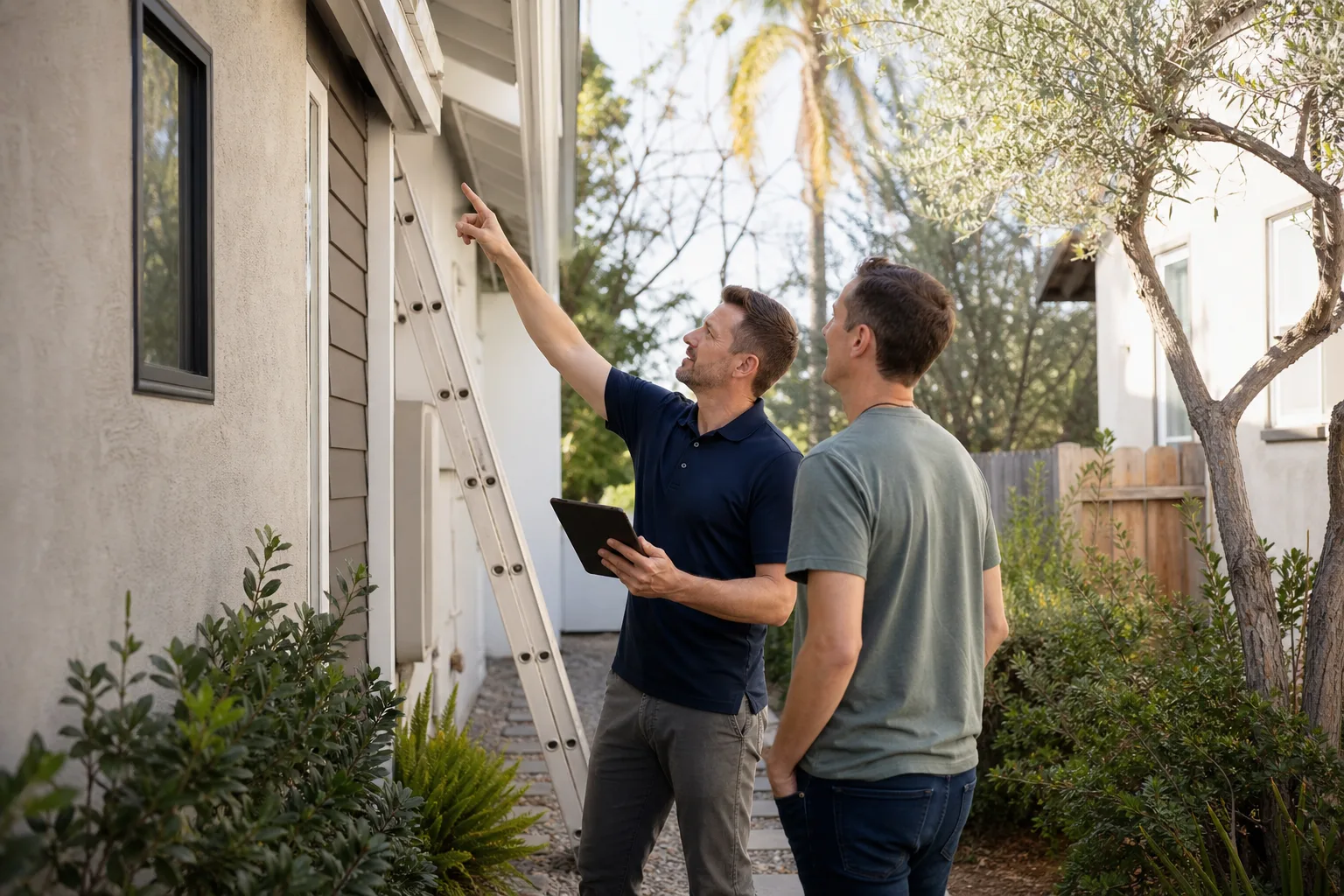
- Walk the roof perimeter and check fastener exposure. Look for lifted or backed-out fasteners along ridge lines, eave edges, and anywhere the roof meets a wall. Any place a shingle or tile sits proud is a candidate.
- Clear vent screens and soffit vents. Wind-driven debris packs screens and blocks airflow. Blocked soffit vents are one of the most common reasons an attic runs hot in the following summer.
- Check perimeter vegetation clearance. Tree limbs within a few feet of the roof surface become projectiles in a Santa Ana event. Keep them trimmed back so branches don’t abrade roofing or tear at gutters.
- Inspect fence posts and panel anchors. A fence that held through spring may still have a post starting to work loose in its footing. Push-test every post along the windward side.
- Look at window and door seals. Weatherstripping and glazing seals that dry out over summer will let wind-driven dust and moisture in once the winds pick up.
- Check gutter attachment. Any gutter hanger that’s pulled loose goes on the fall list, because wind plus the first rain will finish the job.
If any of those checks surface something that needs replacement rather than adjustment, that’s the right time to look at Construction Downey‘s full-scope capabilities. Roofing materials from GAF, CertainTeed, and Owens Corning are available, and fence systems in aluminum from Ameristar and Jerith, vinyl from Bufftech and ActiveYards, and ornamental from Barrette and Master Halco cover every material category. Fall is the correct window for that kind of work, before the wet season starts.
Winter: Moisture, Drainage, and the Wet Season Window
Downey’s wet window runs November through March. Almost all of the year’s rain lands in that span, which means the property has to handle a full year’s moisture load in roughly five months. When something goes wrong, it goes wrong fast, and it’s usually at a caulk joint or a drainage low point that’s been quietly failing for a couple of seasons.
What winter prep actually involves:
- Caulk joint inspection. Walk the fascia, window frames, door frames, and any place a different material meets another. Look for gaps, cracked bead, or caulk pulling away from the substrate. This is the single most overlooked winter task in Downey because it looks fine from ground level.
- Drainage grading. The ground should slope away from the foundation on every side. If water pools against the house after a heavy rain, the grade needs correction. This is a hardscape and grading item, not a roofing one, and it’s often missed because the roof itself is doing its job.
- Downspout discharge check. Confirm that downspouts discharge well away from the foundation. A downspout that dumps at the base of a wall is the same as no downspout at all.
- Attic and ceiling stain watch. Any discoloration on an interior ceiling or along a wall top plate is a moisture-intrusion signal. Note the location and the date you saw it first.
- Driveway and hardscape drainage. Confirm that water sheet-flows off the surface and doesn’t pond. Ponding accelerates joint failure and base settlement.
This is where the driveway and hardscape side of the property genuinely matters. Properly built driveway & pavers systems, with engineered base preparation from Belgard, Unilock, Techo-Bloc, Tremron, or Cambridge Pavers, handle water correctly because the base was built to spec, not to price. Commodity concrete with inadequate base doesn’t.
If winter inspection turns up a project above your comfort level, that’s the moment to bring in a professional. The damage curve in Downey is steep once water gets under a surface.
Spring: Reading Post-Rain Damage Before It Spreads
Spring is diagnostic season. Winter has just finished doing its worst, and everything that’s about to fail is visible now, before summer heat sets it in place. The trick is knowing what to look for and where.
There are two specific signals we watch for after a Downey wet season:
- Efflorescence on hardscape: that white, chalky bloom that appears on concrete, pavers, and masonry surfaces. It’s water carrying mineral salts to the surface as it evaporates. On its own, it’s cosmetic and cleanable. When it reappears in the same zone after cleaning, it usually means moisture is being drawn up from below through the base, not just from surface water.
- Moisture staining that signals sub-surface intrusion: dark patches on hardscape, discoloration along a foundation line, or damp seams where two surfaces meet. Any of these says water is getting where it shouldn’t.
Spring is also when you want to:
- Re-inspect every caulk joint you checked in winter. Anything that has already migrated or opened up is not holding and needs replacing, not patching.
- Check fence posts again. Wet soil plus a post that wiggled in fall equals a post that will fail. This is the correct window to catch it before summer wind testing.
- Look at exterior paint edges. Paint that has bubbled or flaked at a joint edge means moisture has already gotten behind it.
- Log the location of any ceiling or wall staining you noticed in winter. Photograph it. Note whether it’s growing.
Replacing fencing after winter is a common spring project in Downey, and fence installation done correctly at this point in the year gets ahead of both the summer UV exposure and the fall winds. It’s better to replace a compromised fence in spring than to watch it fail in the next Santa Ana event.
Summer: UV, Heat, and Attic Ventilation Checks
Summer is where Downey’s climate quietly does the most long-term damage. High UV exposure breaks down exterior wood, paint, and sealant, and extended heat turns any attic ventilation problem into an accelerated wear issue on the roof deck itself.
Deck and exposed wood inspection
Exposed wood trim, deck boards, fence rails, and any unpainted or unsealed structural wood should be inspected each summer. Look for:
- Graying or silvered surface, which indicates the wood fibers have broken down under UV
- Splintering at board ends or where fasteners penetrate
- Loose boards or fasteners that have backed out of the substrate
- Any soft spot when you probe with a screwdriver
Exterior paint assessment
Paint is a sacrificial layer. Once it starts failing at edges, chalking, or lifting, the wood underneath takes direct UV. Summer is the time to identify areas that will need repainting before the wet season starts. James Hardie fiber cement siding is the industry benchmark for exterior cladding durability and warranty coverage, and it eliminates the recurring repaint cycle as a long-term option.
Attic ventilation check for low-slope roofs
Many Downey homes have at least one low-slope roof section. Those sections rely heavily on proper attic ventilation because they have less natural updraft than a steep roof. In summer, check:
- Confirm every soffit vent is unobstructed. Clear from below.
- Confirm ridge or roof vents are clear. Clear from outside.
- Feel the attic on a hot afternoon. If it’s dramatically hotter than outdoor temperature, airflow is insufficient.
- Look for condensation or dark staining on roof deck underside. That’s a ventilation and moisture signal simultaneously.
Building a Rolling 12-Month Maintenance Log
The single most useful thing you can do as a Downey homeowner isn’t a seasonal checklist. It’s a rolling log that stays current. Here’s how we recommend building one.
Start with a simple three-column format:
- Date: When you inspected or observed
- System: Roof, caulk joint, drainage, fence, hardscape, exterior wood, windows, attic
- Observation: What you saw, with a photograph and location note
Then follow this rolling cycle:
- Fall (September-October): Santa Ana prep. Roof fasteners, vent screens, perimeter vegetation, fence post anchors, window/door seals, gutter attachment.
- Early wet season (November): Caulk joint inspection before the first heavy rain. Drainage grading. Downspout discharge. Confirm nothing from fall has shifted.
- Mid wet season (January): Interior stain check. Look for ceiling or wall discoloration. Note any new moisture signal.
- Post-rain (March-April): Efflorescence and moisture staining check on hardscape. Fence post re-check. Paint edge inspection.
- Pre-summer (May-June): Exterior wood inspection. Paint assessment. Attic ventilation confirmation.
- Mid-summer (July-August): UV damage check on exposed surfaces. Fence rail inspection. Driveway joint check.
The discipline is the log itself. Every entry is a data point. After one full cycle, you can see patterns that a one-off inspection will never show you: a caulk joint that fails every third year, a hardscape zone that draws efflorescence after heavy rain, a fence line that loosens after every wind event.
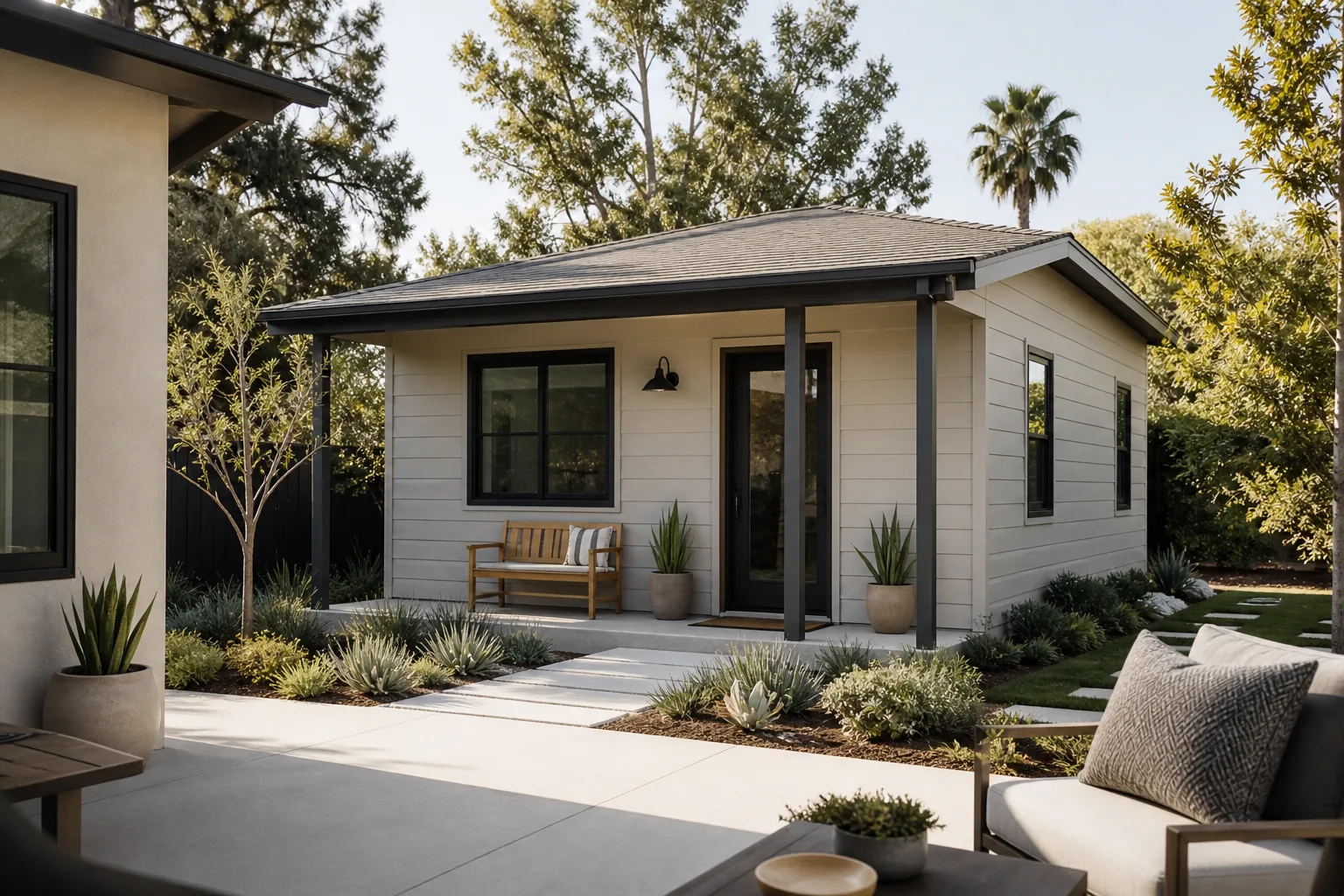
That pattern recognition is what surfaces deferred maintenance before it compounds. A caulk joint is five minutes and a tube. The same joint left three years can mean fascia replacement, sheathing repair, or worse. For bigger decisions like an addition, the log becomes the reference document for scope. If you’re moving toward that conversation, home additions & ADU planning benefits from a documented property history. Prefab systems from Abodu, Dvele, and Mighty Buildings are a genuine option alongside traditional stick-built construction, and matching the pathway to your timeline and budget starts with knowing exactly what your existing structure needs.
Trade-by-Trade: What Each System Needs Season to Season
Every system on a Downey home has its own seasonal rhythm. Here’s the trade-by-trade view.
Roofing
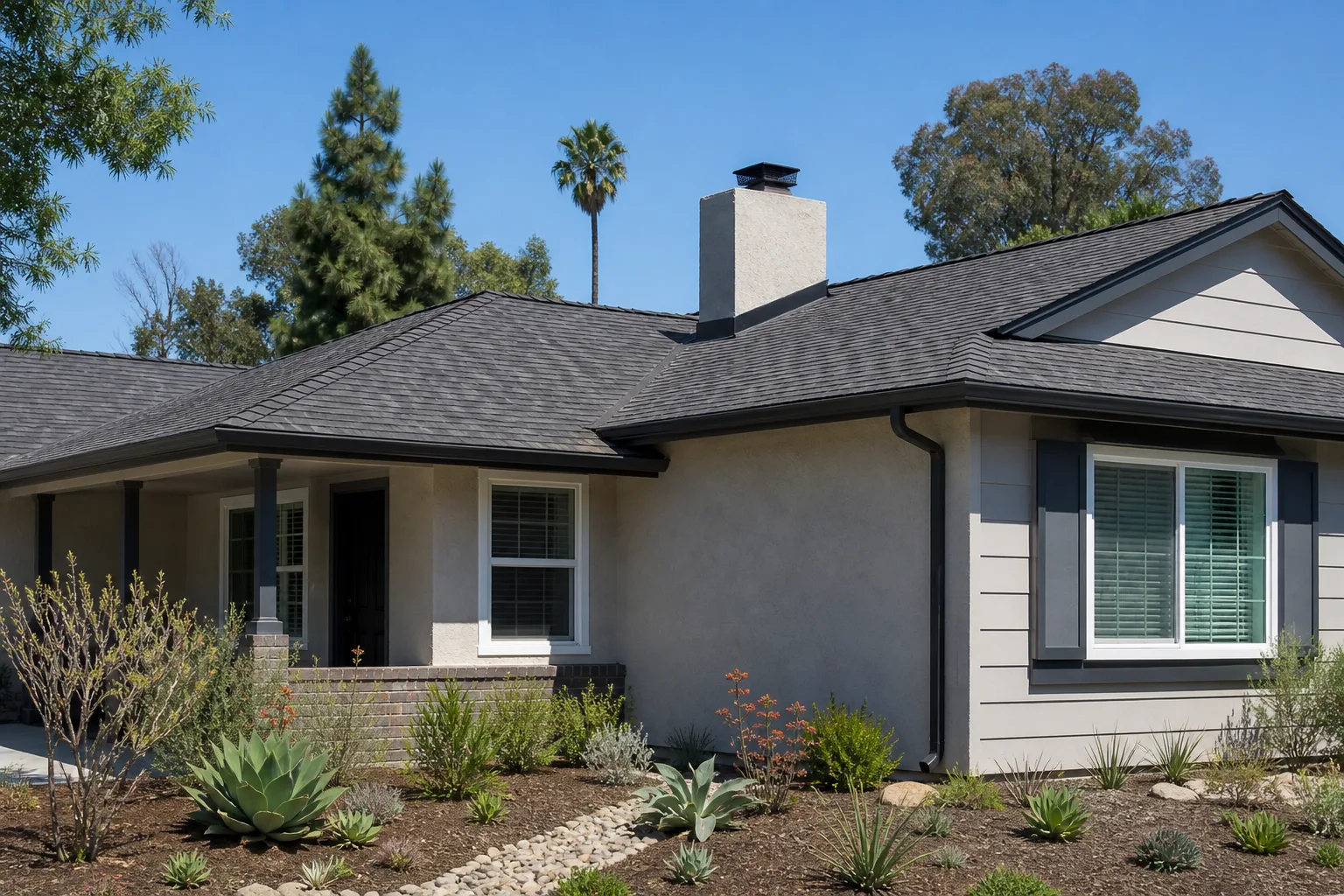
Fall is fastener and vent check. Winter is interior stain watch. Spring is post-rain inspection. Summer is attic ventilation confirmation. Roofing materials from GAF, CertainTeed, and Owens Corning are the systems we work with because all three have residential warranties that hold up to real use.
Windows and doors
Fall is weatherstripping and glazing seal check. Winter is moisture intrusion watch at frames. Spring is post-rain frame re-check. Summer is sealant UV assessment.
Fencing
Fall is post anchor and panel check. Winter is wet soil observation. Spring is replacement window if posts have failed. Summer is UV check on vinyl, wood, and painted metal surfaces.
Driveways and pavers
Fall is drainage grading. Winter is downspout discharge and ponding check. Spring is efflorescence and sub-surface intrusion review. Summer is joint and sealant inspection.
Home additions and ADUs
Additions are not seasonal, but the planning cycle fits a seasonal rhythm: fall and winter are useful planning windows, spring is typically the heaviest construction season, summer is when installations are most weather-reliable. Prefab from Abodu, Mighty Buildings, Dvele, Boxabl, or Plant Prefab gives you timeline options a traditional build can’t always match.
Kitchen remodeling
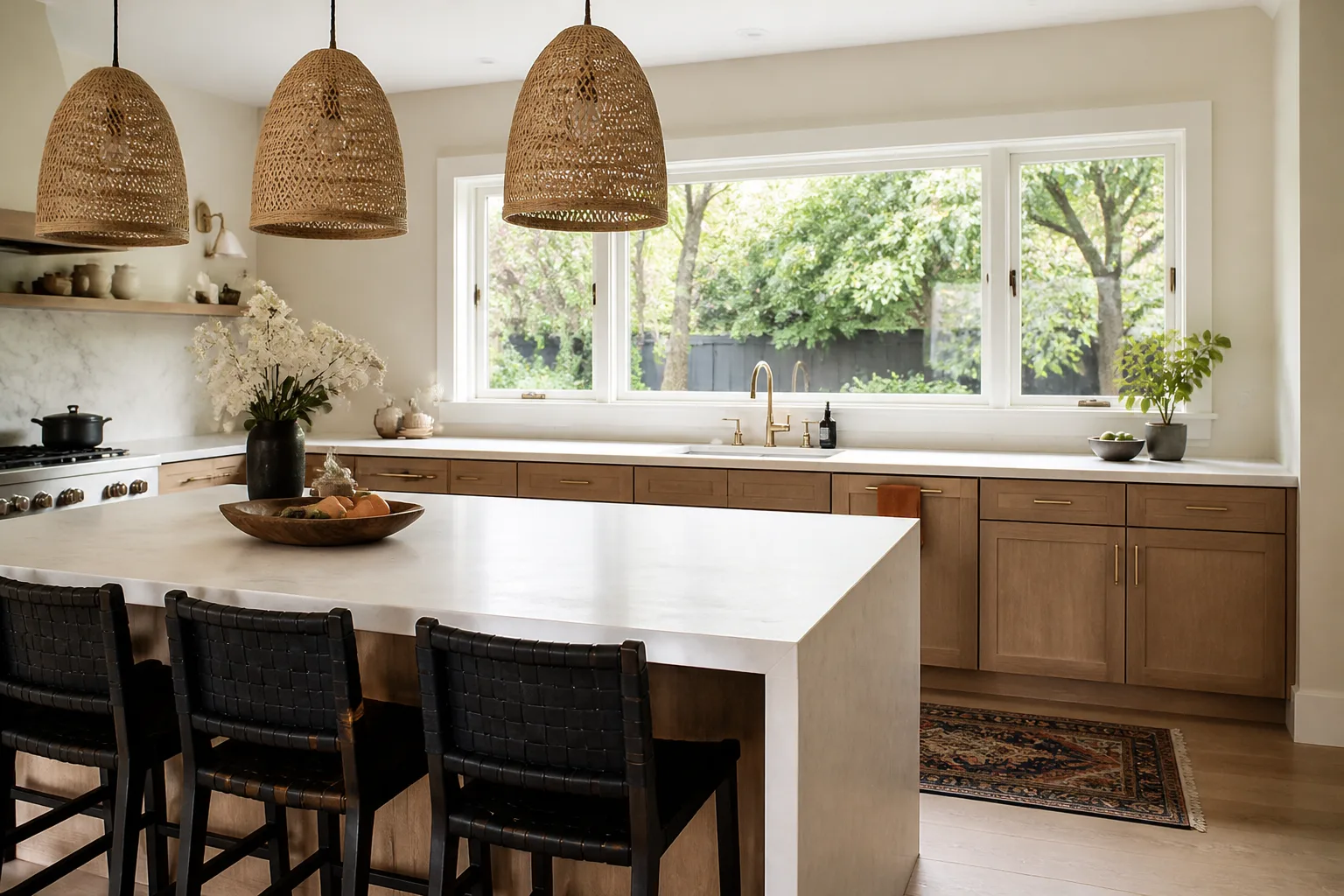
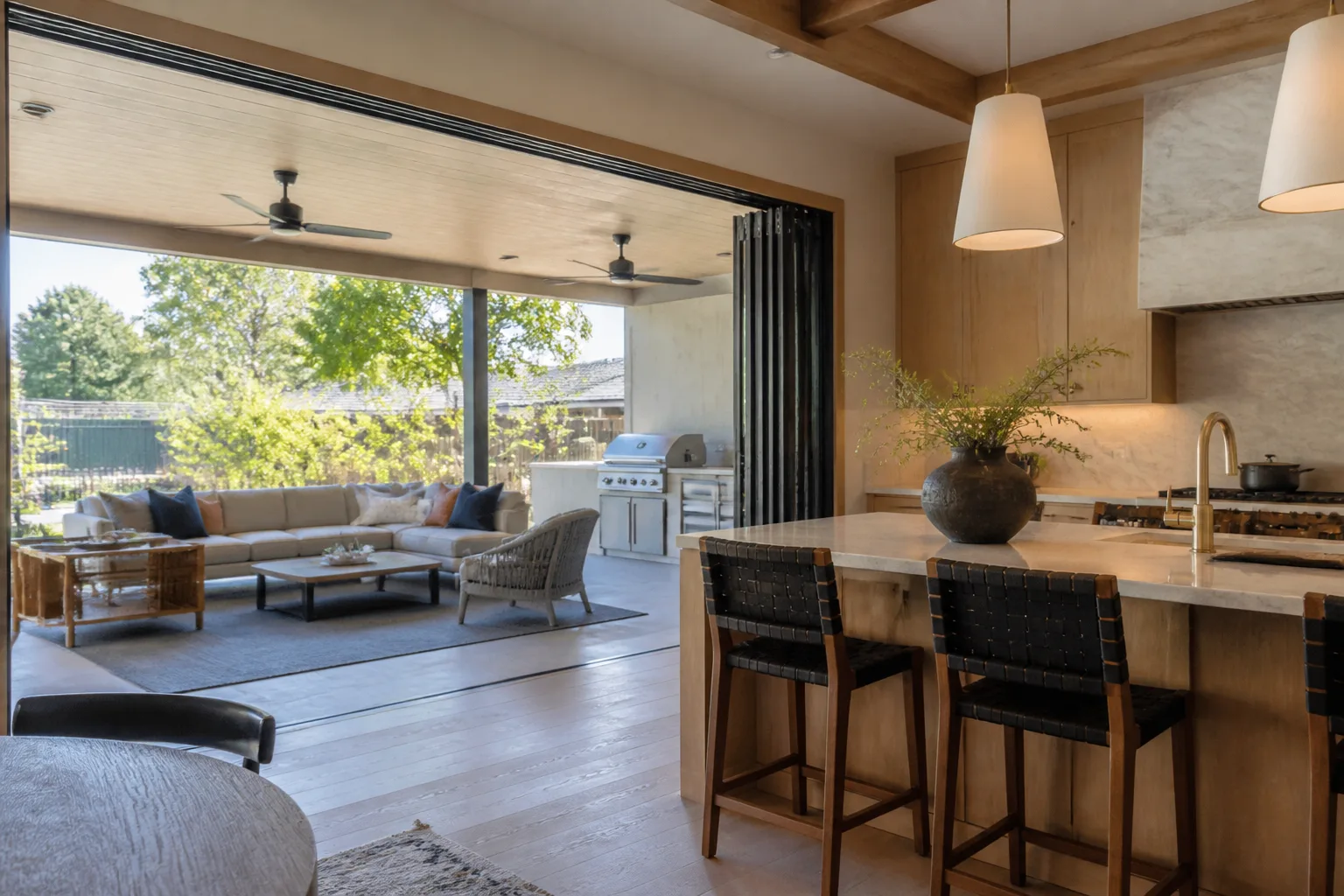
Kitchen remodels are interior, so seasonal timing is mostly about your own availability. Cabinet lines from KraftMaid and Wellborn, and countertops from Cambria, Silestone, or Caesarstone, give you real ranges to choose from rather than a single supplier’s inventory.
Bathroom remodeling
Bathrooms carry a specific moisture load. Every remodel should account for ventilation and substrate waterproofing because Downey’s mild climate doesn’t trigger the warning signs a hard winter would. Fixtures from Kohler, Moen, Toto, and Grohe give real choices within the same remodel.
The whole-home advantage matters here. A single contractor across every project means the roofing schedule, the caulk joint repair, the paver re-grading, and the fence replacement all get sequenced together. No sub-to-sub handoffs, no gaps where nobody owns the overlap.
Common Mistakes to Avoid
- Skipping winter caulk inspection because the roof is fine. Roofing is one part of the moisture envelope. Caulk joints along the fascia are the more common failure point in Downey, and they’re not visible from the ground.
- Treating efflorescence as purely cosmetic. White bloom that reappears after cleaning is signaling moisture coming from below the surface.
- Assuming a mild climate means no prep. Downey’s mild climate means the prep is different, not that it’s skippable. The specific damage patterns (wind stress, wet-season concentration, summer UV) are what make it worth doing at all.
- Clearing soffit vents once and forgetting them. Wind-driven debris packs them again every fall. Any vent check has to be seasonal, not annual.
- Replacing a compromised fence in fall instead of spring. A fence post that’s already wiggling is more likely to fail in the next Santa Ana event. Spring replacement gets the whole summer to cure before the next wind season.
- Ignoring attic ventilation because the attic looks “fine.” Heat accumulation is the failure, and it doesn’t leave obvious visual evidence until it’s affected the deck.
- Not keeping a log. Without a log, every inspection is a first inspection and every deferred maintenance item is invisible until it fails.
See the difference
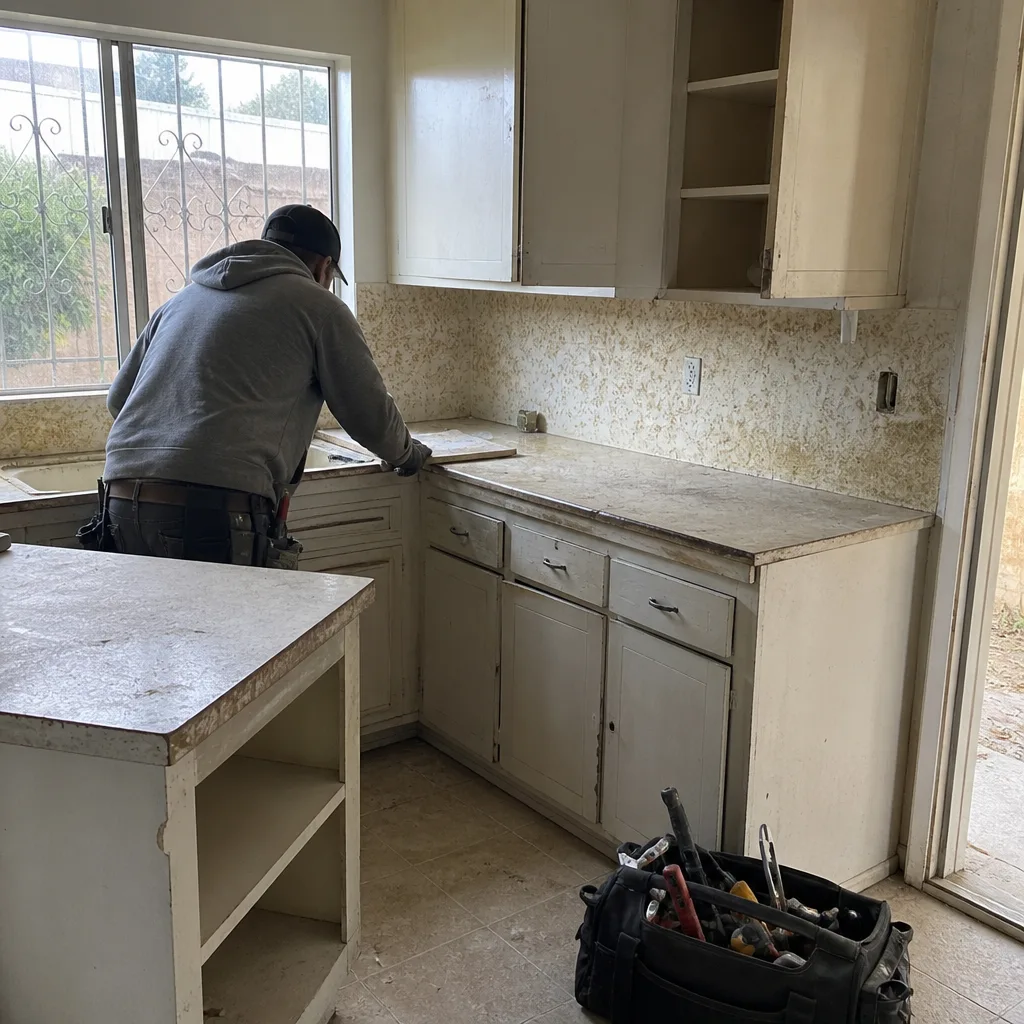 Before
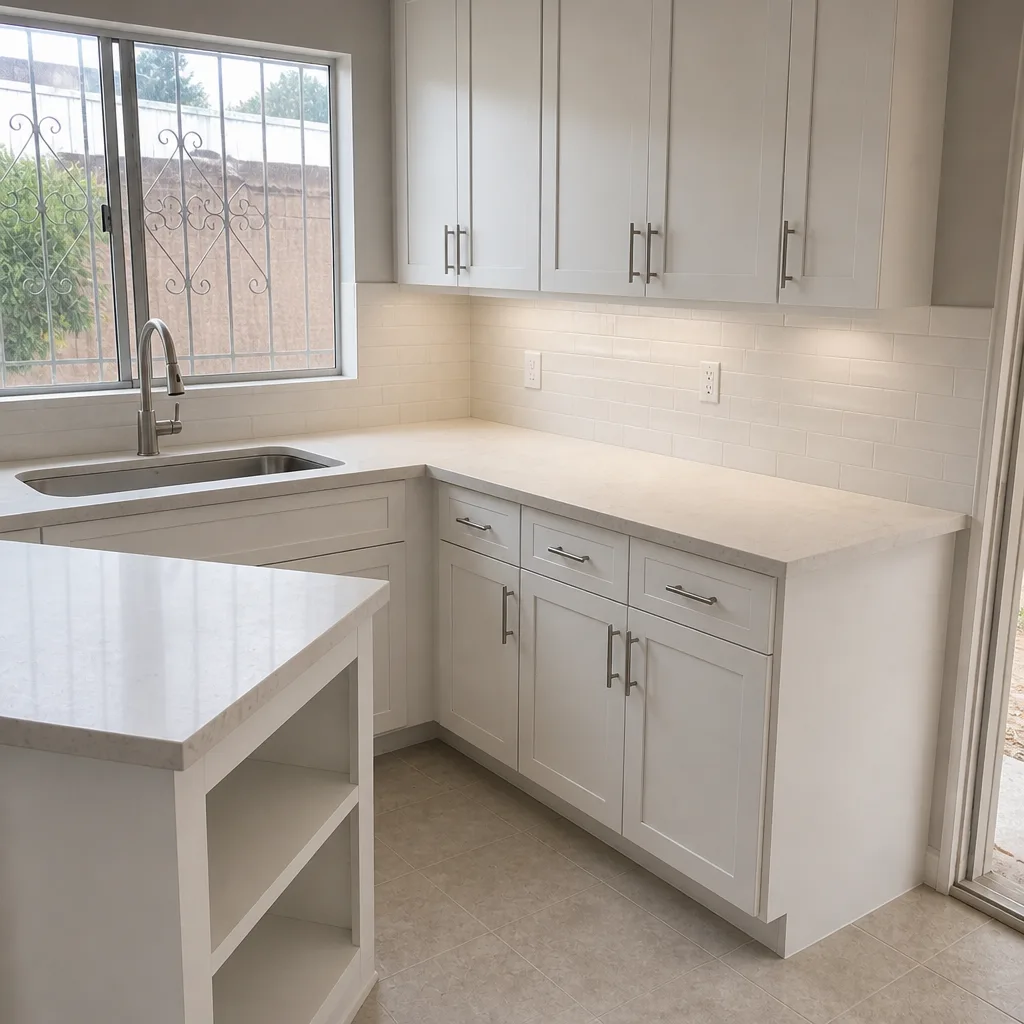 After
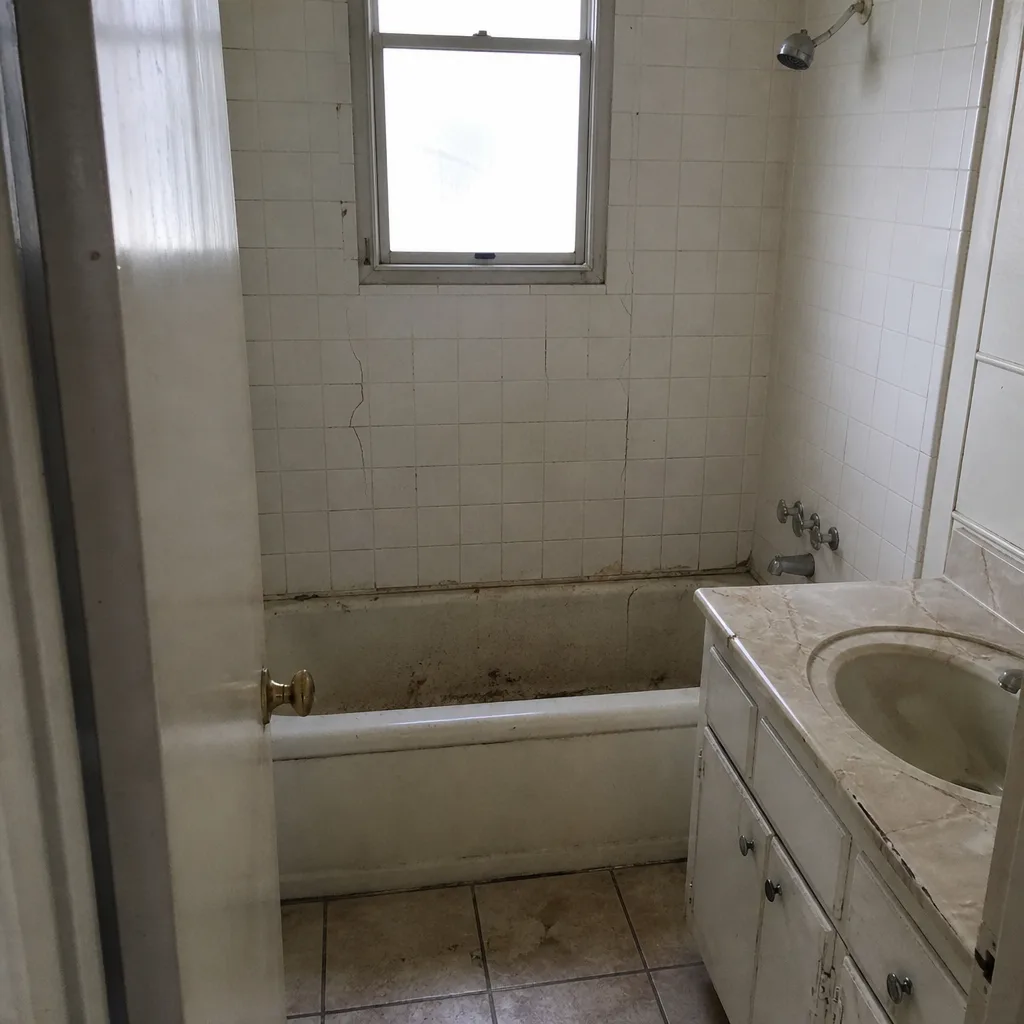 Before
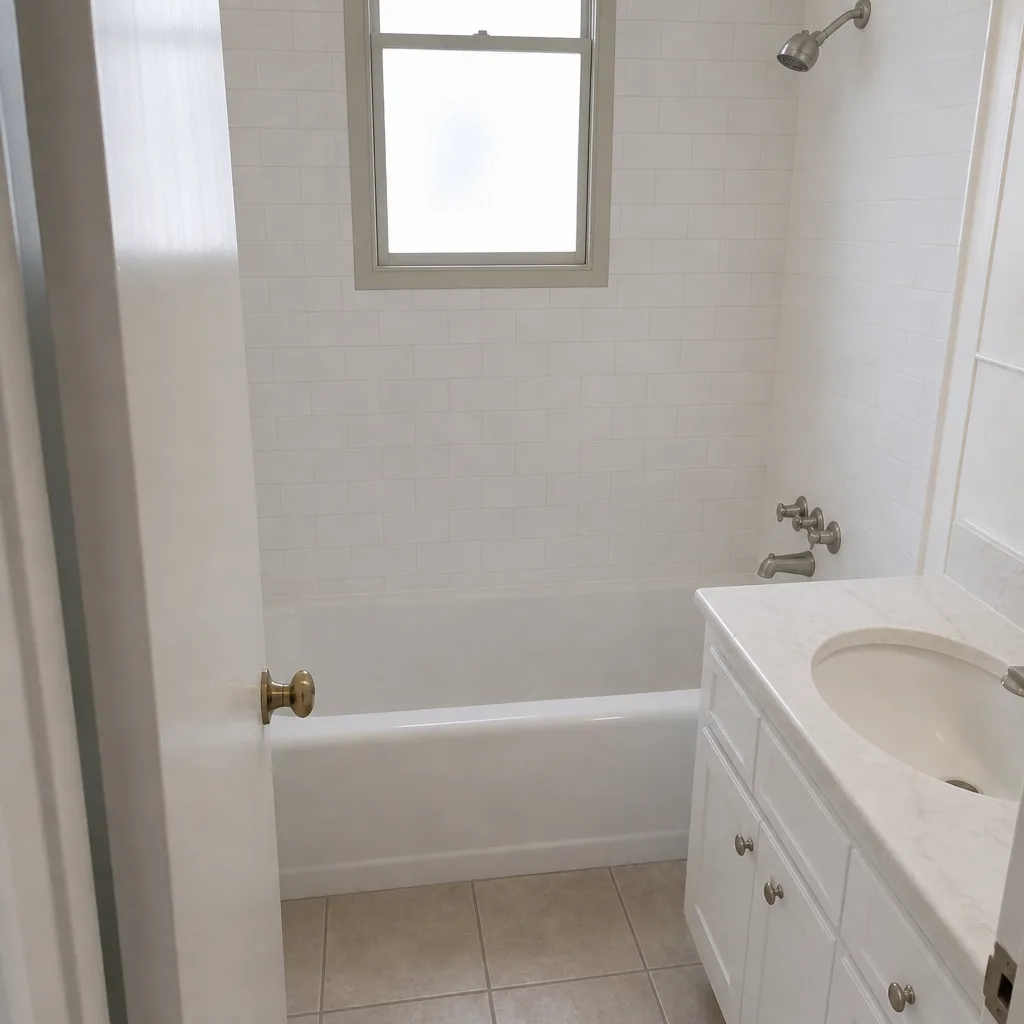 After
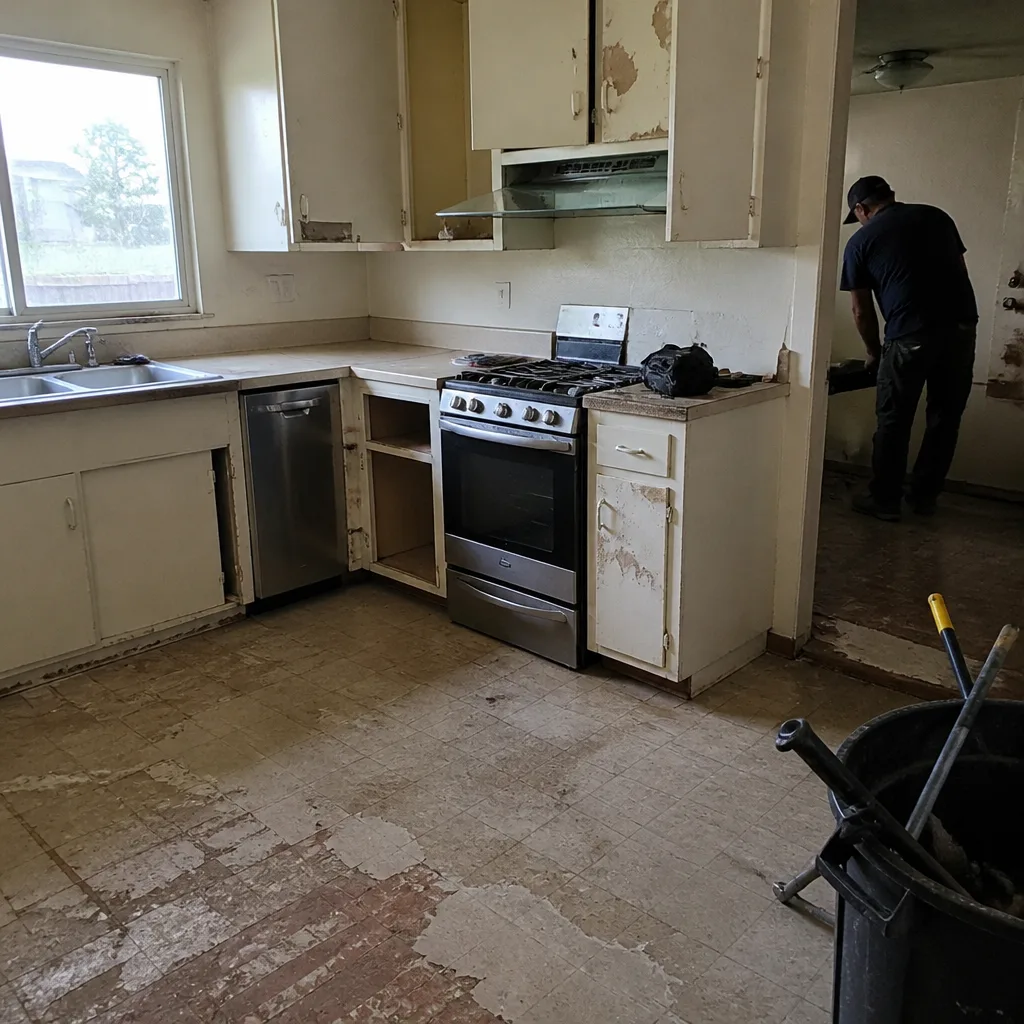 Before
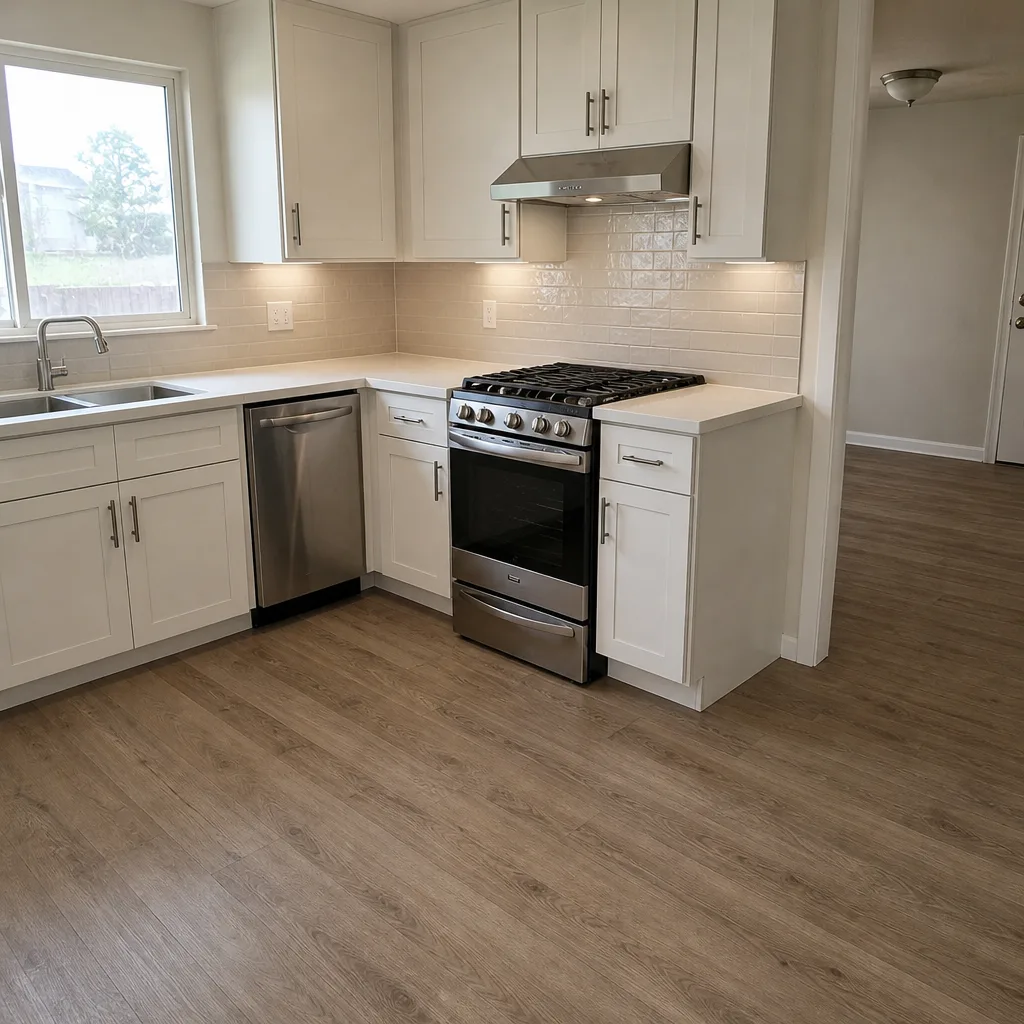 After
When to Call a Professional
Some items on this list are DIY-friendly: caulk checks, vent clearing, and post push-tests. Others are not. Call a professional when any of the following apply: your log shows a caulk joint that has failed after repair, you find ceiling or wall staining that’s moved or grown between inspections, spring inspection turns up repeated efflorescence in the same zone, a fence post has clearly failed in its footing, you’re planning to replace more than a small section of roofing, or your attic ventilation check points to insufficient airflow in a low-slope section. At the point where you’re making any substantive architectural or structural change, the full-scope view is worth the call. Construction Downey has technicians with up to 11 years of experience, licensed and insured, and offers free estimates. Call (844) 312-0107 for a free estimate.
Frequently Asked Questions
Twice a year: once in fall before Santa Ana season, once in spring after the wet season. Fall catches fasteners and vent screens before wind stress; spring catches anything that opened up during rain. If your log shows repeated fastener issues in the same zone, increase to quarterly for that section. Call (844) 312-0107 for a free estimate – estimates are free.
Yes: confirm drainage grading, confirm downspouts discharge away from the surface, and look for ponding. Water that pools on a driveway accelerates joint failure and base settlement. The check is quick and it’s much cheaper than a base rebuild. Call (844) 312-0107 for a free estimate – estimates are free.
Efflorescence is mineral salts carried to the surface by evaporating water. On its own, it’s cosmetic and cleanable. If it returns after cleaning in the same location, moisture is being drawn up from the base, which usually points to a base or drainage issue under the surface. A professional should look at that pattern. Call (844) 312-0107 for a free estimate – estimates are free.
Well-applied exterior caulk on a properly prepped joint will typically hold several seasons, but Downey’s summer UV accelerates curing. Inspecting twice a year (fall and early wet season) is the practical answer. If a joint has failed twice in the same location after repair, the substrate may be moving, and that’s a repair scope question. Call (844) 312-0107 for a free estimate – estimates are free.
Not automatically, but low-slope sections rely on attic ventilation more than steep-slope sections do. If the attic runs dramatically hotter than the outdoor temperature on a hot afternoon, or if you see staining on the deck underside, ventilation needs addressing. Call (844) 312-0107 for a free estimate – estimates are free.
Most of it, yes. Caulk inspection, vent clearing, caulk joint maintenance, and drainage grading are homeowner tasks. Anything structural, anything above a single-story eave line, and anything involving the roof envelope itself should go to a licensed professional. Call (844) 312-0107 for a free estimate – estimates are free.
The Bottom Line
Downey’s mild climate doesn’t remove maintenance risk; it hides it. Low annual rainfall, concentrated in a five-month window, plus Santa Ana wind events and extended summer UV, creates a specific damage pattern that generic seasonal advice doesn’t address. The four moves that matter most: fall prep for wind, calibrated winter moisture inspection, spring post-rain diagnostics for efflorescence and sub-surface intrusion, and summer UV and attic ventilation checks. Then keep a rolling 12-month log so every observation builds on the last. Done consistently, that discipline surfaces deferred maintenance while it’s still small. Done sporadically, it surfaces after compounding. Construction Downey works across all seven service categories under one contractor, and we’re happy to help you scope what the log is telling you. Call (844) 312-0107 for a free estimate. We answer 24/7. Fast dispatch from 7am to 7pm, Sunday through Friday.
Written by the team at Construction Downey.