Last updated November 17, 2026


Free written scope consultation - allowances, timeline, and change-order rules on paper before a single trade is scheduled
Choosing the Right Construction Brand: A Buyer’s Guide for Downey
A shingle that earns a high wind-uplift rating in a Florida test facility can behave very differently on a low-slope Downey roof under Santa Ana winds. The test protocol, the installation angle, and the substrate underneath are all variables. Regional brands build their warranties around those variables; national brands often don’t. That gap between what a marketing sheet promises and what a warranty actually covers is where most Downey homeowners get burned. This guide walks through the specs that matter for Southern California homes: UV exposure, seismic movement, thermal cycling, and local distributor support, trade by trade. You’ll learn how to read a warranty, how to confirm the brand you paid for is the brand installed, and where the real value sits.
Quick Answer
Choose construction brands in Downey by matching the product to local conditions and reading the warranty exclusions, not by picking the most recognizable logo. The right brand has a tested track record under high UV and seismic movement, a distributor within LA County so parts and service stay available, and warranty terms that don’t void coverage for the way the product is actually installed here. Recognize the brand, confirm the spec, and get it written into the contract.
Styles & brands we work with
- Kitchen remodeling
- Bathroom remodeling
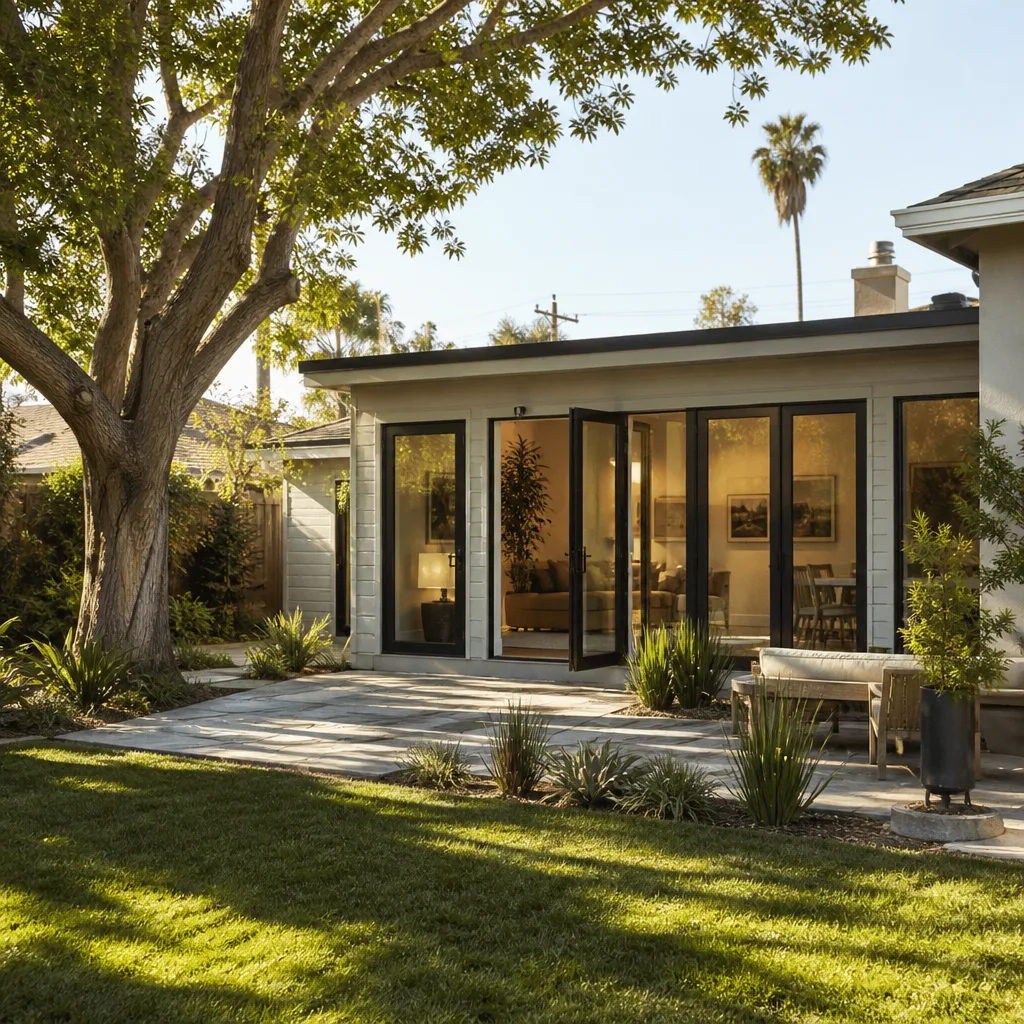
- Home additions & ADU
- Roofing
- Windows & doors
- Driveway & pavers
- Fence
Table of Contents
- Why Brand Choice Matters More in Downey Than Anywhere
- How to Read a Material Warranty for Southern California Conditions
- Trade-by-Trade: What Separates a Name Brand from a Commodity
- Why Local Distributor Availability Changes the Math
- How to Verify You’re Getting the Brand You Paid For
- The Insurance Connection: Impact Ratings and Fire Ratings
- Matching the Brand to the Contractor’s Portfolio
Why Brand Choice Matters More in Downey Than Anywhere
Downey sits in a climate that quietly stresses building materials in ways cold-weather markets never see. The UV index runs high enough for much of the year that sealants, coatings, and plastic components degrade faster here than in most of the country. Temperature swings between cool nights and hot afternoons push materials to expand and contract daily, and that thermal cycling works joints, fasteners, and sealant lines loose over time. Add the seismic movement the whole LA basin lives with, and you get a set of stressors that a product tested in a temperate climate may never have been evaluated against.
This is the core of the brand question. A commodity shingle and a GAF, CertainTeed, or Owens Corning system may look similar on the pallet. What differs is the testing, the warranty language, and how the manufacturer handles claims when the failure mode involves UV or thermal movement rather than a manufacturing defect. A commodity countertop and an engineered quartz from Cambria, Silestone, or Caesarstone differ the same way: one has published performance data on stain resistance and thermal shock, the other usually doesn’t.
In Downey, brand isn’t a status marker. It’s a proxy for whether the manufacturer has done the homework on conditions that match the ones your home actually faces. From the driveway to the roofline, the material choices that hold up here are the ones chosen for these conditions, not for a national average. We source across a real portfolio of recognized brands so the choice is driven by your project and your conditions, not by what a single distributor is pushing that month.
How to Read a Material Warranty for Southern California Conditions
Most homeowners read the length of a warranty and stop there. Ten, twenty, thirty years. But the term is the least important number on the page. The exclusions are what determine whether you’ll ever collect. Read the exclusions first, and read them looking for language tied to UV, thermal cycling, and structural movement. Those three exclusions come up again and again on products that perform fine in milder climates but get argued away on a claim in Downey.
Here’s a practical method for reading any material warranty before you sign a contract:
- Find the exclusions section, not the coverage section. The coverage tells you what’s included; the exclusions tell you what’s realistically going to disqualify a claim. Spend your time there.
- Search for UV and “weathering.” Some warranties reduce or void coverage for fading, chalking, or surface degradation after a certain exposure period. In high-UV Downey, that’s the clause that matters most for coatings, sealants, and anything with a color surface.
- Search for “movement,” “settlement,” and “substrate.” Warranty language that voids coverage for movement cracks can void a lot in an area with seismic activity, especially on hardscape, tile, and countertops.
- Look for installation requirements that void the warranty if not followed. Almost every brand requires a specific substrate prep, fastener pattern, or underlayment. If your contractor skips it, the warranty may already be gone before the job is done.
- Check who honors the warranty. A labor warranty from the contractor and a material warranty from the manufacturer are two different things. Know which one covers which failure.
- Ask for the warranty in writing before the deposit. A brand that won’t hand you the actual warranty document before the job isn’t giving you a warranty; it’s giving you a promise.
Any product you’re installing on a Downey home should carry warranty terms written for an environment with high sun exposure and real ground movement. When we spec Cambria, Silestone, or Caesarstone for a countertop, or a Schluter system under tile, the installation spec and the warranty terms are part of the conversation, not an afterthought. Built to spec, not to price, means the spec matches the conditions your home lives in.
Trade-by-Trade: What Separates a Name Brand from a Commodity
A name brand isn’t automatically better, and a commodity product isn’t automatically worse. The difference is in what the manufacturer is willing to publish and stand behind. Here’s how that breaks down across the trades that come up most on Downey homes.
- Roofing. A recognized system like GAF, CertainTeed, or Owens Corning comes with published performance data on wind uplift, fire rating, and algae resistance, tested under defined protocols. A commodity shingle may carry a rating but often lacks the system-level testing that pairs the shingle with its underlayment and fasteners. In high-UV Downey, that system pairing matters more than the shingle alone.
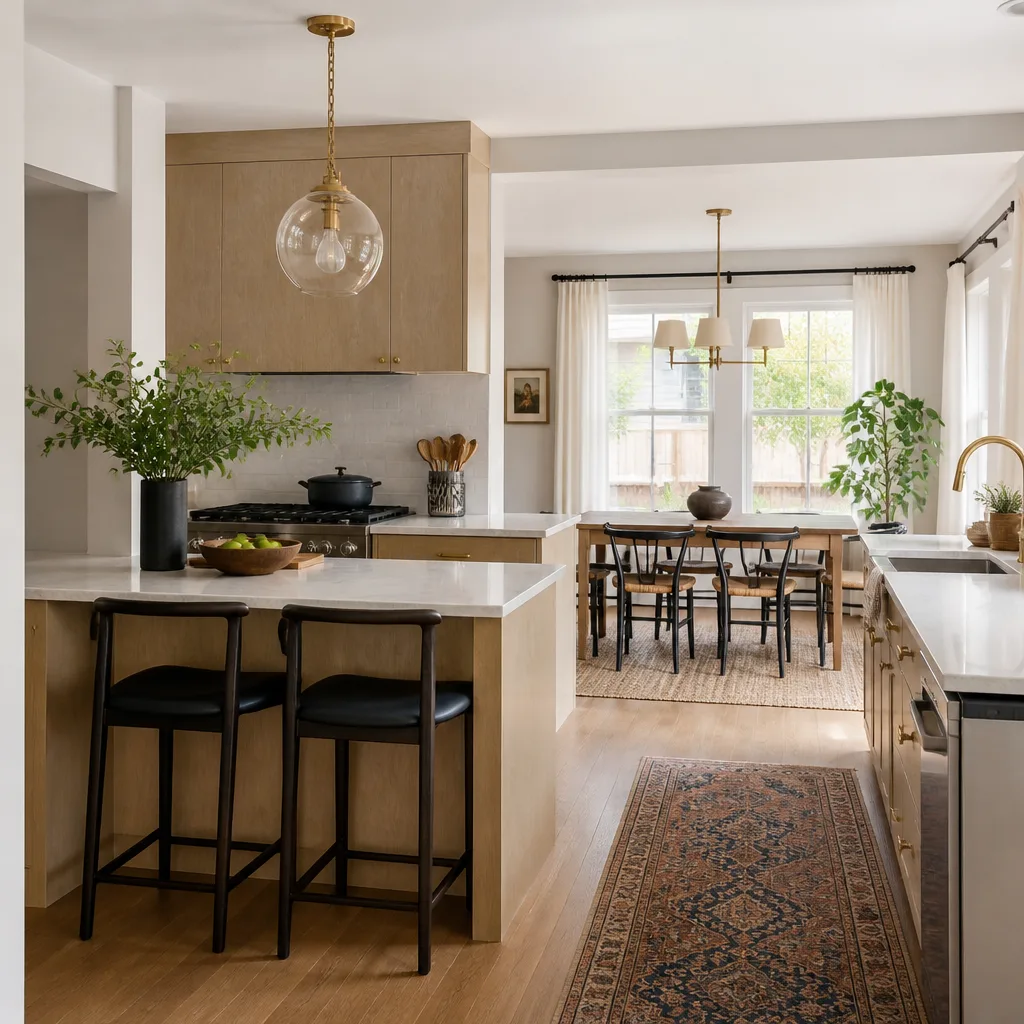
- Countertops. Engineered quartz from Cambria, Silestone, or Caesarstone publishes data on stain resistance, scratch resistance, and thermal tolerance. A commodity quartz may claim the same durability but without the documented testing. In a hot kitchen, thermal tolerance is what keeps a hot pan from leaving a mark.
- Cabinetry. Lines like KraftMaid and Wellborn publish material specs, hinge and drawer hardware ratings, and finish warranties you can compare line to line. Commodity cabinets often hide the difference in the hardware, which is the first thing to fail under daily use.
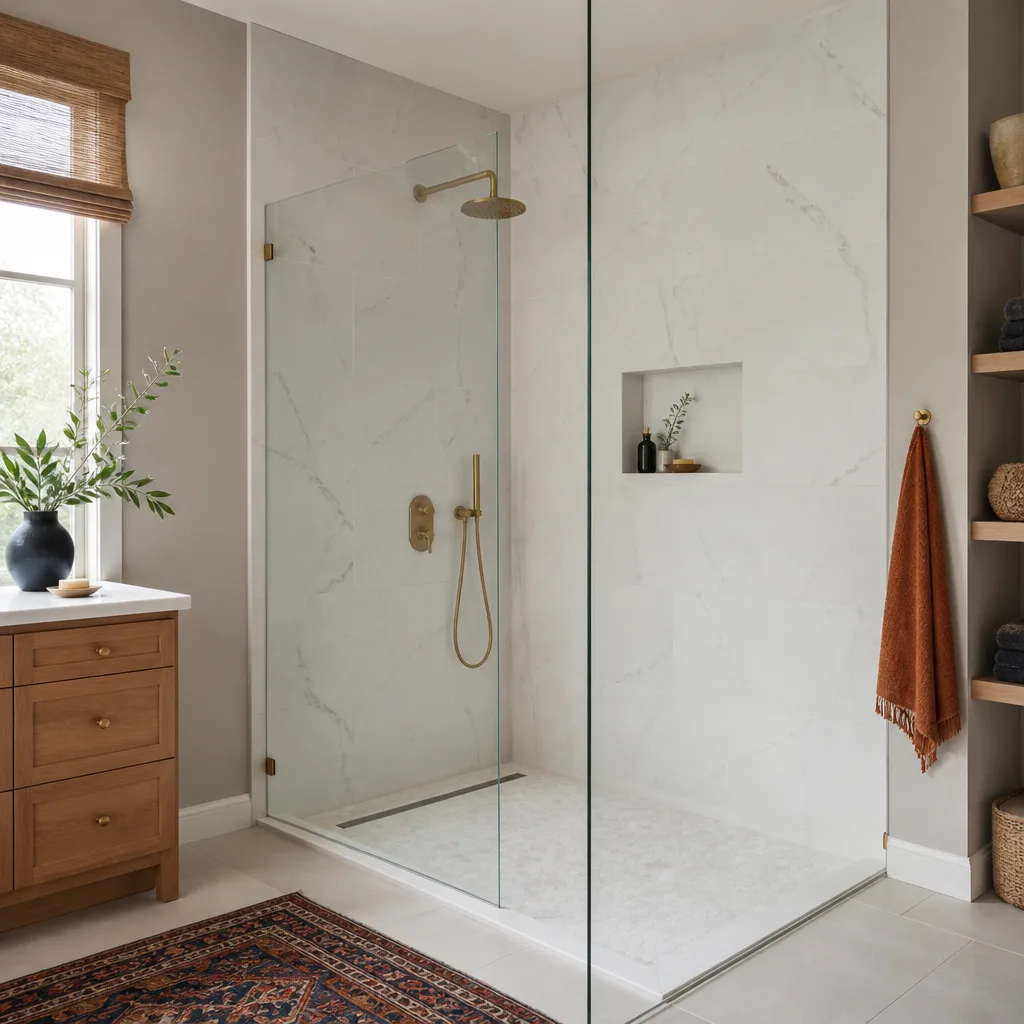
- Plumbing fixtures. Kohler, Moen, Toto, and Grohe publish flow ratings, finish durability specs, and service parts availability. A commodity faucet may look identical but has no parts catalog behind it a few years down the line.
- Siding and cladding. James Hardie fiber cement is the benchmark for exterior durability and warranty coverage because the product’s spec sheet and warranty terms are unusually explicit. That specificity is what you’re paying for.
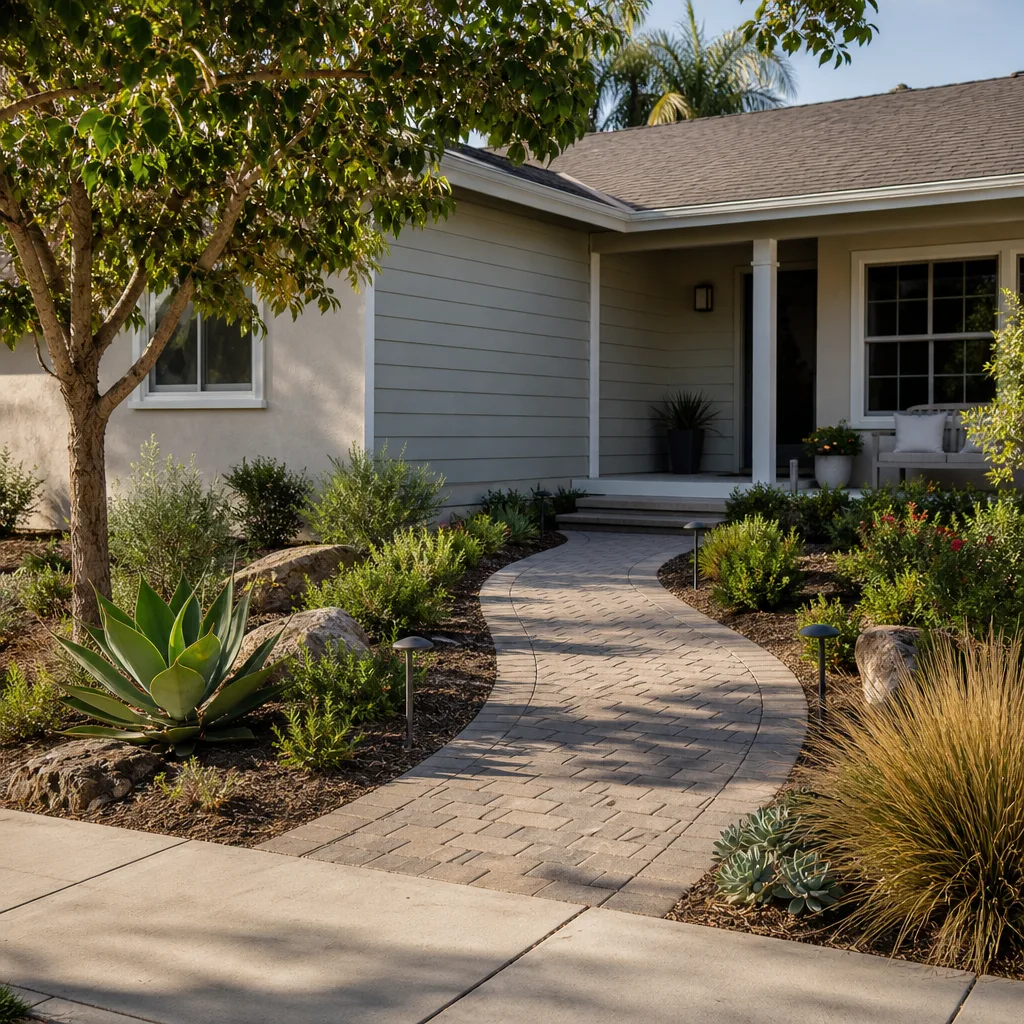
- Pavers and hardscape. Engineered paver systems from Belgard, Unilock, Techo-Bloc, Tremron, and Cambridge Pavers are manufactured to tolerances that commodity concrete block doesn’t match. The difference shows up in color consistency, joint stability, and freeze-thaw performance you’ll want here even on mild winters.
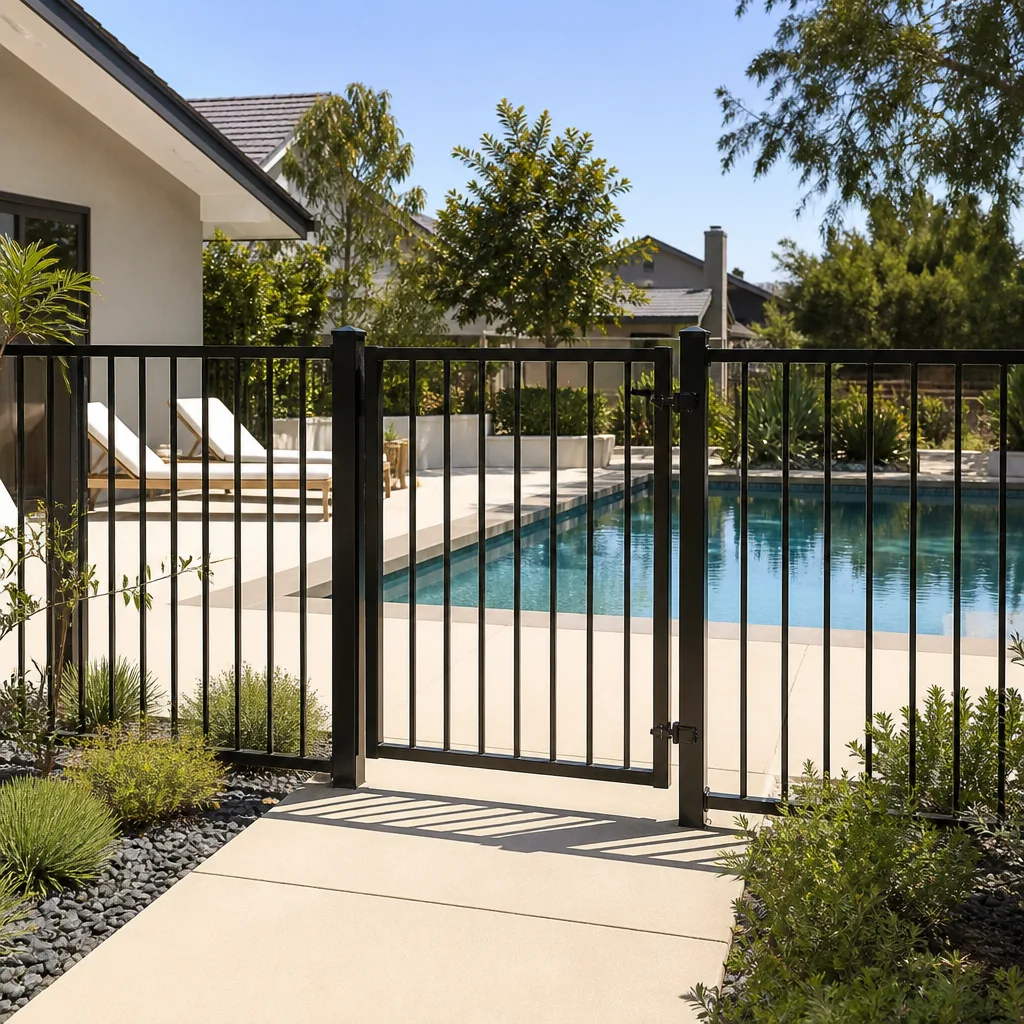
- Fencing. Aluminum (Ameristar, Jerith), vinyl (Bufftech, ActiveYards), and ornamental (Barrette, Master Halco) each carry specific warranties tied to finish and structural performance. The material you choose should follow from your needs, not from contractor inventory.
The takeaway is consistent across trades: a name brand is valuable when it publishes the performance data and the warranty terms you can compare. If a product’s documentation is thin, the brand name on it is doing marketing work, not engineering work. That’s the difference we look for when we spec materials for a Downey project.
Why Local Distributor Availability Changes the Math
Here’s the question most buyers skip: can this brand actually be serviced and repaired where I live? A premium product with no distributor in LA County can turn a simple repair into a long wait and an expensive shipment. And when a warranty claim needs a field inspection or a replacement part, distance becomes dollars.
Downey sits inside a dense LA County distribution network, which is a real advantage if you use it. Brands with local distributor presence can typically get parts, replacement panels, finish-matched pieces, or field service far faster than brands shipping from out of state. That difference doesn’t show up on a spec sheet, but it shows up the day a window seal fails or a fence panel gets damaged.
Before you commit to a brand, ask two questions: who is the local distributor, and who handles warranty service here? If your contractor can’t answer both, that’s your signal. A brand with real regional support is a brand you can live with for the life of the installation, not just the day it’s finished. This is also why the material portfolio we work from spans recognized brands in every category: the point is access to options that can actually be serviced locally, not a single supplier’s catalog.
How to Verify You’re Getting the Brand You Paid For
The most common form of brand disappointment isn’t a bad brand. It’s a substitution: the contract says one thing, the product on site is a “product-equivalent,” and by the time the homeowner notices, it’s installed. Protecting yourself against that is mostly about documentation, and it starts before the first delivery.
Follow these steps to make sure the brand in the contract is the brand on the house:
- Name the brand and product line in the contract. “Premium shingle” doesn’t cut it. The contract should name the manufacturer and the specific product line, and “or equal substitute” language should require your written approval first.
- Ask for the submittal page before delivery. The manufacturer’s product data sheet confirms the exact model and its specs. Match it against the contract before anything gets installed.
- Check the packaging and labeling on delivery day. Branded materials carry branded packaging, batch codes, and product labels. If packaging is unbranded or relabeled, ask why before installation proceeds.
- Photograph labels and batch codes. A quick photo of the packaging and any product stamps gives you a record for the warranty file and makes substitution disputes much easier to resolve.
- Confirm installer certification where it matters. Some systems require factory-trained or certified installers to keep the manufacturer warranty valid. Ask the contractor to show the certification before the work starts.
- Keep the warranty documents together. The material warranty, the labor warranty, and the install documentation belong in one folder. If you ever need to file a claim, you’ll have everything in one place.
In Downey, the verification step matters most on roofing, windows, and countertops, where the difference between a brand and a look-alike is hardest to see after installation. When we spec a Cambria countertop or a Toto or American Standard fixture, the documentation comes with the job because that’s the only way you can confirm what you’re paying for. It’s also the only way to make a warranty claim stand up later.
The Insurance Connection: Impact Ratings and Fire Ratings
Brand and spec choices can affect more than durability. Some carriers offer premium discounts for products with certain ratings, provided they’re installed to the manufacturer’s spec. Class 4 impact-rated roofing is one example. Fire-rated siding is another. These ratings come from the manufacturer and require installation exactly as specified, so the brand, the rating, and the installation are all linked.
Hail is uncommon in Downey, so the main drivers here are wind uplift, sun exposure, and fire safety, not hail impact. If you’re replacing a roof or cladding, it’s worth calling your insurer before the job to ask what documentation they need to recognize a rating. Some carriers want the product data sheet and the install confirmation. Getting that together is easier before the boxes are gone than after. The brand’s rating is only worth anything to your insurer if you can prove the installation matched the spec.
It’s worth saying plainly: we don’t bill your insurance directly, and we don’t decide what your carrier will discount. What we can do is install to the manufacturer’s spec, keep the documentation together, and hand you a warranty file you can bring to your insurer. That’s what makes a rating useful to you in practice.
Matching the Brand to the Contractor’s Portfolio
The last piece of brand selection isn’t about the brand at all. It’s about whether the contractor who’s installing it actually has access to the brand and knows the install spec cold. A contractor who only sells one supplier’s line will steer every project toward that line, because it’s what they know. That’s not necessarily dishonest; it’s just limited. A contractor who works across a genuine portfolio can match the product to your project and your conditions.
For a Downey home, that usually means more than one trade. A renovation that touches the roof, the kitchen, and the exterior is where juggling single-trade specialists starts to cost time and coordination. One contractor across every project removes that. Whether you’re planning a driveway & pavers project, a fence installation, or a larger home additions & ADU build, the material portfolio behind the contractor is what determines how well the product matches the job.
Our technicians have up to 11 years of experience across these trades, and the material roster spans more than 50 nationally recognized brands across roofing, windows, doors, fencing, pavers, cabinetry, countertops, and plumbing fixtures. For ADUs and additions, that means both traditional stick-built construction and prefab systems from manufacturers like Abodu, Dvele, Mighty Buildings, Boxabl, and Plant Prefab, so the pathway fits your timeline and budget instead of the other way around. Your timeline, your material, your budget: we match the solution to the project, not the project to a single supplier.
Common Mistakes to Avoid
- Choosing a brand by recognition instead of by spec. A familiar logo on a spec sheet that never addresses UV or thermal movement is marketing, not engineering. Read the performance data before you trust the name.
- Reading the warranty length and skipping the exclusions. The term is the least important number on the page. In Downey, the UV and movement exclusions are the ones that decide whether a claim gets paid.
- Accepting “or equal substitute” language without approval rights. That phrase is how a name-brand material quietly becomes a look-alike on delivery day. Require your written approval for any substitution.
- Skipping the local distributor question. A brand with no LA County distributor can mean slow, expensive warranty service. Ask who handles service here before you commit.
- Assuming the manufacturer warranty covers the install. Material warranties and labor warranties are separate, and a bad install can void the material warranty entirely. Confirm what’s covered by whom.
- Specifying a rated product but not the install to match. A fire-rated or wind-rated product only counts if installed to the manufacturer’s spec. The rating and the install have to travel together.
- Letting one supplier’s inventory drive every choice. A brand you can’t service locally or a product line the contractor only half-knows is a bad trade for a short-term discount. Match the material to the project, not the project to the material.
See the difference
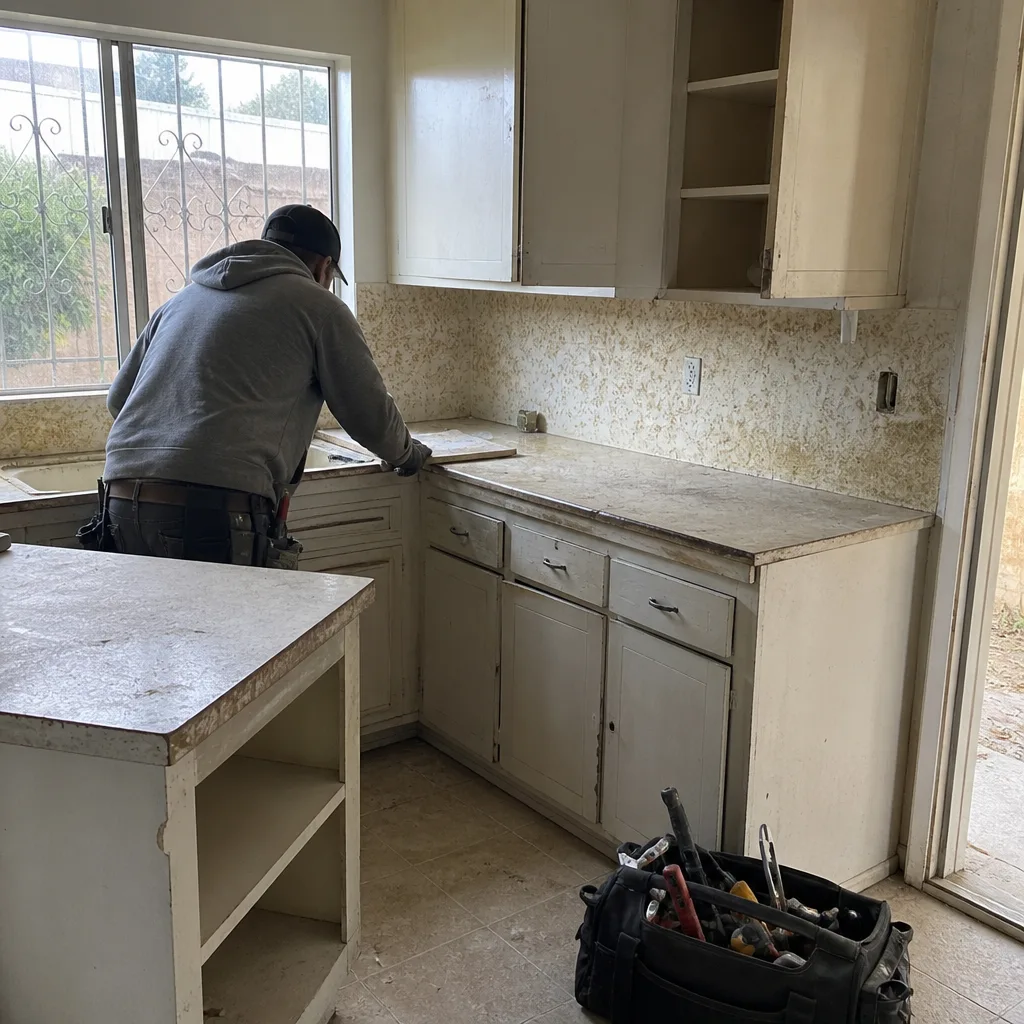 Before
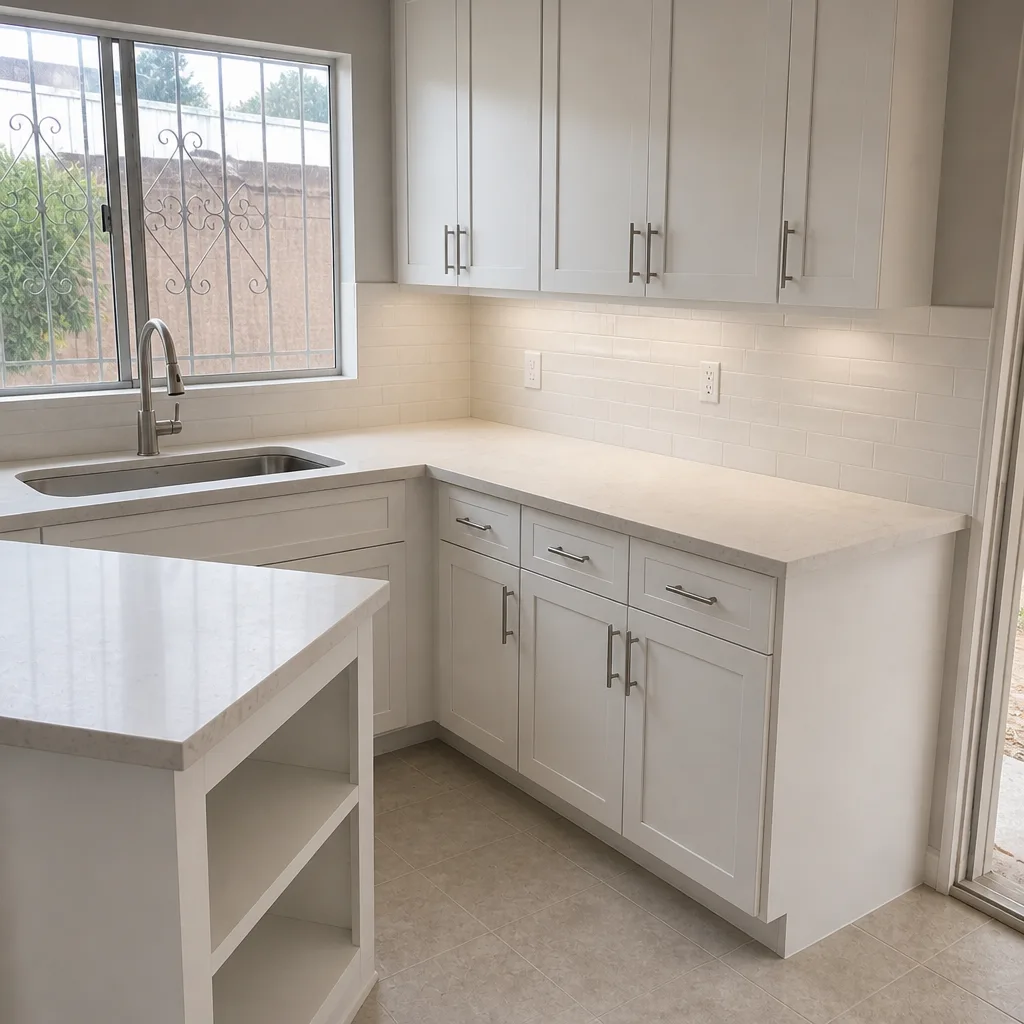 After
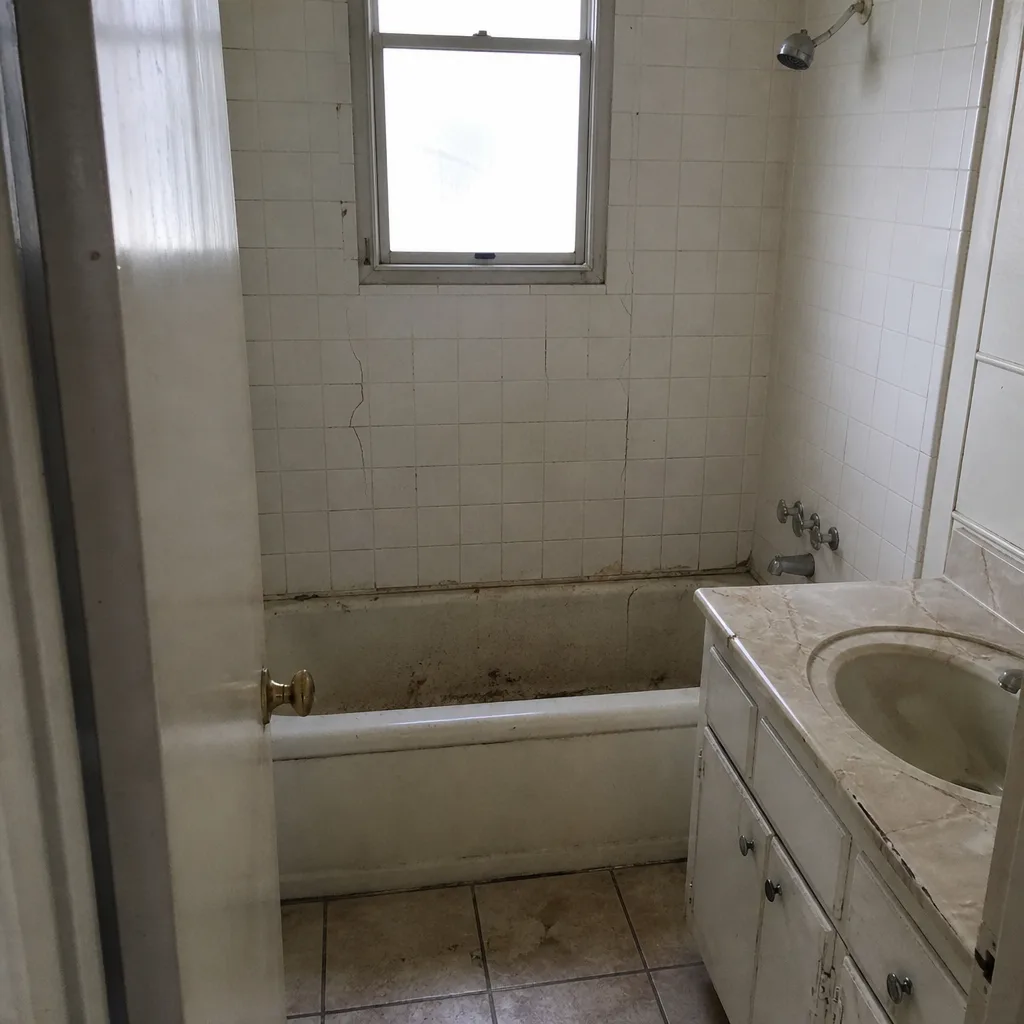 Before
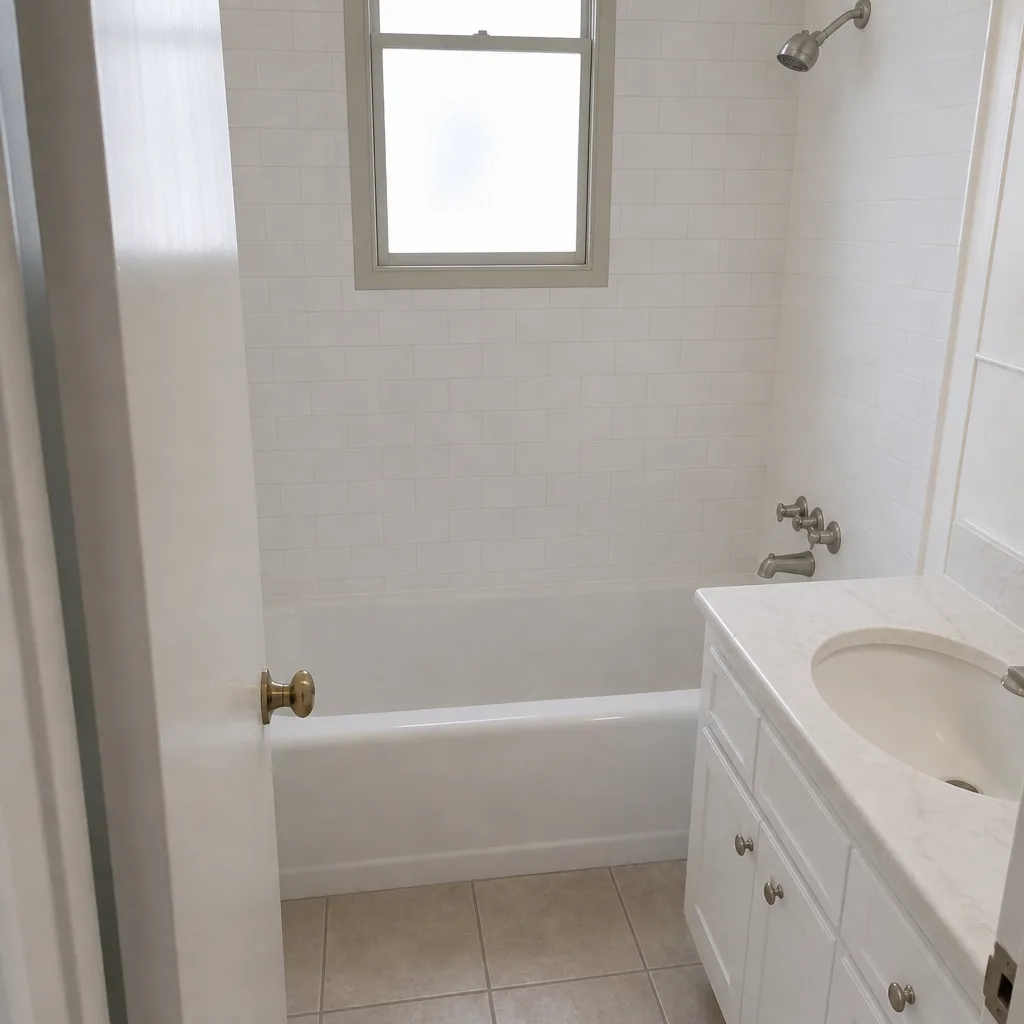 After
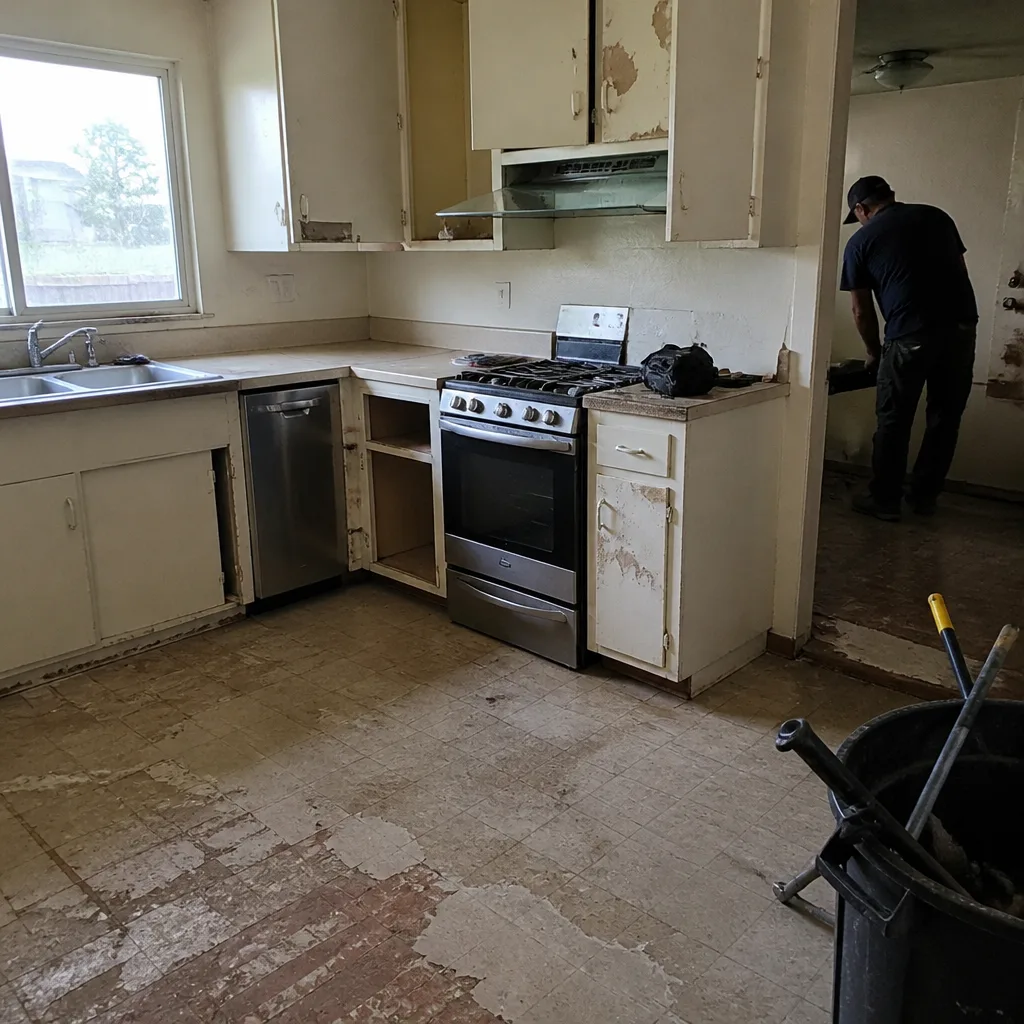 Before
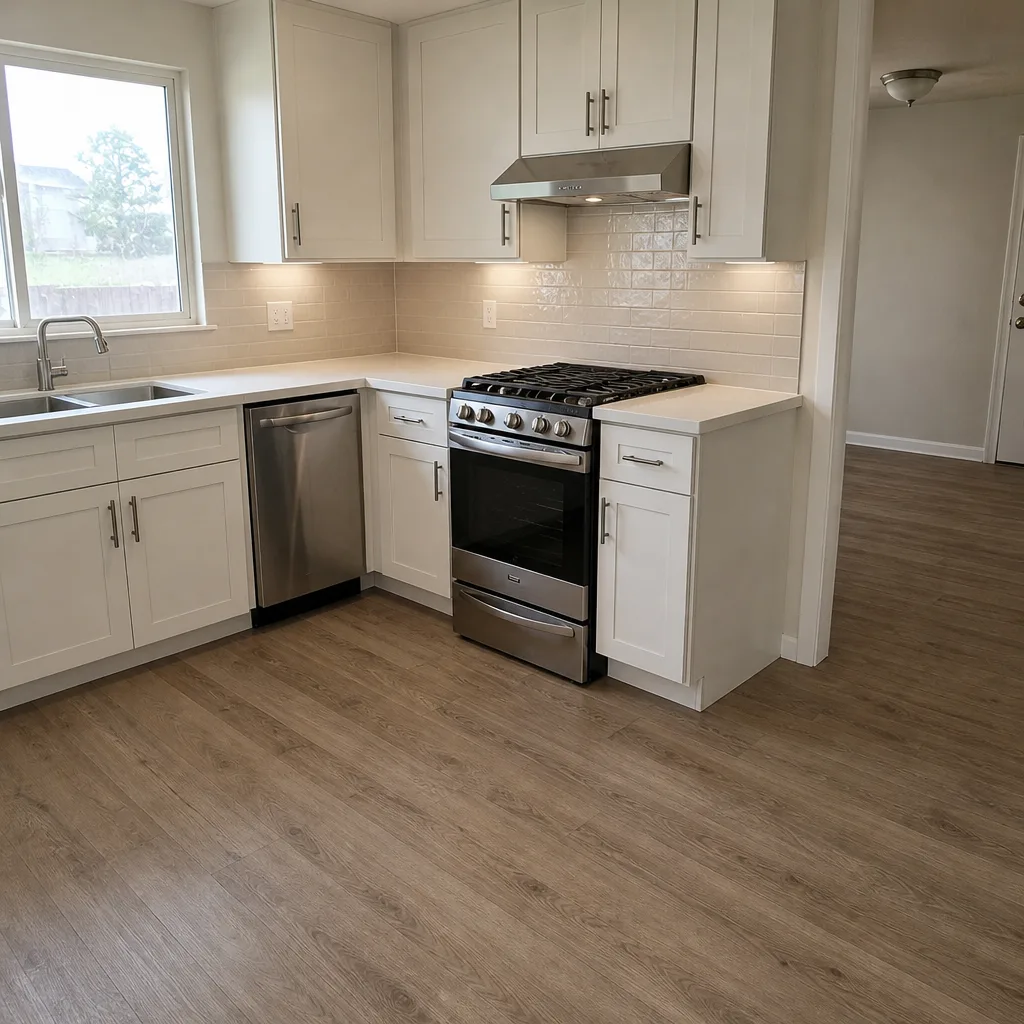 After
When to Call a Professional
Some material decisions belong in the hands of a contractor. If you’re replacing a roof, you’ll want the system installed to spec so the manufacturer warranty survives. If you’re installing cladding with a fire rating or a shingle with a wind rating, the install pattern and substrate have to match the rating. Same for engineered quartz countertops, tile over a Schluter system, or a paver system that has to hold up to real load and drainage. Countertops, roofs, and rated cladding are also where a bad install voids the warranty faster than a bad product ever would. Construction Downey offers free estimates in Downey, and we’ll walk you through the spec, the warranty terms, and the install approach for any project. Call (844) 312-0107.
Frequently Asked Questions
There’s no single best brand. The right brand for a Downey home is one with published performance data on UV exposure and thermal cycling, a warranty that doesn’t void coverage for conditions common here, and a local LA County distributor for parts and service. Start with the spec and the warranty, then compare names.
Name the manufacturer and product line in the contract, require written approval for any substitution, and check the packaging and batch labels on delivery day before installation proceeds. Ask for the manufacturer’s data sheet for the exact product before the job starts, and keep photos of labels for your warranty file.
They can. Some carriers offer premium discounts for Class 4 impact-rated roofing or fire-rated siding, provided the product is installed to the manufacturer’s spec and you can document it. The brand and the rating are linked to the installation, so keep the data sheet and the install confirmation together and confirm with your insurer what they require.
Because a warranty is the only enforceable promise behind the product. A name brand with warranty exclusions for UV and structural movement may give you less protection in Downey than a lesser-known brand with clear terms and a local service network. Read the exclusions and the install requirements before you compare anything else.
Usually not in a project you plan to keep. A brand with one regional distributor is fine to install, but repair parts and warranty service can get slow and expensive if that distributor changes or moves. For Downey homes, a brand with multiple LA County distribution points is a safer bet for the long term.
Yes. We work from a portfolio of more than 50 nationally recognized brands across roofing, windows and doors, fencing, driveways and pavers, home additions and ADUs, kitchens, and bathrooms, so a project that touches multiple trades can be sourced from one contractor. Call (844) 312-0107 for a free estimate and we’ll walk through the material options for each part of the job.
The Bottom Line
Choosing a construction brand in Downey comes down to three things: whether the product has published performance data for local conditions, whether the warranty actually covers what can fail here, and whether the brand can be serviced locally. The logo is the last thing to check, not the first. Name the product line in the contract, read the exclusions, confirm the delivery, and keep the warranty file. When the brand matches the conditions, the install, and your timeline, you get a material you can live with for years, not just a name on a brochure. That’s the standard we work to at Construction Downey, from the driveway to the roofline.
Ready to sort out the right materials for your Downey project? Call (844) 312-0107 for a free estimate. We’ll walk through the brand options, the specs, and the warranty terms together. We answer 24/7. Fast dispatch from 7am to 7pm, Sunday through Friday. Our technicians have up to 11 years of experience, and estimates are free, with a written line-item quote before any work begins.
Written by the team at Construction Downey.