Last updated November 17, 2026


Free written scope consultation - allowances, timeline, and change-order rules on paper before a single trade is scheduled
Driveway & Pavers Troubleshooting in Downey: Common Problems and How to Fix Them
If your paver joints are widening or individual units are rocking underfoot, the problem isn’t the pavers. It’s the bedding sand migrating into an undersized base, and replacing the pavers without fixing that will get you the same result in about 18 months. Most driveway failures we see in Downey trace back to one of three installation shortcuts: a base that was too thin, edge restraint that was never built to hold, or joint sand applied wrong in summer heat. This guide teaches you to read your driveway’s symptoms before you call anyone, so you can tell a spot repair from a full base redo and know which one you actually need.
Quick Answer
Most driveway and paver problems in Downey are either surface failures you can re-set or subbase failures that require excavation, and the way to tell them apart is whether the units rock independently or the whole surface moves as one. Loose, rocking pavers with sand washing out of the joints usually point to a thin base or failed edge restraint, while wavy, sunken runs point to base settlement. Fixing the symptom without fixing the cause gets you the same failure again within a couple of seasons.
Styles & brands we work with
- Kitchen remodeling
- Bathroom remodeling
- Home additions & ADU
- Roofing
- Windows & doors
- Driveway & pavers
- Fence
Table of Contents
- Surface Failure vs. Subbase Failure: How to Tell the Difference
- Why Polymeric Joint Sand Fails in Downey’s Summer Heat
- Reading Concrete Driveway Cracks: Tree Roots, Thermal Expansion, or Settlement
- Edge Restraint Failures and Why Plastic Spike-Down Edging Gives Way
- Drainage, Standing Water, and the Downey Flat-Lot Problem
- Spot Repair or Full Replacement? How to Decide
- Red Flags in a Driveway Repair Quote
- Preventing the Next Failure
Surface Failure vs. Subbase Failure: How to Tell the Difference
Every paver problem in Downey falls into one of two categories, and knowing which one you have is the single most useful diagnostic you can perform. A surface failure means the pavers themselves or the joint sand between them has degraded, but the compacted base underneath is still sound. A subbase failure means the compacted gravel and sand layers beneath the pavers have settled, shifted, or lost their compaction, and no amount of re-sanding or re-setting will fix it because the foundation the pavers sit on is no longer flat or stable.
The distinction matters because the two failures have wildly different repair scopes. A surface failure might be a spot re-set of a few courses and a re-sand. A subbase failure requires pulling up the affected area, excavating down to subgrade, re-compacting in lifts, and re-laying the pavers on a rebuilt base. Miss the distinction and you pay for a repair that fails again.
Visual and physical inspection you can do yourself
- Look along the surface at a low angle. Stand at one end of the driveway and sight down its length. Small undulations are normal. A distinct dip or a wavy run tells you the base underneath has settled.
- Press down on individual pavers. If a single paver rocks in place while its neighbors stay put, the bedding layer under that one unit has thinned. If several adjacent pavers move together as a plate, the base below them has lost compaction.
- Look at the joints. Wide, empty joints with sand visibly washed out suggest the joint sand has migrated into the base. Joints that stay full but the surface still dips point to settlement.
- Check the edges. Walk the perimeter. If the pavers have spread outward and the edge restraint has separated, the lateral confinement has failed and the whole field may be loosening behind it.
- Look for sand at the low points or near drains. Sand collecting at a low spot is a clear sign it has been migrating out of the joints over time.
- Watch the surface after rain. Water that pools in one spot for hours after the rain stops tells you the grade has shifted, which usually means base settlement.
A single rocking paver in an otherwise flat field is usually a surface issue. Multiple rocking pavers, waviness, or sand loss throughout the field is almost always a base issue. In our experience across Downey, the majority of “my pavers are failing” calls turn out to be base and edge problems, not broken pavers. If you’re weighing a repair against a re-install, the driveway & pavers service overview lays out what a properly built base looks like from the ground up.
Why Polymeric Joint Sand Fails in Downey’s Summer Heat
Polymeric joint sand is designed to be poured into the joints, swept in, misted, and left to cure into a flexible, water-resistant bond. When it’s applied on a hot afternoon in Downey, the surface temperature of the pavers can climb high enough that the sand begins to cure before it’s fully worked into the joint. The result is a joint that looks filled but never actually locks: the top skin cures, the material underneath stays loose, and a few rain cycles later the top layer lifts out in flakes or washes away entirely. It’s very common in summer installations.
Blown joint seal vs. healthy joint
A healthy polymeric joint sits firm and slightly recessed below the paver chamfer, holds together as a small flexible plug when you press it, and doesn’t powder off when you rub it with a finger. A blown joint looks like a shallow trench with loose sand at the bottom, has a thin crust that cracks and flakes off the surface, and often shows a fine silt ring at the paver edge after rain. If water runs into the joint and disappears immediately instead of beading briefly on the surface, that joint has lost its seal.
Where the joint failure is isolated, removing the loose material, re-filling with fresh polymeric sand, and wetting it correctly can restore the seal. Where the failure covers most of the driveway, the sand was likely applied wrong across the entire surface and the joints need to be dug out and re-done. It’s worth saying plainly: this is a job where the working conditions and the timing of the misting matter more than the product. On a 90-degree Downey afternoon, a proper install works in the shade or in the earlier part of the day, applies the mist carefully, and doesn’t move on until the sand has set up. When a joint seal has failed across a whole field, it’s usually a sign the pavers themselves also need attention, and that’s a conversation worth having once rather than twice.
Reading Concrete Driveway Cracks: Tree Roots, Thermal Expansion, or Settlement
Not all concrete cracks are the same, and reading the crack pattern tells you which of the three common causes in Downey you’re dealing with. The pattern of the crack, its direction, its width, and where it runs relative to the surrounding slab each point to a different root cause, and each has a different correct fix. Treating a tree root crack like a settlement crack (or vice versa) typically means the crack comes back the next season.
The three crack signatures
- Tree root intrusion: the crack runs in a wandering, sometimes curved line that appears to aim for a specific tree in the yard. It often widens on one end. Where the root has lifted the slab, you’ll see one side of the crack sitting higher than the other, and the crack may run right through the point where the root has heaved the concrete.
- Thermal expansion cracking: the crack is relatively straight, often runs perpendicular to the driveway’s long axis, and appears at the control joints or midway between them. Both sides of the crack sit at the same level because the slab is expanding and contracting but not sinking. These cracks typically widen slightly in summer and narrow in winter.
- Base settlement: the crack is accompanied by a visible dip or hollow, and the slab on each side of the crack may have tilted. Often the cracks run in a network rather than a single line, and the surface loses grade toward the offending area. Tapping the settled slab with a screwdriver handle produces a hollow sound, while tapping the intact slab gives a dull thud.
What each one calls for
- Tree root: the tree and the driveway are in conflict, and one of them has to give. Root barriers, re-routing the root, or removing the offending tree are all options, but the concrete repair can’t be planned until the tree question is settled.
- Thermal expansion: if the cracks are narrow and holding, filling and sealing them is often the right answer. If the slab is spalling or the cracks have widened past a quarter inch, a larger repair is usually warranted.
- Settlement: mudjacking or polyurethane injection can lift a settled slab back into grade, but only if the underlying cause (drainage, poorly compacted subgrade) is addressed. Otherwise the slab settles again.
Concrete driveways in Downey tend to run into all three of these, sometimes at once on the same slab. Reading the pattern first saves you from paying for the wrong fix. If you’re already at the point where the concrete is beyond a patch, a paver overlay or full replacement designed around the same base work is often the more durable path, and it’s one we plan in advance rather than patching.
Edge Restraint Failures and Why Plastic Spike-Down Edging Gives Way
Edge restraint is the least visible and most overlooked part of a paver driveway, and its failure is behind a large share of the driveway spread we see in Downey. The restraint is the continuous edge that holds the outer courses of pavers tight, resisting the sideways force from traffic and keeping the whole field locked. Without a correctly installed restraint, pavers gradually creep outward, joints open up along the perimeter, and the field starts to loosen from the edges inward.
Why plastic spike-down edging fails
Plastic spike-down edging, which is a strip of plastic or composite driven into the ground on steel or plastic spikes at intervals, is fast to install and works fine on a well-drained base with a strong underlying soil. On clay-heavy soils like the ones under a lot of Downey residential driveways, it doesn’t hold up. Clay expands when wet and shrinks when dry, and that seasonal movement pulls the spikes loose. Once the spikes lose their grip, the edge strip lifts or drifts outward, and the pavers behind it follow.
What should have been installed instead depends on the specific driveway, but the standard that holds up on clay is a rigid restraint set in concrete. That’s a continuous aluminum or steel edge embedded in a strip of concrete along the perimeter of the paved area, anchored deep enough that it doesn’t move with soil moisture. The concrete collar resists the lateral force from traffic and holds the edge strip in place through the wet-dry cycle.
Signs of edge restraint failure
- Pavers lifting or spreading along the outer course, especially where the driveway meets grass, a planting bed, or the sidewalk
- A visible gap between the pavement edge and the adjacent surface
- Loose spikes or a strip of edging that rocks when you press on it
- Joint gaps that are noticeably wider at the perimeter than in the interior of the driveway
- Sand collecting along the base of the edge restraint after rain
Repairing the restraint alone is only correct if the field behind it is still tight. Where the spread has progressed into the interior, the outer courses need to be pulled up and re-laid on a re-compacted base once the new restraint is in place. This is one of the most common corrections we make across Downey, and the fix is always on the restraint side, not the paver side.
Drainage, Standing Water, and the Downey Flat-Lot Problem
A lot of Downey neighborhoods are graded nearly flat, and the driveways are long with a gentle fall toward the street. When everything is built correctly, that fall carries water off the pavement in a matter of minutes after rain. When it doesn’t, the standing water is doing long-term damage to the base and the joint sand at the same time. Pooling water is often the first visible symptom of a base problem that hasn’t cracked the surface yet.
Standing water on a paver driveway tells you one of three things: the surface has lost its original grade, the drainage path is blocked, or the base was never built with enough slope to shed water in the first place. The first two are correctable. The third usually calls for a re-grade of the driveway, which means pulling up the pavers, re-shaping the base, and reinstalling.
What good drainage looks like
- The driveway falls consistently from the garage toward the street, with no puddles after rain
- Water moves to a defined point (a channel drain, a low spot at the street, or a French drain at the edge) rather than sitting in the middle
- The base beneath the pavers slopes in the same direction as the finished surface, so water that gets into the joints drains through rather than pooling under the pavers
- Edge restraints are set below grade so they don’t block the sheet flow of water off the pavement
On the flat lots common in Downey, the slope of the base matters more than on hilly lots because there’s less natural fall to work with. A driveway built on a proper sloped base with correctly compacted layers will shed water even on flat ground. A driveway built flat on top of the base will collect it. If you’re seeing repeat puddling through the rainy season, the drainage question is worth diagnosing before a surface repair, because surface work on a drainage problem doesn’t last.
Spot Repair or Full Replacement? How to Decide
Every driveway repair question eventually comes down to whether the fix is a spot repair or a full replacement, and the right answer is decided by the base, not the surface. If the base is sound and the failure is localized (a single rocking paver, a troweled patch of blown joints, one or two lifted edge courses), a spot repair is a legitimate fix that will hold. If the base is failing, a spot repair is a band-aid on a section that will keep spreading.
Spot repair is the right answer when:
- The problem is confined to one or two courses of pavers and the rest of the field is tight and flat
- The joint failure is limited and the individual joints are visible and re-fillable
- A single paver has cracked from a dropped load or a heavy impact and the base around it is intact
- The edge restraint has separated at one point but is still holding along the rest of the perimeter
- The concrete slab has one crack with no settlement and the two sides are level
Full replacement is the right answer when:
- The pavers are wavy or shifting as a group across a section wider than about two courses
- Joint sand is washing out of a whole field repeatedly
- Edge creep has progressed well into the interior of the paving
- A concrete slab is settling, cracking, or hollow underneath across more than a quarter of the driveway
- The original base was too thin for the traffic the driveway actually carries
- The drainage path is wrong and water is running toward the house
Where a repair is a legitimate fix, we say so. Where the base needs to come out, we say that too, and show you why. Our technicians have up to 11 years of experience reading exactly these failure patterns, and the diagnosis is always the same starting point: how much of the driveway has lost compaction under it, and can that be fixed without replacing the whole field. Where the paver field itself is salvageable but the base isn’t, we pull the pavers, rebuild the base, and re-lay the original material, which preserves the material you already paid for.
Red Flags in a Driveway Repair Quote
Most homeowners end up with a driveway problem because of someone else’s installation shortcut, so it’s worth knowing what a shortcut looks like written down. A quote that promises a fast fix without saying what’s being done underneath the surface is nearly always a surface fix on a base problem, and it will fail in the same amount of time the original installation did.
Watch for these red flags
- A price without a scope. If the quote says “repair driveway” without specifying excavation depth, base thickness, compaction, edge restraint, and joint sand, the price is meaningless. Ask what’s being replaced and to what depth.
- No mention of the edge restraint. Any paver repair that addresses the pavers without addressing the edge is likely to see the same failure return along the perimeter.
- New joint sand over failed joints. If the joints have blown across the field and the quote is only for new sand, the sand will behave exactly like the last batch did.
- “We’ll just top it off” on a settled base. Re-laying pavers on top of a settled base without re-compacting looks fine for a few months and then settles again.
- Concrete patch on a settlement crack. Patching a crack from above without addressing the settled slab underneath means the patch cracks within the next winter.
- No written line-item estimate. Legitimate driveways work is priced per job and quoted in writing, line by line.
- Pressure to skip a permit. Concrete driveway replacement often requires a permit depending on the city, and the right contractor will tell you when it’s needed rather than routing around it.
When you request a quote for driveway work, ask for the repair scope, the base detail, the edge restraint specification, and the joint sand product. A contractor who can answer those questions clearly is a contractor who’s actually thought about the repair, not just the price. That goes for full installs too: when we specify paver systems, we work from engineered product from Belgard, Unilock, Techo-Bloc, Tremron, and Cambridge Pavers, not commodity concrete, and that specification difference shows up years later when the joints and base are still holding.
Preventing the Next Failure
Most of the failures in this guide trace back to a handful of decisions made before the pavers or concrete went down. Getting those decisions right the next time is cheaper and more durable than fixing a repeat failure, and it’s the reason we spend real time on the base, the restraint, and the drainage before anything visible goes in.
Five decisions that determine whether a driveway lasts
- Base thickness matched to traffic. A driveway that carries vehicles needs more base than a walkway. Cut corners here and settlement is the eventual result.
- Compaction in lifts. The base needs to be added in defined layers and compacted between each one. A base that’s dumped in one thick pass never gets the compaction it needs at its depth.
- Rigid edge restraint set in concrete. On Downey’s clay soils, this matters more than the spike-down edging details. The edge is what keeps the field from spreading.
- Correct joint sand application. The sand needs to go in when the pavers are cool enough not to flash-cure it, and it needs to be misted correctly. The right product applied wrong will still fail.
- Drainage built into the grade. Water has to leave the driveway quickly, which means the base has to slope in the same direction as the surface, not sit flat under it.
We’ve seen the same pattern across Downey neighborhoods: a driveway that was fine for years starts to show joint failure, then edge creep, then visible settlement, and the homeowner is told to re-sand and call it a day. The reason we focus on the base and the edge is that those are the parts that determine whether the driveway is a five-year project or a twenty-five-year project. Built to spec, not to price, is the short version of why. From the driveway to the roofline, the same reasoning applies across the trades, and when a driveway project turns into a broader exterior upgrade, coordinating it under Construction Downey with one contractor avoids the hand-off problems between subs.
Common Mistakes to Avoid
- Re-sanding without diagnosing the joint failure. New polymeric sand on a base that’s still losing compaction will wash out the same way the last batch did. Fix the base before you re-sand.
- Applying polymeric sand on a hot afternoon in full sun. On a Downey summer day, the sand can flash-cure before it’s worked into the joint. The right working window and the right misting matter more than the product name.
- Replacing pavers without replacing the edge restraint. Pavers that have spread once will spread again if the edge is still using spike-down edging on clay. The edge is the anchor, and it needs to be set in concrete.
- Patching concrete cracks without addressing settlement. A crack that comes from a settled slab will re-open through any surface patch. The slab has to be lifted into grade or replaced.
- Choosing paver color and finish before confirming the base spec. The base, edge, and drainage determine whether the driveway lasts. Color and finish are the last decisions, not the first.
- Treating a low spot as cosmetic. Standing water on a Downey driveway is a working symptom, not just a nuisance. It’s telling you the base or the drainage has moved.
- Accepting a verbal quote for want of a little paperwork. Driveway repairs are priced per job and written estimates are standard. Ask for the scope, the base detail, and the joint sand product in writing.
Three of these mistakes compound: a residential driveway that was built on an undersized base, edged with spike-down plastic, and jointed on a hot afternoon is likely to fail in all three ways at once. Reading the symptoms together tells you what needs to be fixed together. If the driveway is only one part of a larger property upgrade, coordinating with fencing or a structural addition matters too, and the fence installation and home additions & ADU scopes all share the same subgrade and drainage questions at the perimeter of the lot.
See the difference
 Before
 After
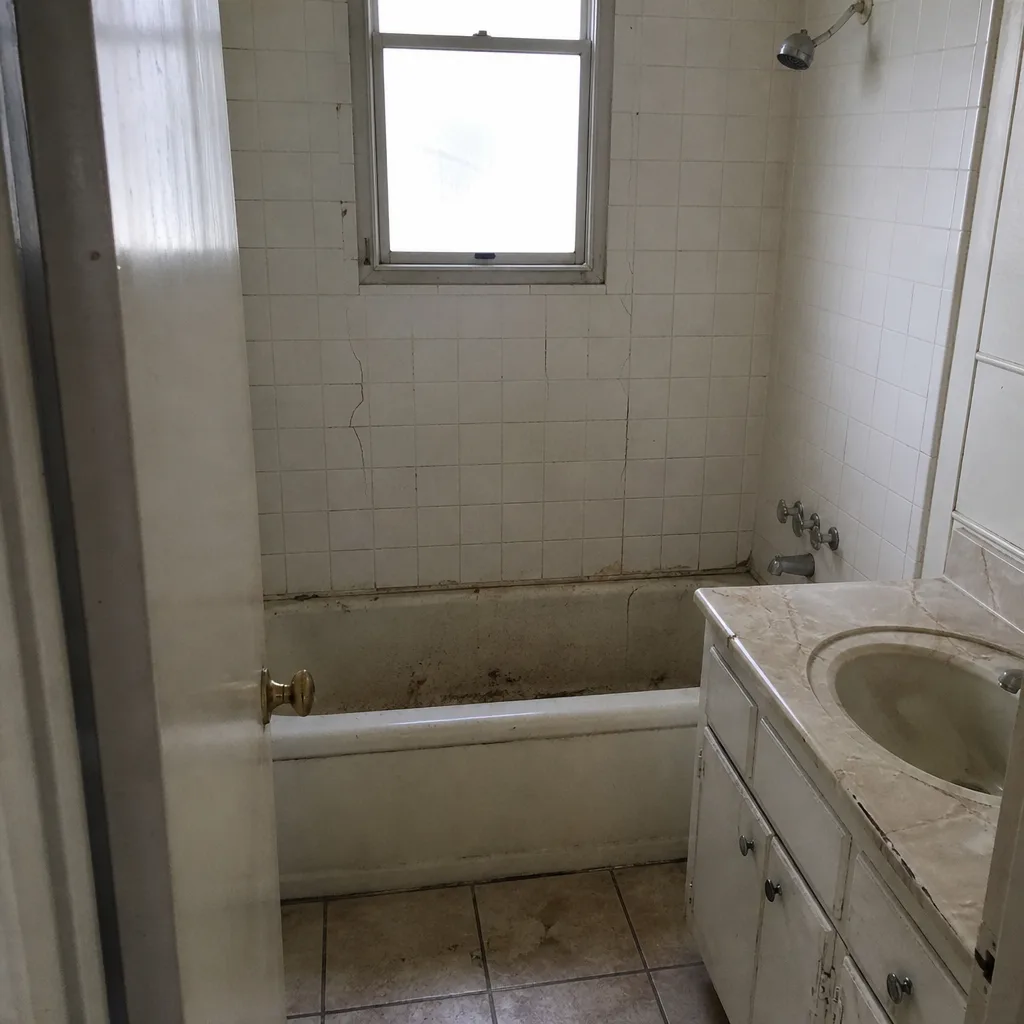 Before
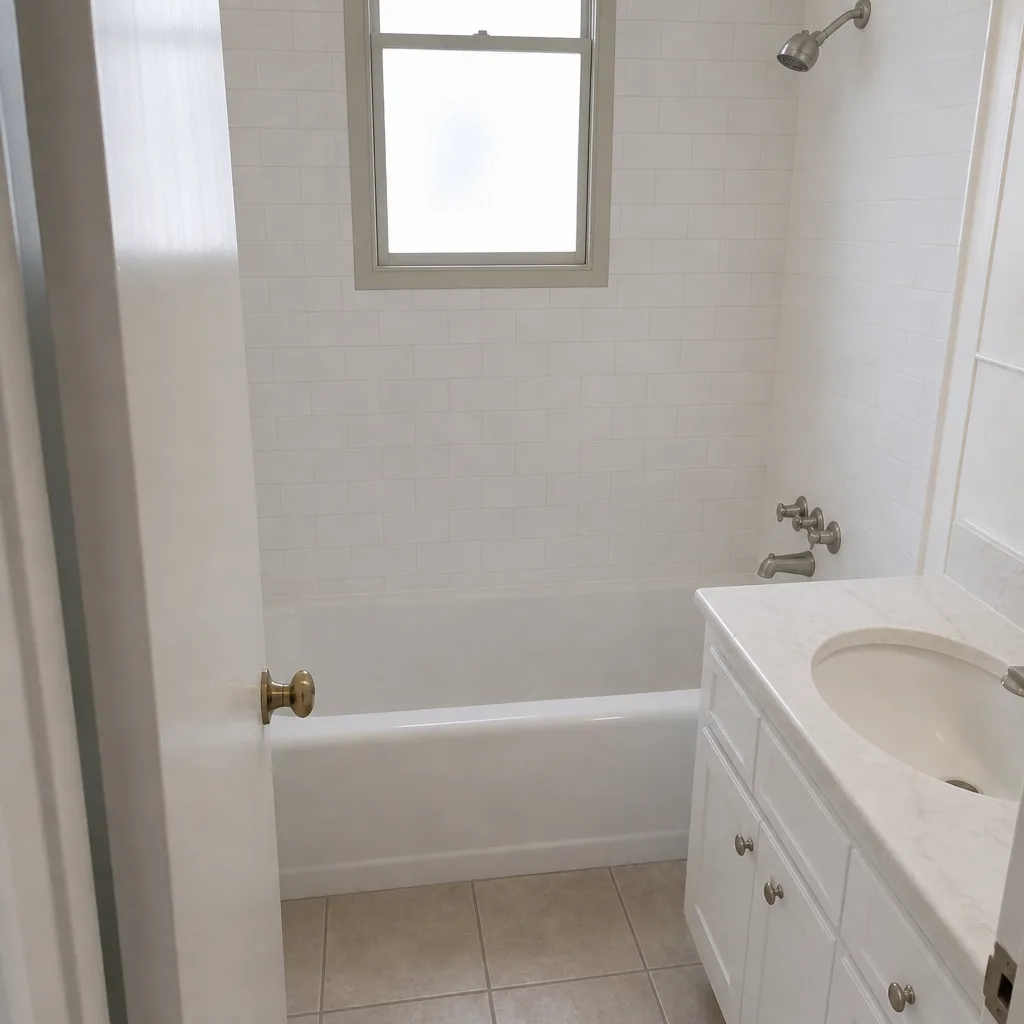 After
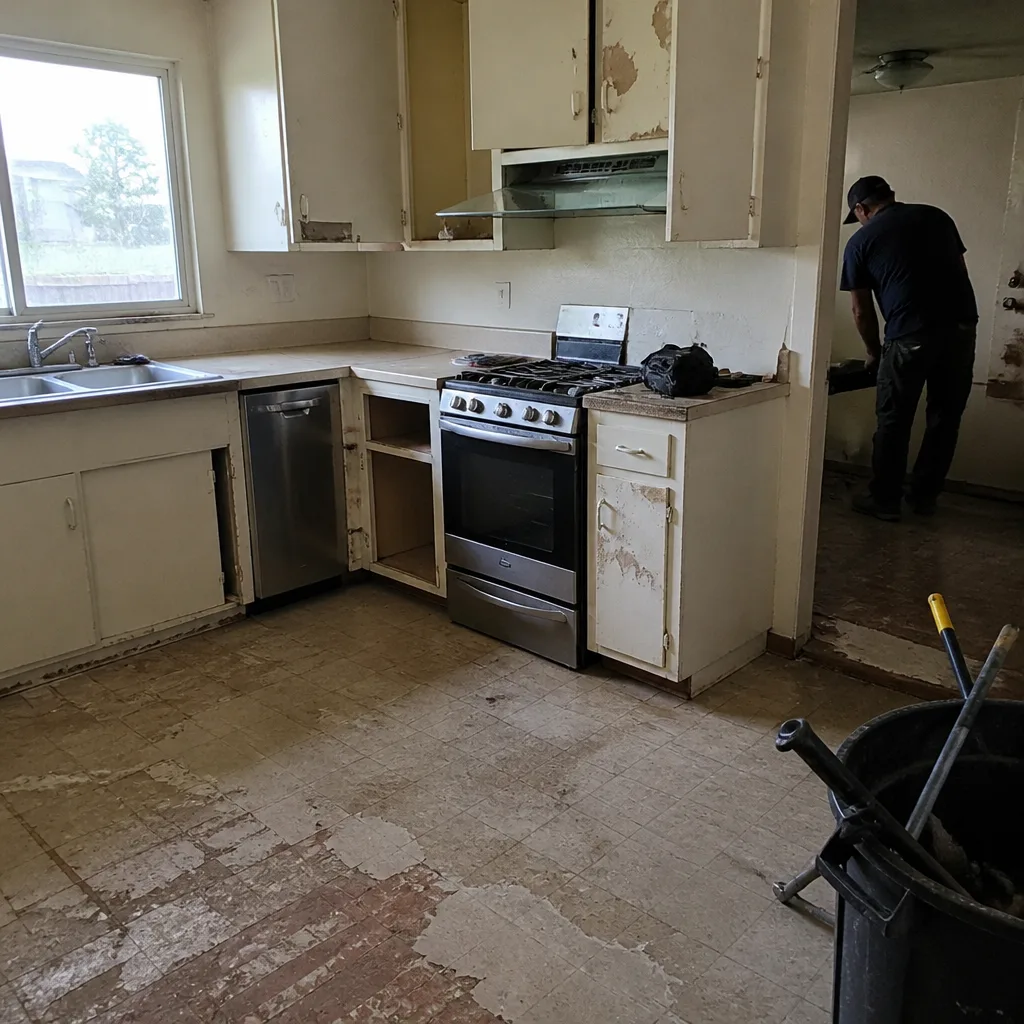 Before
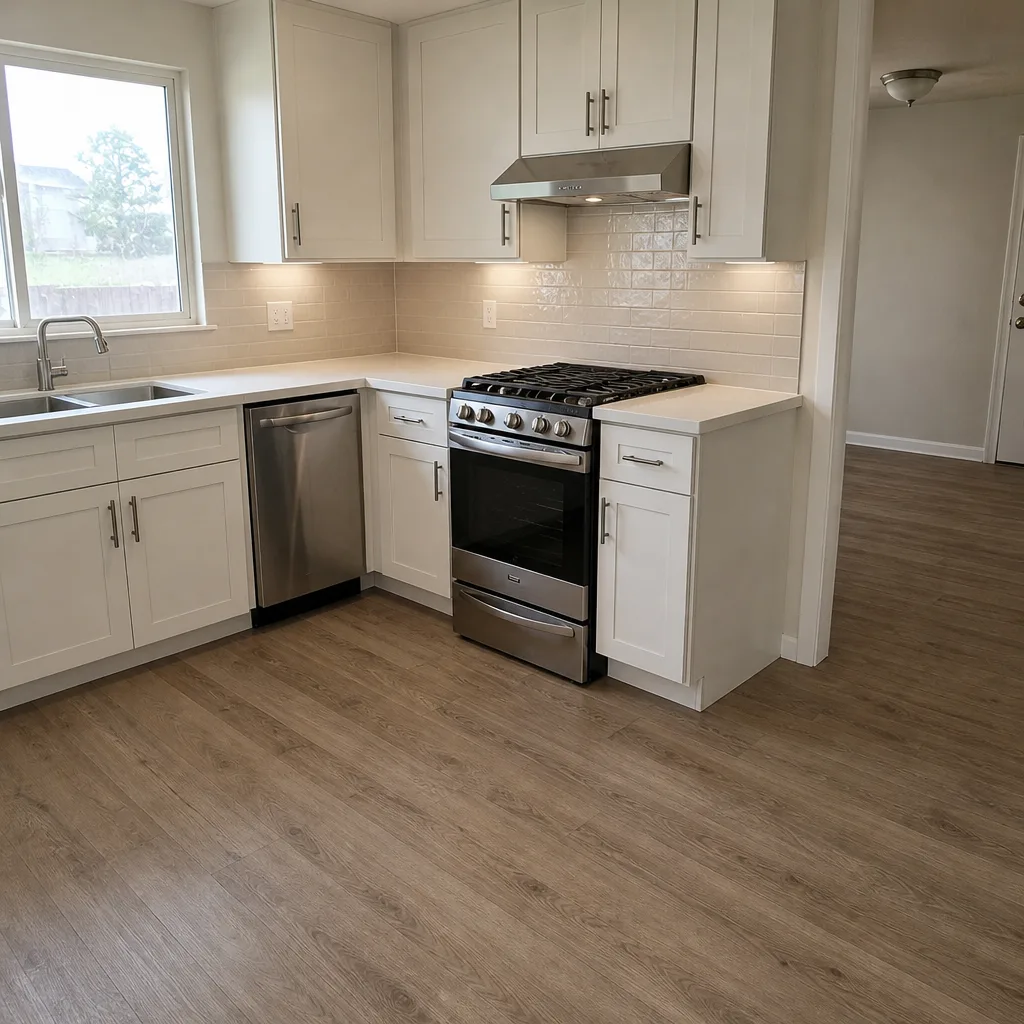 After
When to Call a Professional
Call a professional when the driveway problem is structural rather than cosmetic. That means: pavers rocking in groups across more than two courses, joint sand washing out repeatedly after rain, edge restraint lifting or spreading along the perimeter, standing water that doesn’t clear within an hour after rain, or concrete cracks accompanied by a visible dip or tilt. Call sooner rather than later if the water is running toward the house or garage, because that can affect the structure below the driveway surface. A problem caught at the joint-sand stage is a much smaller job than the same problem caught after base settlement has spread under the whole field.
Construction Downey offers free estimates in Downey. Call (844) 312-0107. We answer 24/7, and fast dispatch runs from 7am to 7pm, Sunday through Friday. A written line-item estimate is free, and the price is set per job by that estimate. When a repair is the right fix, we’ll say so. When the base needs to come out, we’ll show you why rather than quote a patch that won’t hold.
Frequently Asked Questions
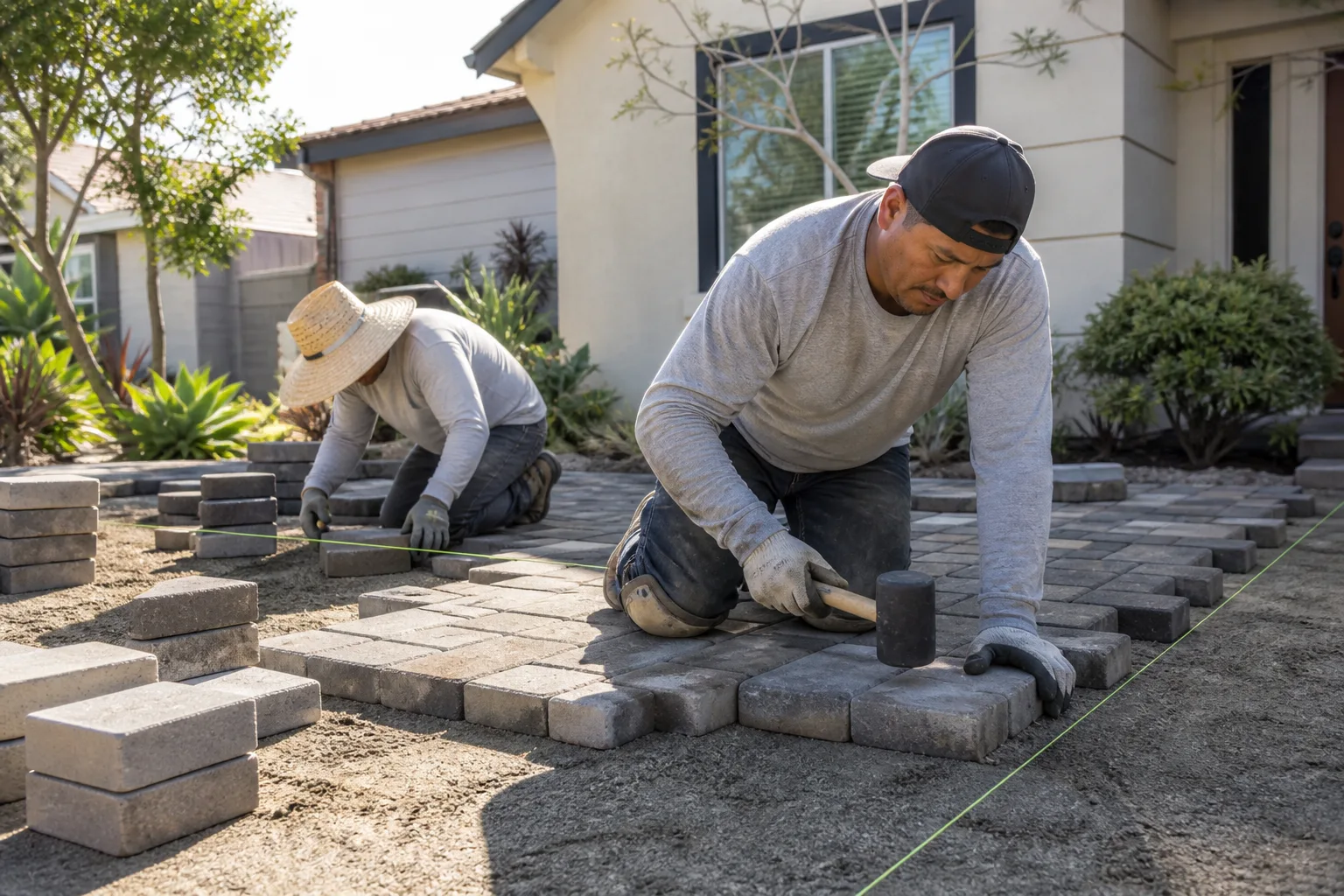
Pavers rock because the bedding sand or the compacted base underneath has lost its support, most often from a base that was installed too thin or wasn’t compacted in lifts. Individual pavers rocking one at a time usually means a localized bedding issue. Several pavers rocking together as a plate means the base beneath them has settled. A spot repair can fix the first; the second needs the base rebuilt. Call (844) 312-0107 for a free estimate on either.
The joint sand washes out when the base beneath the pavers is moving or when the sand was applied on a hot day and never fully cured. In Downey’s summer heat, polymeric sand can flash-cure on the surface before it’s worked into the joint, leaving a crust that fails within one rainy season. If the joints are washing out across the whole field, the sand was either applied wrong or the base is losing compaction. Both are diagnosable, and both can be fixed once the cause is confirmed. Call (844) 312-0107 for an exact quote; estimates are free.
Yes, by the pattern. A tree root crack wanders, often curves toward a specific tree, and may show one side of the slab sitting higher than the other. A settlement crack is usually accompanied by a visible dip or hollow, and the slab on each side may tilt. Thermal expansion cracks are straight and often sit at the control joints. Each one has a different fix, so identifying the pattern before any patching saves you from paying twice. Call (844) 312-0107 for a free estimate on the repair.
Many California cities require a permit for concrete driveway replacement, and some require one for paver installation depending on scope. Rules vary by jurisdiction and by whether the work affects the right-of-way at the street. Ask the city’s building department for the requirement on your specific address before work begins, and ask any contractor you hire to confirm the same. We pull the permits the work requires and see the work through inspection. Call (844) 312-0107 for a free estimate.
A spot repair of a few courses is typically a short job measured in a day or two. A base rebuild under a section of driveway takes longer because the base has to be excavated, re-compacted in lifts, and re-laid with the correct edge restraint and joint sand. Full replacements are scheduled across multiple days. The written estimate specifies what’s being done and the timeline, so you know what to plan for before work begins. Call (844) 312-0107 for an exact quote; estimates are free.
No. The written line-item estimate sets the price. If we open up the driveway and find a problem the initial inspection didn’t reveal (a buried root, a broken utility line, or a base issue worse than visible from the surface), we stop and go over the finding with you before continuing. Anything that changes the scope is agreed in writing first. Call (844) 312-0107 for a free estimate on your driveway.
The Bottom Line
Most driveway failures in Downey come down to three installation decisions: base thickness, edge restraint type, and joint sand application. Reading your driveway’s symptoms against those three decisions tells you whether you need a spot repair or a base redo, and whether the fix a contractor proposes is addressing the cause or just the surface. Rocking pavers in groups, sand washing out across a field, edge creep along the perimeter, and cracks with a dip underneath are all signs of a base or edge problem. Localized rocking, single-crack concrete, or a few blown joints are legitimate repair scenarios. The right diagnosis saves you from paying for the same failure twice.
Contact Us

If you’re ready to sort out what’s actually going on under your driveway, call (844) 312-0107 for a free estimate. Construction Downey works across all seven of our service lines from the driveway to the roofline under one contractor, with material specifications drawn from brands like Belgard, Unilock, Techo-Bloc, Tremron, and Cambridge Pavers for driveways, and coordinated with our fencing portfolio (Barrette, Master Halco, Ameristar, Jerith) when the driveway repair meets the property line. We answer 24/7, and fast dispatch from 7am to 7pm, Sunday through Friday, gets a technician out to look at the actual failure rather than guess from a photo. Free written line-item estimates. Built to spec, not to price. Call (844) 312-0107.
Written by the team at Construction Downey.