Last updated November 17, 2026
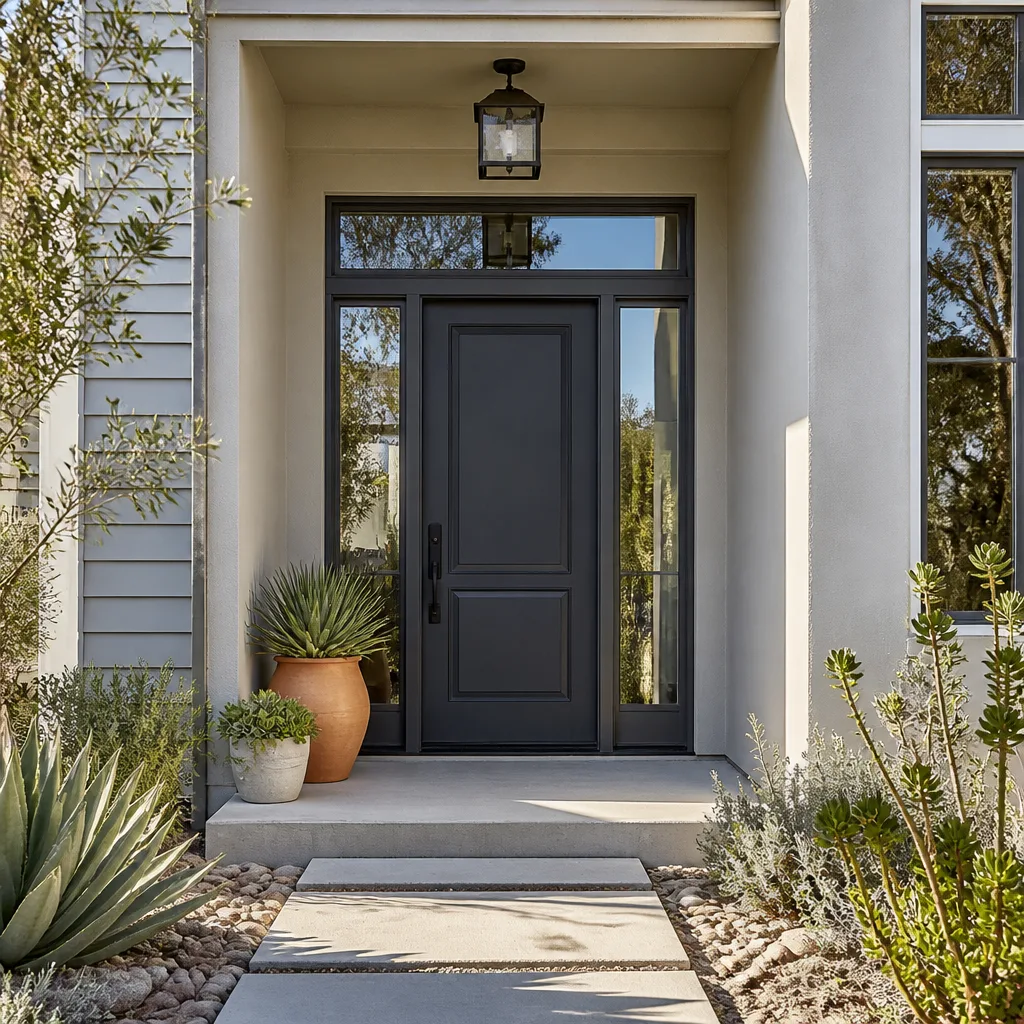
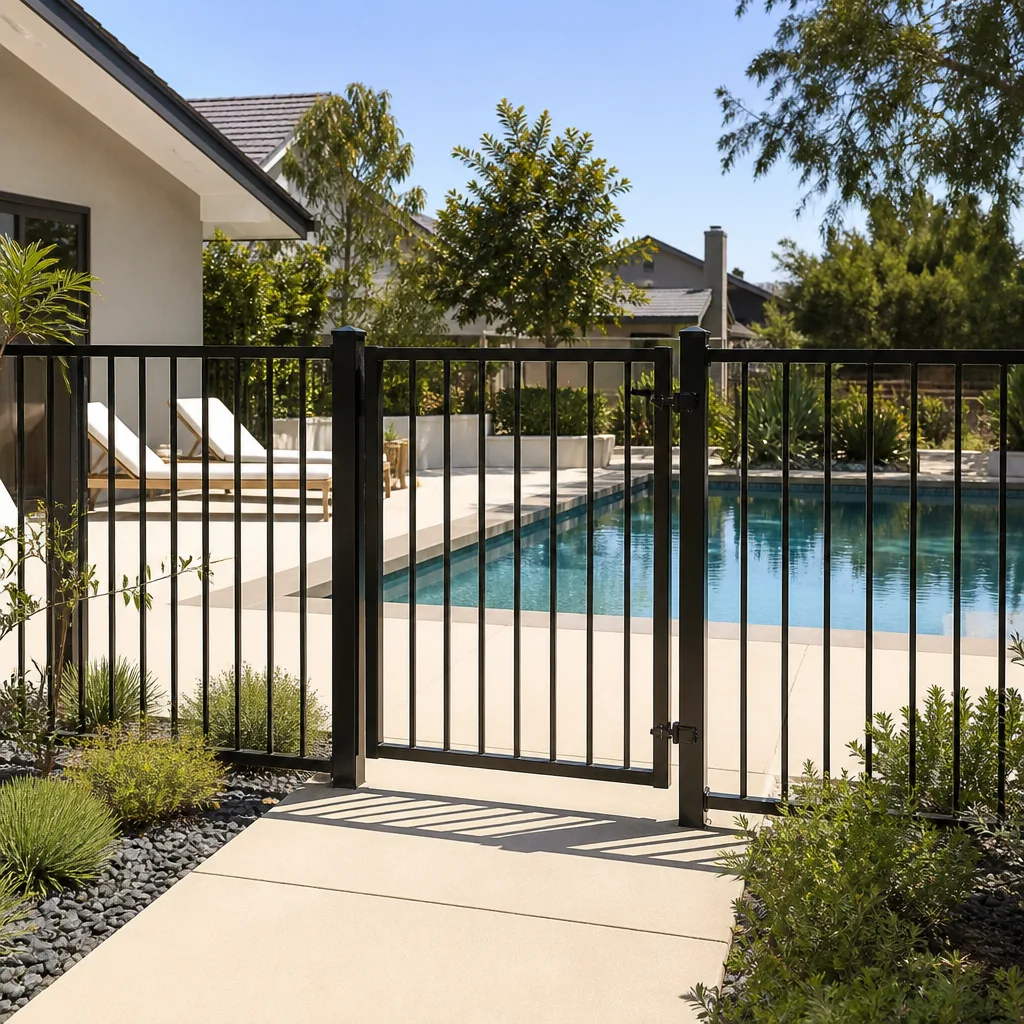
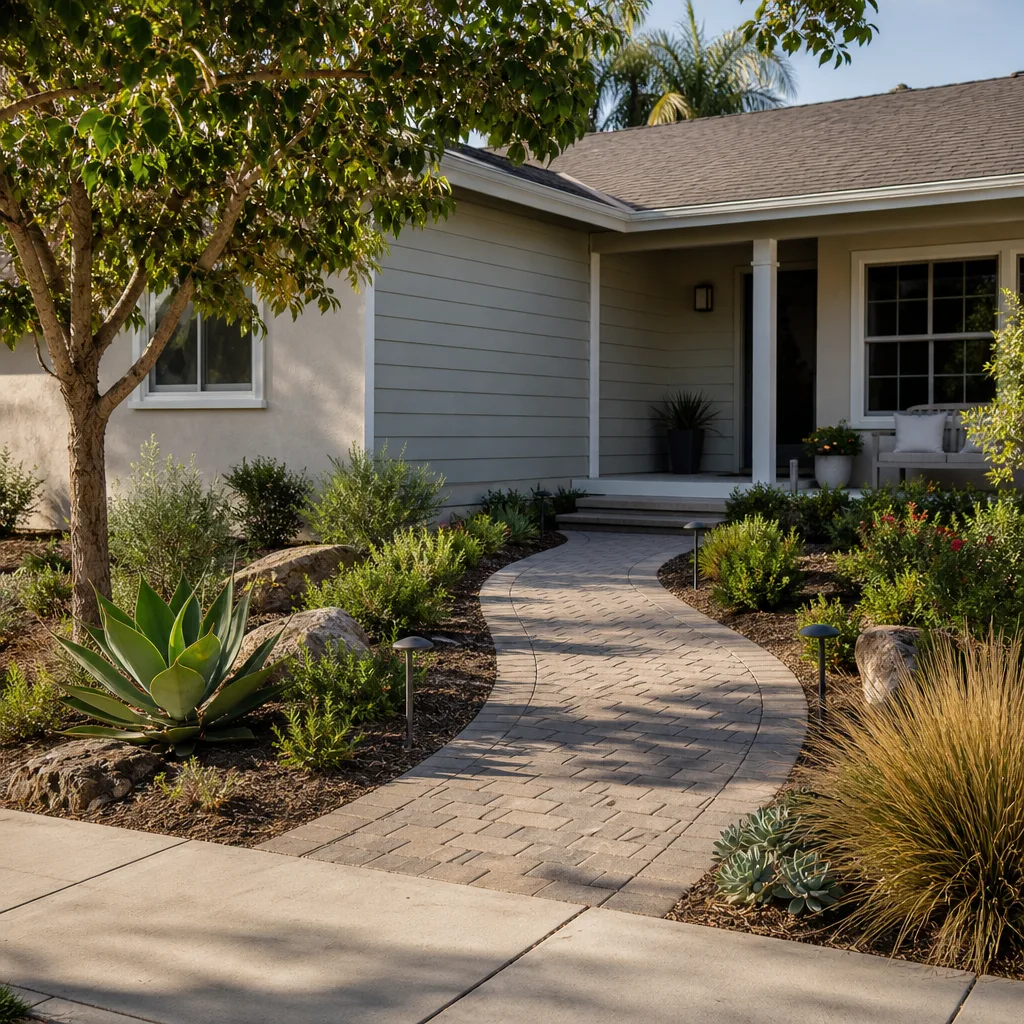




Free written scope consultation - allowances, timeline, and change-order rules on paper before a single trade is scheduled
Construction Emergency Preparedness Guide for Downey Homes
Most Downey homeowners think emergency prep means a bin of water bottles and a flashlight. That’s a kit, not a plan. The failures that actually cost families here are construction failures: a gas line sheared during a seismic event, a roof deck that sags under debris load, a foundation crack that starts at a hairline and propagates across a slab. And there’s a second layer most people miss. After the Northridge earthquake, the most common insurance dispute in the LA basin wasn’t over total losses. It was over pre-existing construction defects that seismic activity made worse, which insurers argued weren’t covered. Documentation made before an emergency is what separates a paid claim from a denied one. This guide walks through how to build that record, what to inspect and in what order, what to do in the first 24 hours of an active failure, and how to vet a contractor when the stakes are highest.
Quick Answer
Construction emergency preparedness for a Downey home means three things: a documented pre-event baseline of your home’s current condition (photos, written notes, dated receipts), a priority-ordered inspection sequence you can run yourself in the hours after a seismic event or windstorm, and a short list of vetted contractors with real contact numbers ready before you need them. The goal is to protect both the structure and your insurance claim. A claim backed by baseline documentation is a claim you can defend.
Styles & brands we work with
- Kitchen remodeling
- Bathroom remodeling
- Home additions & ADU
- Roofing
- Windows & doors
- Driveway & pavers
- Fence
Table of Contents
- How to Document Your Home’s Construction Baseline Before Anything Happens
- The Post-Earthquake Inspection Sequence for Downey Homes
- What to Do in the First 24 Hours After Roof Damage
- Is That Crack New or Pre-Existing? Why the Answer Decides Your Claim
- How to Vet an Emergency Contractor in Downey
- Santa Ana Winds and the Seasonal Failure Pattern in Downey
- Why Material Spec Matters More in a Crisis, Not Less
- Common Mistakes to Avoid
How to Document Your Home’s Construction Baseline Before Anything Happens
The single most valuable thing you can do this month costs nothing but an afternoon. You’re building a pre-event baseline: a dated record of your home as it stands today, before a single shingle moves. When an adjuster asks whether the angled crack in your slab foundation was there last year, a folder of dated photos answers the question instantly. Without it, you’re arguing from memory.
Here’s the documentation routine we recommend to Downey homeowners. It takes about two hours for a typical single-story house and less for a condo:
- Photograph every wall, ceiling, and floor junction. Include a coin or a tape measure in the frame for scale. Notes scribbled on a sticky don’t survive a filing cabinet half as well as a photo with context.
- Photograph the foundation line from the outside. Walk the perimeter of the house and shoot the slab edge, the stem wall, and the ground-to-wall transition. This is where post-event crack claims live or die.
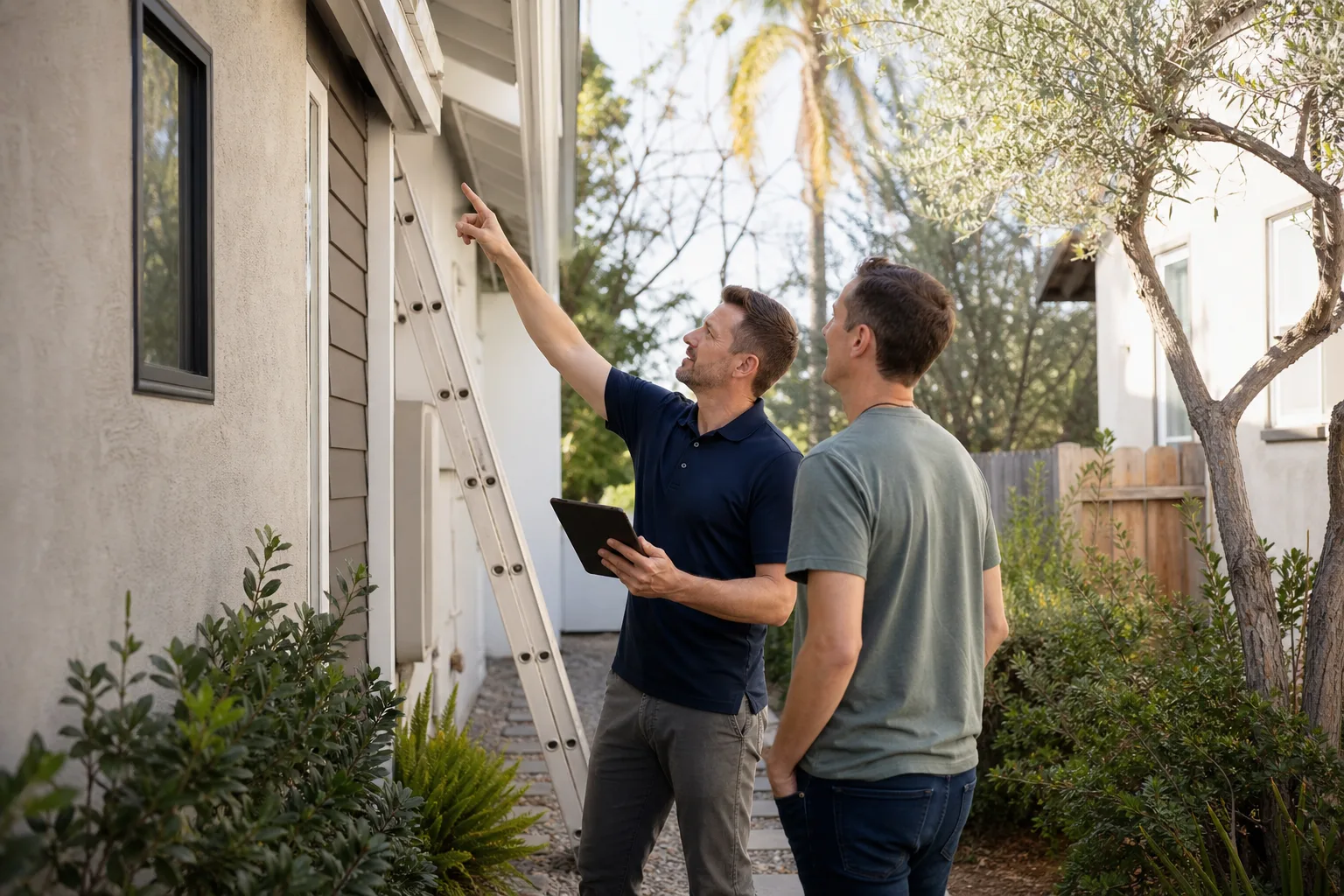
- Photograph the roof from the ground with a zoomed lens. Never climb up. Capture ridge line, fascia, and any visible flashing. If you have drone footage from a past inspection, file it with the rest.
- Record chimney and masonry conditions. Brick chimneys and block walls are the most vulnerable non-structural components in a Downey home during a seismic event, and also the most expensive to argue about later.
- Log major systems and their install dates. Water heater, HVAC, roof age, electrical panel condition. You don’t need a certification, just a written note with a date.
- Keep a folder of dated receipts for all prior repairs. A repair you documented in 2021 is a repair the insurer can’t claim you fabricated in 2026.
- Store a duplicate off-site. Cloud storage or a copy at a relative’s house. A folder in the garage doesn’t survive the garage.
Do a fresh pass on this routine every 18 to 24 months, or after any major project. If you’ve had recent work done on the Construction Downey side of your property, add those photos and the closeout paperwork to the same folder. Insurance disputes are won on paper, not on argument.
The Post-Earthquake Inspection Sequence for Downey Homes
After a seismic event, adrenaline makes people inspect in the wrong order. They start with the crack they can see and miss the gas leak they can smell. The sequence below is deliberate: you work from life-safety down to property damage. Every step is observation only. If anything looks wrong, you stop and call a professional. We answer 24/7, and fast dispatch from 7am to 7pm gets a trained eye to your property.
- Gas shutoff first. If you smell gas or hear hissing, get everyone out and call the utility from outside. Know where your meter and shutoff valve live before an event. This is the one step to rehearse now, not later.
- Foundation inspection next. Walk the exterior. Look for new separation between the slab and the wall, fresh diagonal cracks at corners, or a step crack running through the stem wall. A hairline vertical crack is often cosmetic. A diagonal crack wider than a pencil line is a call.
- Chimney and masonry. From the ground only. Look for displaced bricks, cracked mortar joints, or a chimney that’s visibly leaning away from the roofline. A damaged chimney is a life-safety issue: keep everyone clear of it until a professional evaluates it.
- Roof decking and interior ceilings. Look up. Sagging, new water stains, or a hairline crack running along a drywall seam all point to movement in the roof structure.
- Wall-to-ceiling junctions and door frames. If a door that closed cleanly last week now sticks, the frame has moved. Note it and photograph it.
- Utilities and appliances. Check for a shifted water heater (which needs strapping to stay put), disconnected venting, or a panel that’s tripped repeatedly.
Write down what you saw, where, and at what time. That sequence of notes is your secondary baseline, and it’s what an adjuster will want in the event of a claim.
What to Do in the First 24 Hours After Roof Damage
A Santa Ana wind event can tear a ridge cap or lift a run of shingles loose, and the damage itself may be minor. The danger is what happens after. Once the roof is open, water intrusion runs by gravity, and your real risk in the first 24 hours isn’t the missing shingles. It’s the interior water damage that follows the next rain event.
The priority order in those first 24 hours looks like this:
- Stop the water path. If a section of roof is exposed, get a tarp over it from the ground if you can do so safely. Never get on a pitched roof. If you can’t reach it safely, that’s fine, that’s what a roofer is for.
- Get water out of the interior. Towels, buckets, and a wet/dry vacuum will buy you hours, and hours matter. Mold growth needs moisture that lingers.
- Photograph the damage as found. Don’t clean up before you document. An adjuster needs to see the original condition.
- Note the interior leaks, not just the roof. Water stains on a ceiling tell the adjuster where water actually went, which determines how much interior repair is covered.
- Call for a professional evaluation before the next wind or rain event. This is not a “wait and see” situation. Every day the roof is open, the interior repair line item grows.
If your roof is older and you know it, this is also a good moment to think seriously about the replacement conversation rather than a one-off patch. Insurance adjusters look at roof age. A roof over 15 years old invites pressure toward settlement rather than repair. Roofing draws from GAF, CertainTeed, and Owens Corning, and a properly documented replacement can mean clear warranty coverage going forward. If the fascia or soffit took damage alongside the shingles, our fence installation team can handle the perimeter while roofing handles the top, all under one contractor.
Is That Crack New or Pre-Existing? Why the Answer Decides Your Claim
Here’s the question an insurer will ask about any crack you claim after a seismic event: was it there before? If your answer is “I think so” or “I don’t remember,” you’ve handed the claim to the insurance company. The distinction between a new crack and a pre-existing one is the single biggest lever in a post-seismic construction claim.
Here’s how to think about it in practice:
- An old crack has a story. Staining, dust accumulation, or a prior overpatch are all evidence the issue has been there a while. Photographs from before the event are the strongest evidence of all.
- A new crack is sharp. Fresh concrete or fresh paint at the edges, no accumulated dust, and no matching crack in your pre-event folder. That’s a new event.
- Direction matters. A crack running diagonally from the corner of an opening (door or window) suggests structural load movement. A crack that runs vertically, in a straight line, is more likely settlement or shrinkage, and often predates the event.
- Width is a measurement, not an impression. Photograph with a straightedge. A hairline isn’t a claim, and a quarter-inch is a call to a structural professional.
If you don’t have a baseline, the crack doesn’t automatically fail as a claim, but it makes you a much harder case. If the crack is in the foundation or the frame and the structure has moved, this is not a DIY problem. A crack in a slab can propagate to a load-bearing wall. Have a licensed professional look at it before you do anything else to it. That includes not spackling over it. If you’re now staring at a patio, walkway, or driveway that cracked during the event, our driveway & pavers team can assess whether the substrate has moved along with the surface, which is what actually determines whether a patch will hold.
How to Vet an Emergency Contractor in Downey
Post-disaster solicitation is a known problem after any major seismic event in Southern California. Predatory operators show up first, quote a number on the spot, ask for a check, and disappear. The vetting shortcut below is what we tell homeowners to run through when the pressure is on and they need to make a decision fast.
- Check the license against the CSLB (California State License Board) directly. Any licensed contractor can be looked up. No license, no conversation.
- Insist on a written estimate, not a verbal one. A written estimate is your legal protection. Insist on seeing it before work starts.
- Ask for proof of insurance and bond. A legitimate contractor carries both, and they’ll give you the paperwork on request.
- Never pay in full up front. A reasonable deposit tied to a written schedule is normal. A request for full payment before a permit is pulled is not.
- Confirm who pulls the permit. In most Downey construction scenarios, the licensed contractor pulls the permit. If they ask you to pull it, that’s a red flag.
- Get two references from similar work done recently, and call them. Not references from five years ago. Recent work, in Downey or nearby, for a similar scope.
- Ask what happens if the scope turns out to be bigger once they open the wall. A contractor with a real process answers with confidence. A predator stalls.
Red flags of a predatory solicitation: unmarked vehicles, door-knocking immediately after a visible event, pressure to sign today, a price that goes up once a check clears, or a request to sign something on the spot. Walk away from all of them. On the other side, when you’re ready to plan a larger rebuilding prospect rather than a same-week repair, our home additions & ADU team can help you think through the sequencing. The option to rebuild bigger is real. The option to pretend a predatory contractor is a shortcut is not.
Santa Ana Winds and the Seasonal Failure Pattern in Downey
Downey sits on the flat, older residential grid south of the 5, in a basin where the Santa Ana wind pattern does its annual thing. The winds blow hot and dry from the northeast, and the homes that fail first are the ones whose roof and fence maintenance got deferred. A wood fence panel that’s been soft for two years is a projectile in a high wind event. A roof with lifted shingles is an open door. A garage door that’s been grinding on its rollers is one gust away from a call.
The maintenance prep that actually reduces your risk in a wind event looks like this:
- Inspect the roof before the season, not after. Loose flashing and lifted shingles are the two failure points you can see from the ground with a zoomed phone photo. Look at your ridgeline, your fascia, and the transition where the roof meets your chimney. Get a professional out for a look if anything is questionable.
- Walk the fence line. Push on each post. If it moves, the post is failing. If the panel is soft near the ground, it’s failing too. Fencing includes Ameristar and Jerith aluminum, Bufftech and ActiveYards vinyl, and ornamental options from Barrette and Master Halco, so a wind-rated replacement is straightforward.
- Test your garage door. It should raise and lower without grinding. If it shudders, get it looked at before the season. Garage door springs and cables are genuinely dangerous components: never attempt to adjust a spring or cable yourself. That work belongs to a trained technician.
- Trim trees within 10 feet of the roofline. Palm fronds and eucalyptus branches are the two most common wind-event projectiles in this part of LA County.
- Check window and door seals. A seal that’s lifted is a water entry point during the first rain after the wind. Windows & doors in our portfolio draw from materials rated for the local environment, and a sealed assembly is cheaper than the interior repair it prevents.
Why Material Spec Matters More in a Crisis, Not Less
Homeowners sometimes assume that when they’re in a hurry, material choice should get flexible. In our experience, that’s exactly backwards. A crisis is when the difference between a commodity product and a properly specified assembly becomes an insurance and safety question, not a cosmetic one.
Take the roof. A GAF, CertainTeed, or Owens Corning system, installed to spec with the correct underlayment and flashing, is not just a better-looking roof. It’s a roof that holds together under wind lift rather than one that tabs off in the first Santa Ana event. That’s a real difference, and it’s a difference you can’t see from the street.
The same logic applies across the house. Countertop material is cosmetic until a fixture leaks and the substrate matters. A Schluter shower system and a Toto fixture and a Grohe valve are not just brand names: they’re assemblies that fail at a known, documented rate because the components are engineered to work together. When you’re rebuilding after a failure, the failure that got you here usually traces to a mismatched assembly somewhere upstream. Choose from Cambria, Silestone, or Caesarstone for surfaces. Choose from Kohler, Moen, Toto, or Grohe for plumbing. Every brand choice should be a deliberate decision, not a default.
Built to spec, not to price. That’s the standing rule, and it applies in a crisis as much as in a calm remodel. Our technicians have up to 11 years of experience across these materials, and we work with over 50 nationally recognized brands across roofing, windows, doors, fencing, pavers, cabinetry, countertops, and plumbing fixtures. When the homeowner’s timeline is compressed, matching the solution to the project is still the answer. The same is true on the cabinetry side, where KraftMaid and Wellborn are the most specified lines in professional kitchen work, and where a rushed choice tends to show up ten years later as a failing hinge or a sagging drawer.
Common Mistakes to Avoid
- Starting a clean-up before you photograph. The instinct to get a mess out of the house is natural. But an adjuster needs to see the original condition, and a swept-up mess removes evidence. Photograph first, clean second.
- Assuming the contractor who shows up first is the one you should use. In any post-event window, the first vans on the street are the least likely to be licensed. Ask for the CSLB license number and check it before you let anyone touch the property.
- Storing only one copy of your documentation. A photo folder on a phone that dies in the event is not documentation. Cloud storage or a second location is what actually protects you.
- Confusing an insurance settlement with an actual repair plan. Adjusters estimate loss; they don’t design a rebuild. A written estimate from a contractor, itemized and specific, is what tells you whether the settlement covers the real scope.
- Ignoring a hairline crack that’s actually propagating. A vertical hairline on a slab is often cosmetic. A diagonal crack at the corner of a wall, however thin, is a different animal. When in doubt, get a professional to look at it rather than spackling over it.
- Missing the perimeter. A huge part of what makes a Downey property wind-safe is fencing, soffit, and garage door condition. Wind damage isn’t just a roof problem, and a rebuild that ignores the perimeter will need another pass in a year.
- Making a large material commitment under time pressure. A cabinet line, a countertop, or a roofing system selected in a rush tends to produce a call six months later. Slow down enough to be deliberate, even in a crisis.
See the difference
 Before
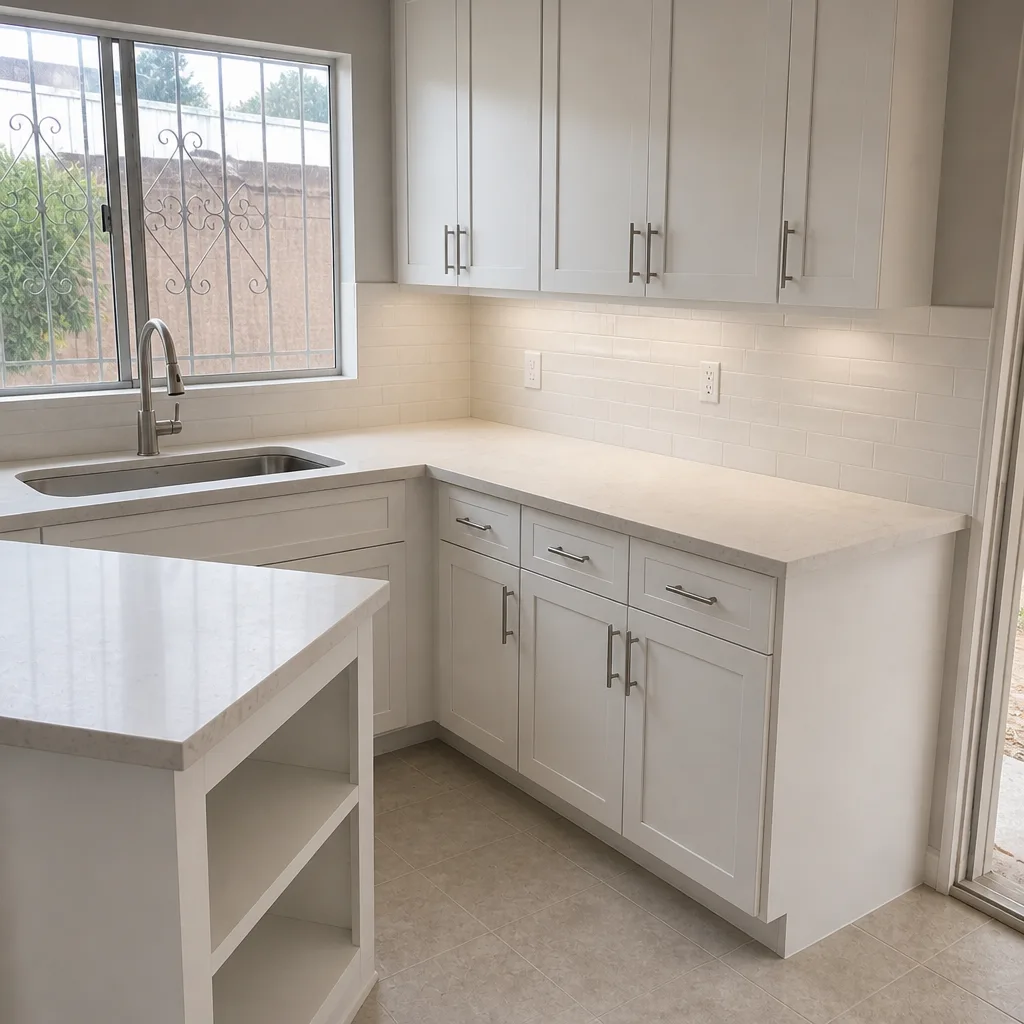 After
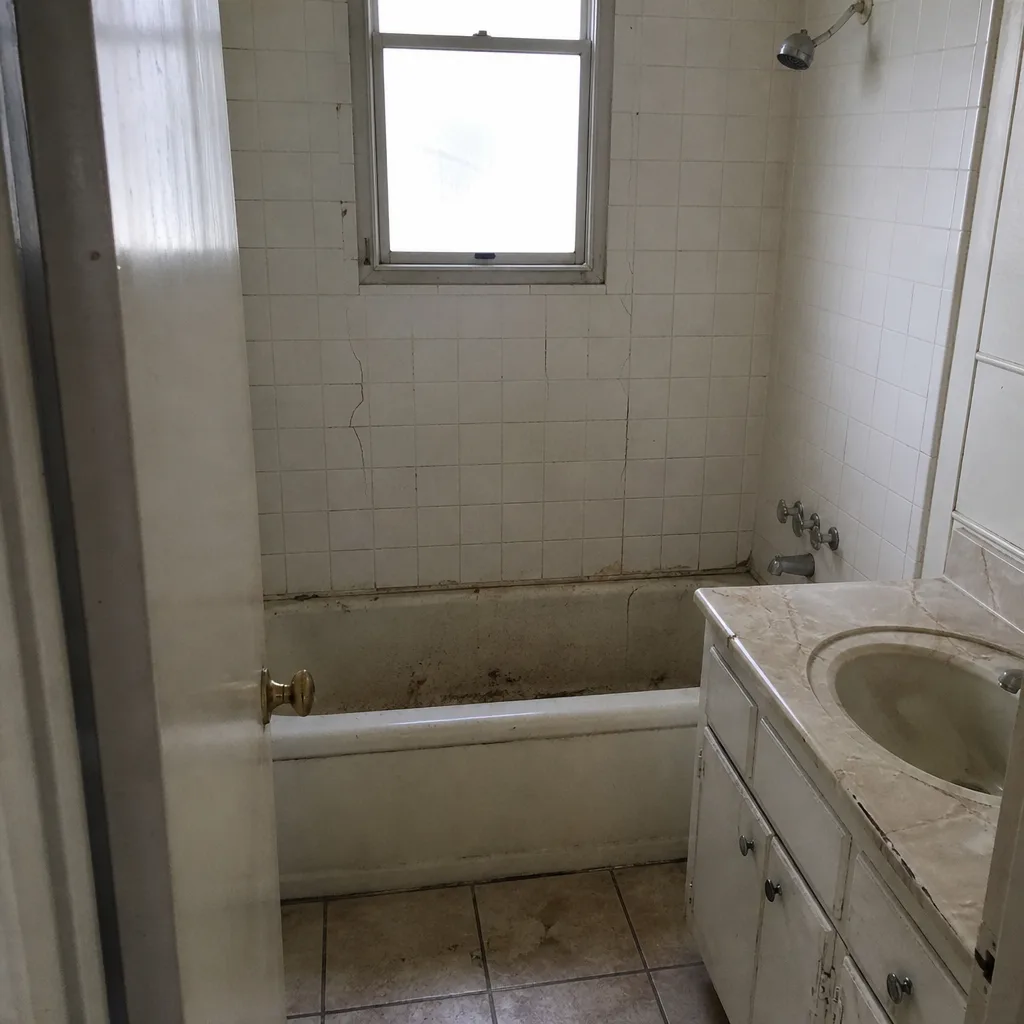 Before
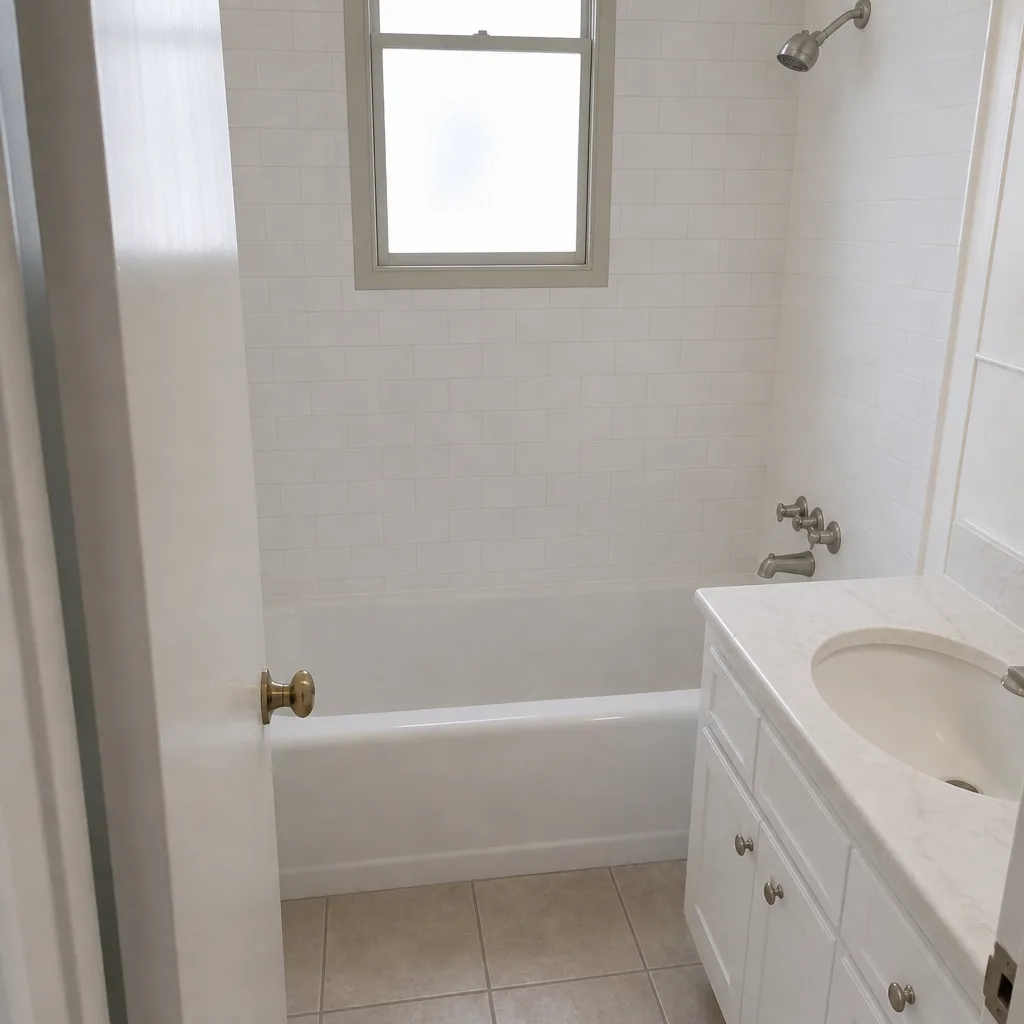 After
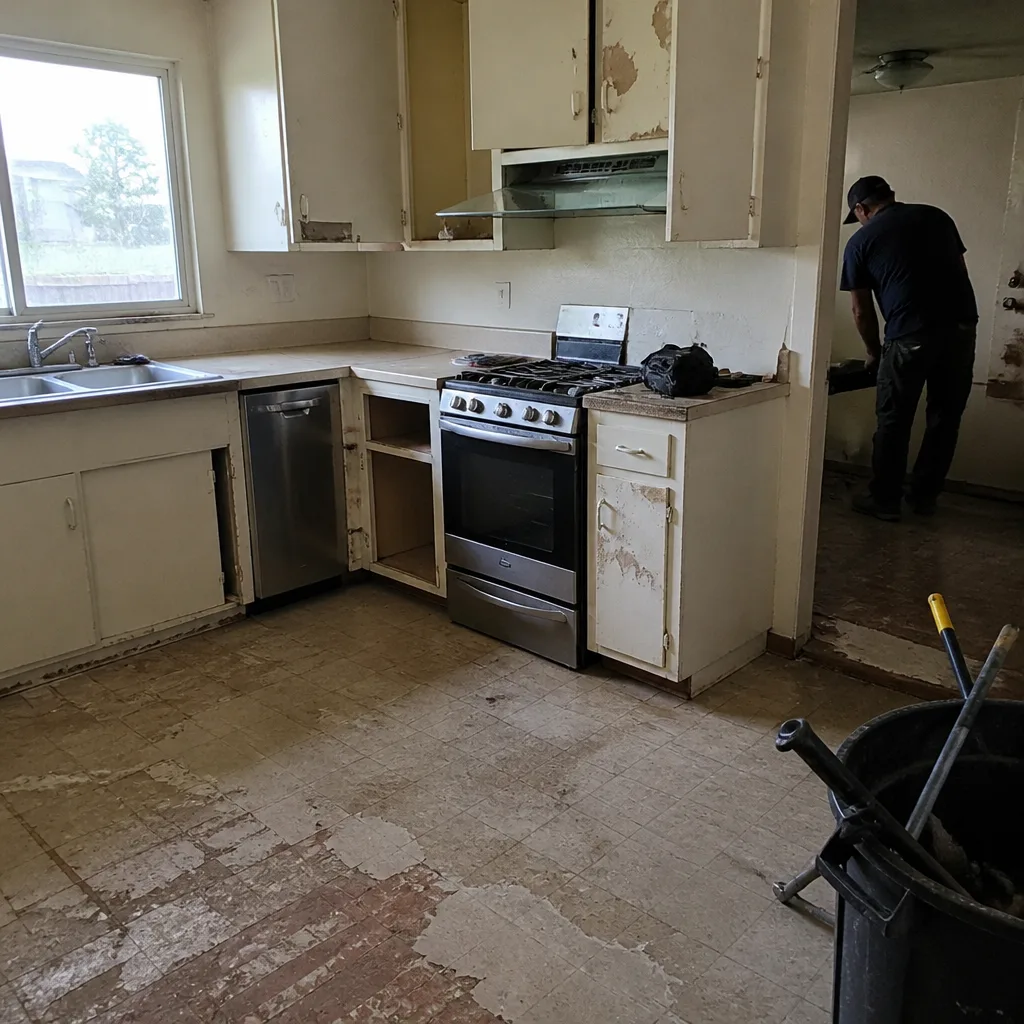 Before
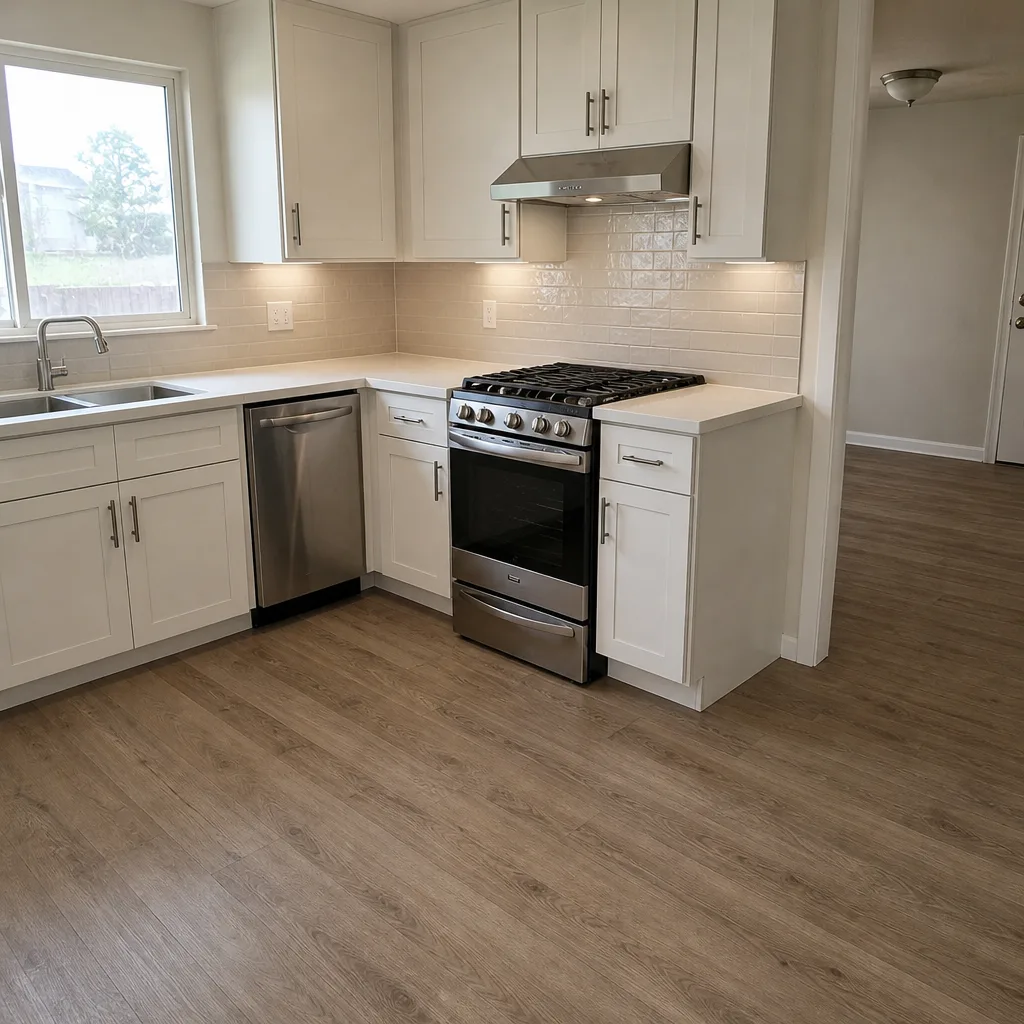 After
When to Call a Professional

Some problems are a look and see. Others are stop-what-you’re-doing and call. Here’s where the line sits:
Call a professional immediately if you smell gas, if a chimney is visibly displaced or leaning, if a foundation crack is diagonal and growing, if a roof has an active water intrusion you can’t stop, if a garage door spring or cable has failed, or if a post-event crack shows movement over a 24-hour observation window. All of those are life-safety or escalating-damage scenarios. The rest of the list (a hairline crack, a lifted shingle, a soft fence post) is a schedule-the-inspection scenario. Either way, don’t wait until the next event to start the conversation. Construction Downey offers free estimates in Downey. Call (844) 312-0107. We answer 24/7. Fast dispatch from 7am to 7pm, Sunday through Friday. Our technicians have up to 11 years of experience across these trades, and we pull permits and pass inspections on the work we do.
Frequently Asked Questions
A structural or construction inspection typically runs as a fixed-fee service, and the exact price depends on the scope of your property. Our written estimate sets the final price, and the estimate itself is free. Call (844) 312-0107 for a quote. We answer 24/7. Fast dispatch from 7am to 7pm, Sunday through Friday.
No, when the written estimate is itemized and the scope is understood. Construction estimates in California can change if the opening-up of a wall or roof reveals damage that wasn’t visible during the estimate. That’s why we insist on a written, line-item estimate before work begins. The written estimate sets the final price. Call (844) 312-0107 for a free estimate.
Yes, for any work that requires a permit, the licensed contractor pulls the permit as part of the scope. In Downey, roof replacements, structural repairs, additions, and most plumbing and electrical work will need a permit pulled through the city’s building department. If a contractor asks you to pull the permit yourself, that’s a reason to walk away. Call (844) 312-0107 to talk through your project.
The only reliable way is comparison against a pre-event baseline: dated photos and notes taken before the event. Without a baseline, look for sharp edges, no dust accumulation, and a diagonal direction that runs from the corner of an opening. If the crack is diagonal and wider than a hairline, have a professional look at it before covering it. Call (844) 312-0107 for an assessment. Estimates are free.
It depends on the size of the loss relative to your deductible, and the roof’s age. A small repair often doesn’t clear a deductible and is better handled directly. A larger loss, especially one involving interior water damage, is usually worth a claim, but only if your documentation shows the roof condition before the event. Call (844) 312-0107 and we’ll help you think through whether a claim or a direct repair makes more sense.
The pattern is consistent. They show up at your door immediately after a visible event, offer a quote on the spot without inspecting the property, ask for a large up-front payment, and can’t produce a CSLB license number or insurance paperwork on request. Any one of those is a reason to stop. All of them together mean you’re talking to someone who shouldn’t be on your property. Call (844) 312-0107 if you want to talk to a licensed contractor instead.
The Bottom Line

Construction emergency preparedness for a Downey home boils down to three habits. Document your house before anything happens, because a baseline is what makes a claim defensible. Inspect in priority order after an event, life-safety first, property damage second. Vet every contractor you call with the same shortcut, license, insurance, written estimate, permit, references, every time. Everything else is detail. If you handle those three, the difference between a paid claim and a denied one is the difference between a shoebox of receipts and a documented file. From the driveway to the roofline, we’re a single contractor across seven service categories: roofing, windows and doors, fencing, driveways and pavers, home additions and ADUs, kitchen remodeling, and bathroom remodeling. When you’re ready, call (844) 312-0107 for a free estimate. We answer 24/7. Fast dispatch from 7am to 7pm, Sunday through Friday. Choose from the brands we actually work with across every trade: GAF, CertainTeed, Owens Corning, Cambria, Silestone, Caesarstone, Kohler, Moen, Toto, Grohe, James Hardie, KraftMaid, Wellborn, Belgard, Techo-Bloc, and more. Your timeline, your material, your budget. We match the solution to the project.
Written by the team at Construction Downey.