
Last updated November 17, 2026






Free written scope consultation - allowances, timeline, and change-order rules on paper before a single trade is scheduled
Construction Warning Signs: A Downey Homeowner’s Reference Guide
A hairline crack in a Downey driveway and a hairline crack in a Downey foundation slab can look almost identical from standing height. They aren’t the same problem, and they don’t carry the same urgency. One is usually cosmetic. The other can point to movement under the house. Most warning-sign guides skip straight to the obvious stuff: big cracks, active leaks, visible rot. This guide goes earlier. It’s organized by trade so you can walk your property in a set order and read the small signals while they’re still a repair and not a replacement. We’ll cover stucco, low-slope roofing, hardscape sub-base, and the interior clues that trace back to exterior failures. Downey homes have their own patterns, and knowing them saves money.
Quick Answer
The most reliable early warning signs on a Downey home are diagonal or stair-step cracks in stucco near corners and openings, blistering and ponding on low-slope roof sections, paver joint separation and spalling, and interior paint bubbling or baseboard warping on exterior walls. Any one of these is worth a professional look. Two or more in the same area usually means the cause is structural or water-related, and the fix gets more expensive the longer you wait. Catching them early keeps the work in repair territory instead of replacement.
Styles & brands we work with
- Kitchen remodeling
- Bathroom remodeling
- Home additions & ADU
- Roofing
- Windows & doors
- Driveway & pavers
- Fence
Table of Contents
- How Do You Tell Cosmetic Stucco Cracks From Structural Ones?
- What Roof Warning Signs Matter on Downey’s Low-Slope Sections?
- What Do Spalling, Joint Separation, and Drainage Reversal Tell You?
- Which Interior Clues Point Back to Exterior Construction Failures?
- When Do Windows and Doors Stop Sealing Properly?
- What Fence and Gate Signals Suggest a Failing Post System?
- The Second Look: What to Check After Santa Ana Winds or Heavy Rain
- Common Mistakes to Avoid
How Do You Tell Cosmetic Stucco Cracks From Structural Ones?
Most stucco cracks on Downey homes are cosmetic. Stucco is a cement-based skin, and as it cures and the framing behind it settles slightly, it shrinks and cracks. That’s normal. The trick is reading the pattern, the width, and the edges. A crack that runs vertically or follows a rounded, wandering path is usually shrinkage. A crack that runs diagonally at roughly 45 degrees from the corner of a window or door, or steps in a staircase pattern, is a different animal. That pattern follows shear movement, where two parts of the wall are shifting against each other.
Here’s how to sort them:
- Hairline, random direction: typically shrinkage. Watch it, don’t panic.
- Diagonal from an opening corner: shear movement. Worth a professional look.
- Stair-step pattern: often follows the block or framing joints underneath. Get it checked.
- Wider than a credit card edge, or growing: active movement. Don’t paint over it.
- Crack edges that are no longer level with each other: one side has shifted. That’s structural.
The edges are the tell. Run a finger or a straightedge across a crack. If the two sides are flush, it’s likely cosmetic. If one side sits proud of the other, the wall has moved. Downey’s predominantly stucco exteriors make this the single most important check on the list, because stucco telegraphs movement it would hide on siding. If you find diagonal or stair-step cracking around multiple openings, that’s the point to bring in a professional rather than patching and hoping. One contractor across every project means the same eyes that read the stucco can follow the problem to the roof, the hardscape, and the interior.
What Roof Warning Signs Matter on Downey’s Low-Slope Sections?
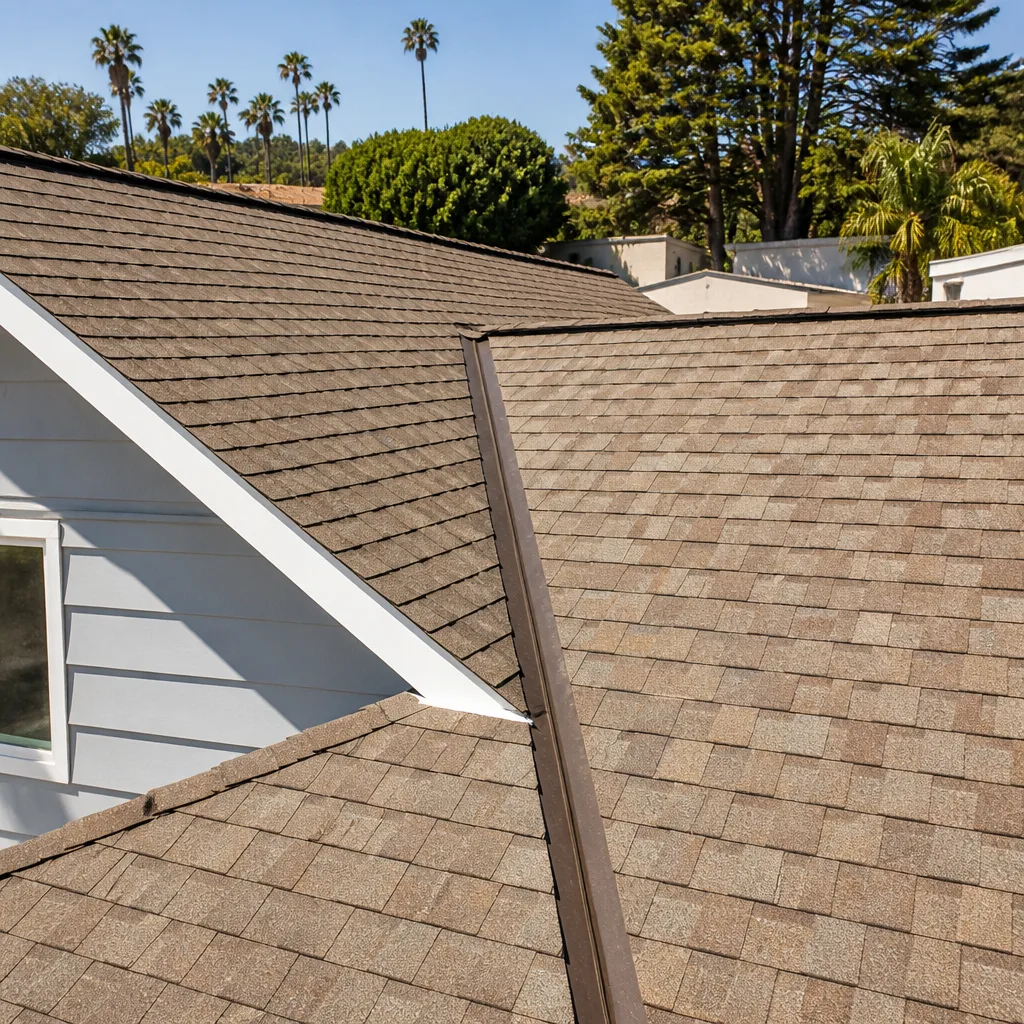
Downey’s mid-century ranch homes often carry low-slope or flat roof sections, and those sections fail differently than pitched shingle roofs. On a steep roof, gravity moves water off fast. On a low-slope section, water sits longer, and that time is what exposes weak spots. The three signals we watch for most are blistering, ponding patterns, and flashing lift.
Blistering looks like small bubbles or raised ridges in the roofing membrane. Each blister is a pocket where trapped moisture or air has pushed the layers apart. They start small and spread. Ponding is water that stands on the roof for a day or more after rain rather than draining. The pattern matters more than a single puddle: if the same low spot holds water every time, the slope has moved or debris is blocking the path. Flashing lift is where the metal or membrane at the roof edge, around a vent, or at a wall junction has pulled away. Even a small gap lets water underneath, and that’s where interior staining begins.
- Look at the roof from ground level after a rain. Note where water stands.
- Check the edges and any wall junctions for lifted or curled flashing.
- Scan the membrane for blisters, bubbles, or soft spots underfoot (only from a safe ladder, never on the roof itself).
- Check ceilings on the top floor for faint rings or discoloration, especially near exterior walls.
If you find blisters or lifted flashing, don’t wait for a leak to announce itself. Water that gets under a low-slope membrane can travel sideways before it shows up inside, so the ceiling stain is often far from the actual failure. Roofing systems from GAF, CertainTeed, and Owens Corning are what we specify when a repair turns into replacement, because those systems carry manufacturer warranties that matter at resale. But the first step is a look, not a guess.
What Do Spalling, Joint Separation, and Drainage Reversal Tell You?
Your driveway and hardscape are the most honest part of the property. They show sub-base problems earlier than almost anything else. Three signals tell the story: spalling, joint separation, and drainage reversal.
Spalling is the flaking or peeling of the top surface, where pieces of the paver or concrete face break away. On a paver system, spalling often means the base underneath has settled unevenly and the pavers are rocking, grinding against each other and shedding their surface. Joint separation is when the sand joints between pavers open up or the pavers spread apart at edges. That’s usually the sub-base losing compaction or water getting into the joints and washing the bedding sand out. Drainage reversal is the sneaky one: water that used to run off the driveway now pools toward the house or the garage instead of away. That’s a clear sign the surface has tilted, which means the base has moved.
- Spalling: base settlement or a paver that wasn’t bedded correctly.
- Joint separation: lost bedding sand or base erosion.
- Drainage reversal: the slab or paver field has tilted toward the structure.
- Rocking pavers underfoot: isolated base failure, often the start of a wider problem.
On a Downey driveway, drainage reversal is the one to fix first. Water that runs toward the house finds the foundation and the garage threshold, and that’s where interior moisture problems begin. A paver system built on an engineered base from Belgard, Unilock, Techo-Bloc, Tremron, or Cambridge Pavers resists these failures far better than a commodity concrete pour, because the base and the interlock are designed as a system. If you’re seeing joint separation across a wide area rather than a single paver, the fix is likely base work, not surface work. That’s the moment to look at the full driveway & pavers conversation rather than patching joints one at a time.
Which Interior Clues Point Back to Exterior Construction Failures?
Interior moisture clues are easy to misread because they look like interior problems. Paint bubbling on an exterior wall, baseboard that’s warped or pulling away, and grout cracking on floor tile near an exterior wall all usually trace back to something happening on the outside of the house. Water gets in through the roof, a window opening, a stucco crack, or a failed seal, then travels behind the drywall before it shows on the surface.
What each clue points to:
- Paint bubbling or blistering on an exterior wall: moisture pushing from behind the paint film. The wall is wet, not the paint.
- Baseboard warping or swelling: water at the floor line, often from a window or door opening above or a crack that reaches the slab.
- Grout cracking on floor tile near exterior walls: movement or moisture in the slab under the tile, often where the slab meets the exterior wall.
- Musty smell without visible water: moisture in a wall cavity. Find the entry point before you treat the symptom.
- Faint ceiling rings near exterior walls: roof or flashing failure, not interior plumbing.
The pattern is what matters. One bubble near a bathtub suggests a plumbing issue. Bubbling along the full length of an exterior bedroom wall suggests the wall is taking on water from outside. In our experience walking Downey homes, the interior clues almost always lead back to a roof or stucco failure that started small and was never chased to its source. If you’re seeing warped baseboards and a bubbling wall on the same side of the house, the roof above that side is the first place to look. Interior clues like these are why a systematic walkthrough beats spot-fixing.
When Do Windows and Doors Stop Sealing Properly?
Windows and doors tell you the building envelope has shifted or aged. The warning signs are subtle until they’re not. A window that used to close flush and now sticks at the top, a door that drags a corner, a draft you can feel on a calm day, condensation between panes, or weatherstripping that no longer touches the jamb. Each points to a slightly different cause, and they’re worth reading in order.
- Sticking or dragging: could be the frame losing square because the wall has moved, or it could be a worn hinge or track. Check whether the frame itself is still square with a level.
- Drafts on a still day: failed seals, worn weatherstripping, or a frame that’s no longer tight to the opening.
- Condensation between panes: the sealed glass unit has failed. The window still blocks air, but its insulating value is gone.
- Water staining at the interior frame: the flashing or seal around the opening is letting water in. This is the one to fix fast.
Downey’s mild winters mean window failures don’t announce themselves with cold drafts the way they do in colder climates. Instead, you’ll catch them through sticking, sealing, or water. A single sticky window is a hardware question. Three windows on the same wall that all started dragging in the same season is a building-movement question. That distinction matters, because replacing the window won’t fix a wall that’s moving. When replacements are genuinely the answer, we specify options from manufacturers with a real track record, because window failures are almost always installation or product quality problems rather than wear. If the failures are widespread, our windows & doors page lays out the material choices and what each is best suited for.
What Fence and Gate Signals Suggest a Failing Post System?
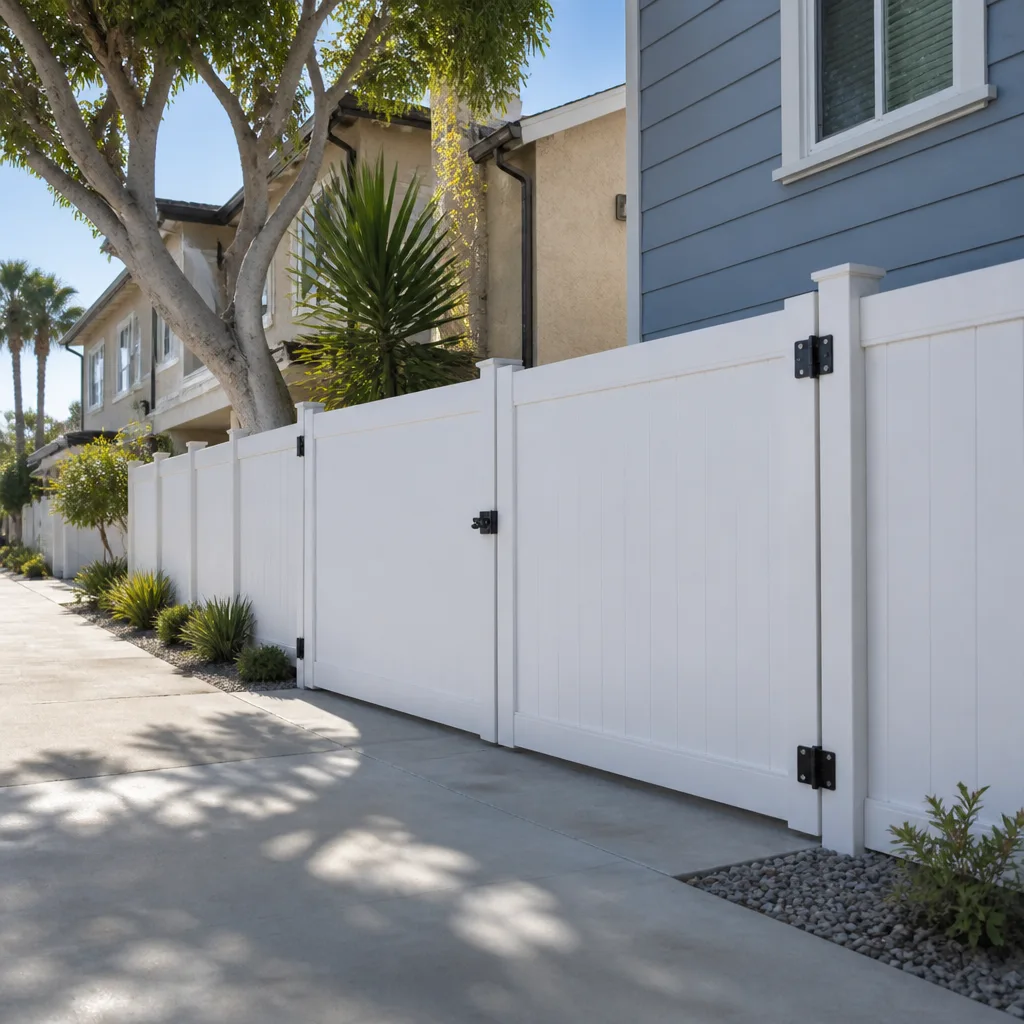
A fence doesn’t fail across the whole run at once. It fails one post at a time, starting with the ones set in the most exposed or wettest spots. The signals are a leaning post, gate sag, panel bowing, and horizontal rails that have pulled loose from the posts. Each points to a different layer of the fence, and the repair is different for each.
- A post that leans only at the top: the post is likely moving in its footing.
- A gate that drags or sags: the hinge post has moved, or the gate has lost square.
- Panels that bow between posts: the fence line has lost alignment, or the rail-to-post connections have loosened.
- Rails pulling from posts: fastener failure or a post shifting under wind load.
- Rust at the base of a metal post: water is sitting in the footing and the post is corroding from the bottom up.
On Downey properties, gate sag is the first thing to check after a windy stretch. The hinge post takes the most load of any part of the fence, so it’s the first to show movement. A leaning post that wobbles when you push it needs a footing fix, not a new panel. If two or three posts have failed on the same line, the base structure is done and it’s time to plan a full fence installation rather than continuously patching. We work across all the material categories, including aluminum from Ameristar and Jerith, vinyl from Bufftech and ActiveYards, and ornamental from Barrette and Master Halco, because the right material for a Downey fence depends on the exposure and the look you want, not on what’s sitting in a yard.
The Second Look: What to Check After Santa Ana Winds or Heavy Rain
Most construction failures get caught weeks or months after the event that exposed them, and by then the repair has grown. The fix is to do a deliberate second look within a day or two after a Santa Ana wind event or a heavy rain. Walk the property in a set order and look for what changed. You’re not diagnosing, you’re cataloging. The list below is the one we use.
- Roof, from the ground: look for lifted or missing flashing, lifted edges, blistered membrane, and any new staining at the fascia.
- Stucco, especially at corners and openings: check every window and door corner for new diagonal or stair-step cracks. Note which ones are new.
- Windows and doors: open and close every one. Note which stick, which don’t latch, and any water at the interior frame.
- Fence and gate: push each gate and the posts on either side. Look for posts that have started to lean and rails that have pulled loose.
- Driveway and hardscape: after rain, note where water ponds and which direction it’s running. Look for new spalling or newly opened joints.
- Interior, on the windward side: check ceilings, exterior-wall paint, baseboards, and grout lines near exterior walls for anything new. A fresh bubble or a new crack in grout is the clue.
Santa Ana winds are a different test than rain. They push from one direction and find every loose edge. After a Santa Ana event, the first thing we look at on a Downey property is the roof edge, the window seals, and the fence posts on the exposed side. After heavy rain, the first things to look at are the roof’s low spots, the drainage around the driveway, and the base of any exterior wall where water stands. Doing this walk twice a year, plus after each notable event, catches the small failures before they turn into interior damage. If anything on the list looks new or worse, that’s the point to call a professional rather than wait for the next storm.
Common Mistakes to Avoid
- Painting over a stucco crack without checking the edges. If one side sits proud of the other, the wall has moved, and paint hides the problem until it spreads. Check the edges before you patch.
- Assuming a leak comes from directly above the stain. On low-slope roofs, water travels along the membrane before it shows inside. The actual failure can be several feet from the ceiling stain.
- Replacing a window when the wall is moving. A window that’s suddenly sticking often reflects a frame out of square, not a failed window. Replacing it without fixing the movement wastes the replacement.
- Patching paver joints one at a time. Wide joint separation usually means the base has failed, and hand-filling the joints over and over won’t fix the cause. Look at the base, not the surface.
- Skipping the interior check after exterior work. Interior clues like baseboard warping or wall bubbling are the cheapest early warning you get. Check them after every notable weather event.
- Ignoring a single leaning fence post. A post moving in its footing gets worse with every wind event and starts pulling the rails with it. One post is a small repair; the whole line is a replacement.
- Waiting for a leak before calling. The gap between a repairable warning sign and a replacement problem is usually shorter than homeowners expect. Catching a warning sign early keeps the work in repair territory.
When to Call a Professional

Call a professional when two or more warning signs show up in the same area, when a crack has edges that no longer line up, when water is getting inside, or when a fix turns out to be structural rather than cosmetic. These are the points where the diagnosis matters more than the repair. A leaning gate post that’s pulling the whole line, a roof that holds water at the same low spot every rain, or interior paint that bubbles along a full exterior wall: each needs someone who can trace the sign back to its cause. In our experience, waiting to see if a warning sign gets worse is where most homes end up replacing a system that could have been repaired.
The advantage of working with one contractor across every project is that the same team reads the stucco, the roof, the hardscape, and the interior together and connects what’s related. Construction Downey offers free estimates in Downey. Call (844) 312-0107. We answer 24/7. Fast dispatch from 7am to 7pm.
See the difference
 Before
 After
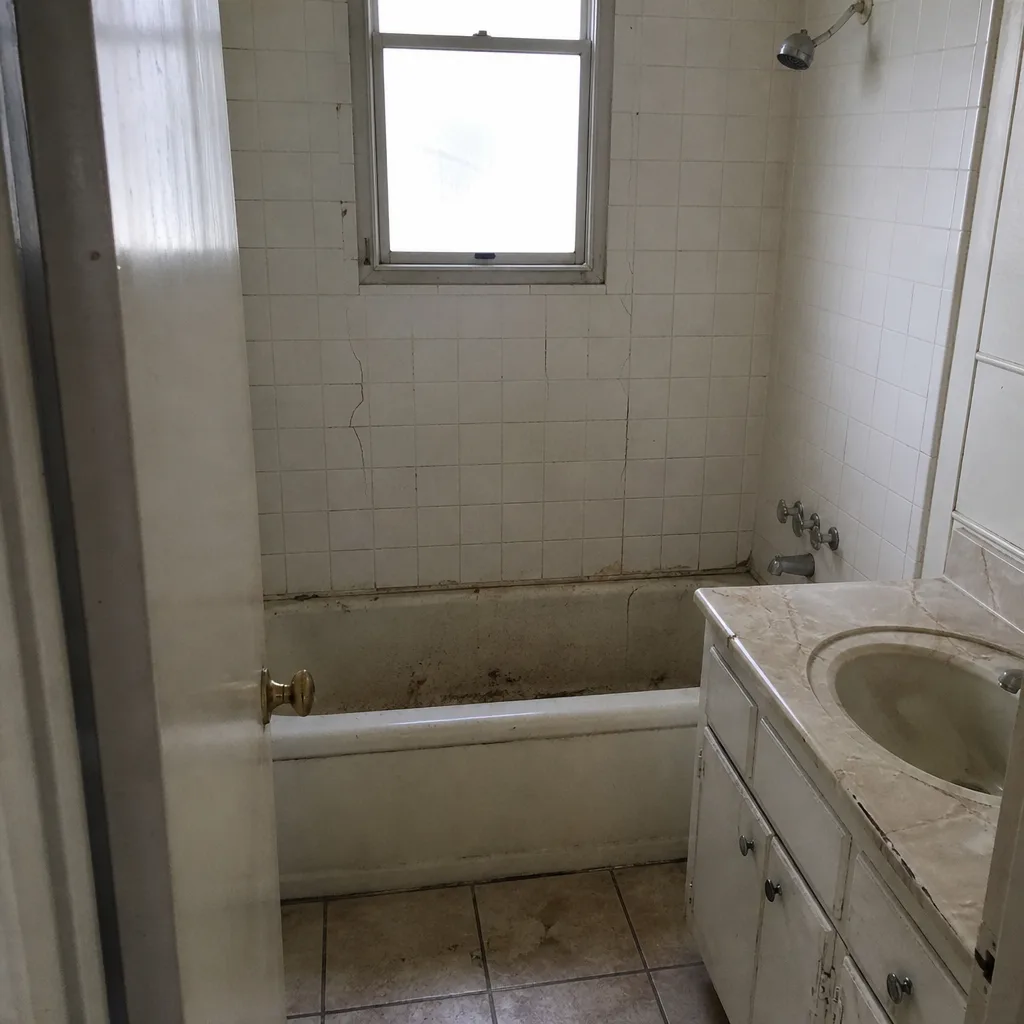 Before
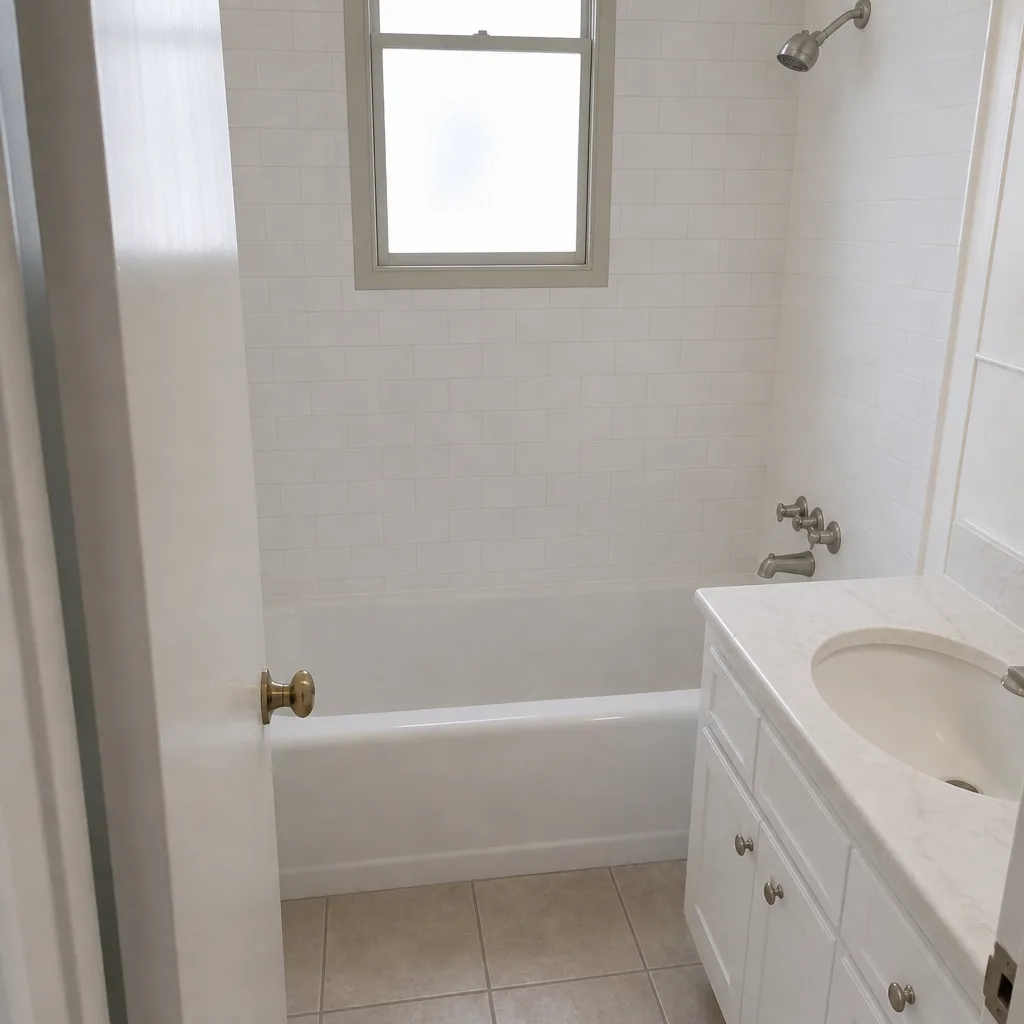 After
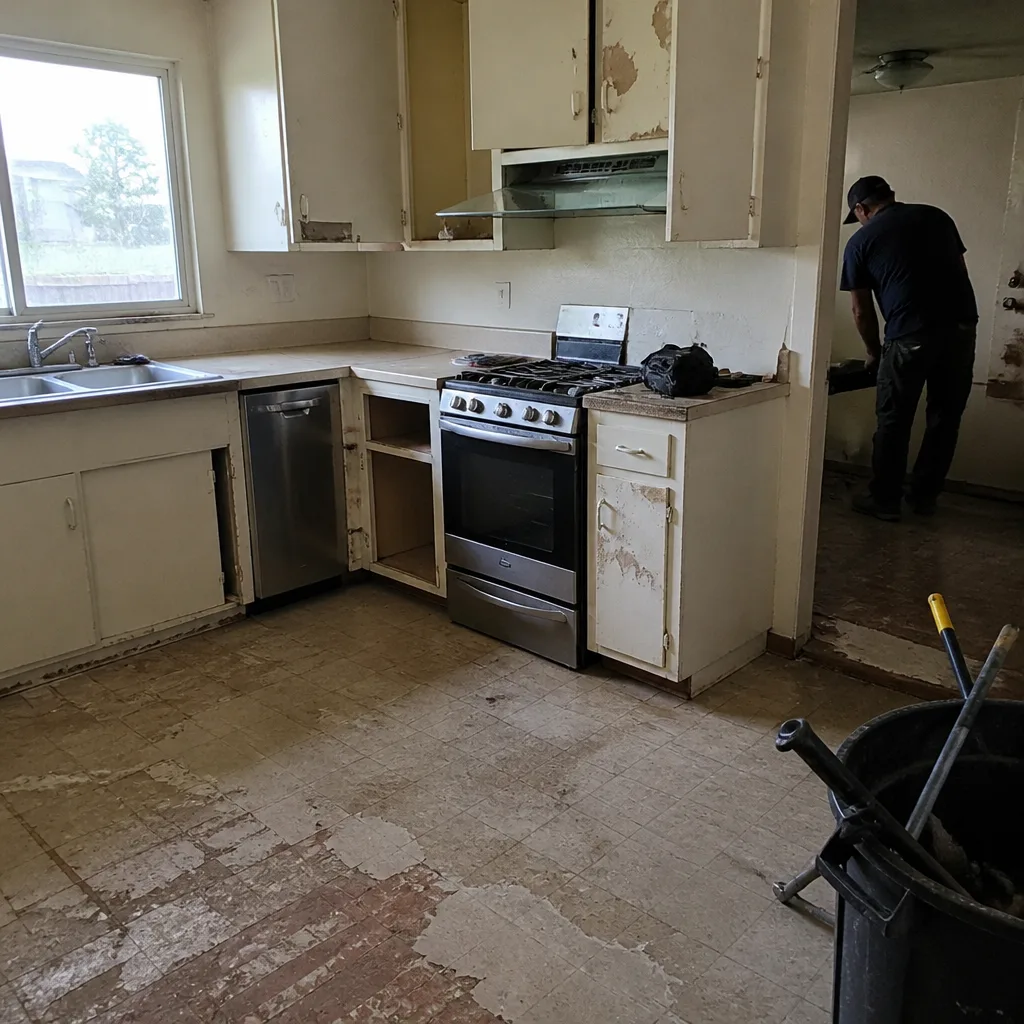 Before
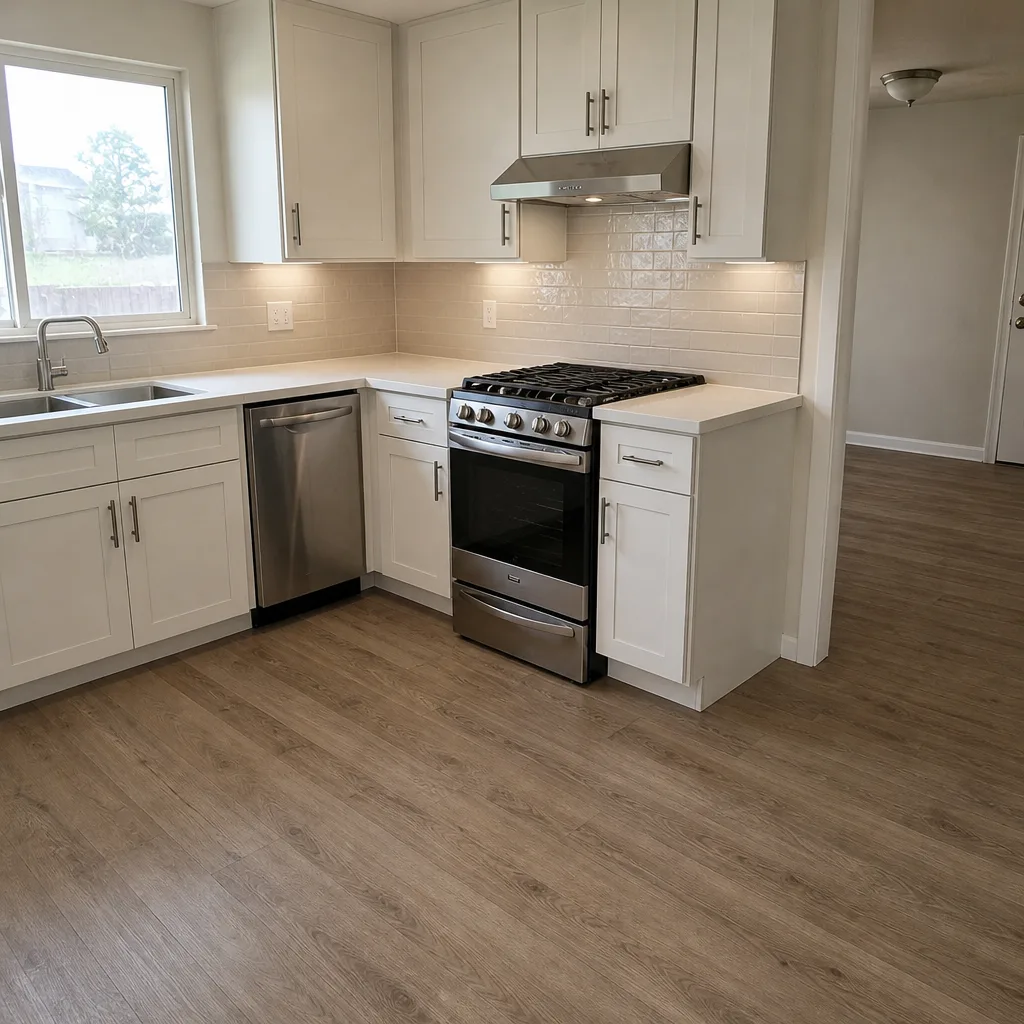 After
Frequently Asked Questions
Run a straightedge or fingertip across the crack. If both sides are flush and the crack is hairline and wandering, it’s likely cosmetic shrinkage. If one side sits proud of the other, or the crack runs diagonally from a window or door corner, it’s worth a professional look. Diagonal and stair-step patterns suggest movement. Call (844) 312-0107 for a free estimate if anything looks active or widening.
Standing water on low-slope or flat sections after rain, followed by lifted flashing at the edges and around penetrations. Ranch homes often carry a small low-slope section over the rear addition or a porch, and that’s where the early signs show up. Blistering in the membrane is the next most common. If you see any of these, call (844) 312-0107 for a free estimate before the next rain.
Yes, when the hardscape tilts toward the house. Drainage reversal sends water against the foundation and the garage threshold, which is where interior moisture shows up as musty smells, baseboard swelling, or wall bubbling. If water is running toward the house instead of away, it’s a fix-first problem. Call (844) 312-0107 to schedule a free estimate.
Paint bubbling on an exterior wall, baseboards that warp or pull away, grout cracking on floor tile near exterior walls, and faint ceiling rings on the top floor. Each points to water or movement coming from outside the interior. A single bubble near a bathtub is usually plumbing; bubbling along a full exterior wall is almost always the roof or the stucco. Call (844) 312-0107 for a free estimate to trace the source.
Twice a year, plus a second look within a day or two after a Santa Ana wind event or heavy rain. The twice-a-year walk is for slow changes; the post-event look is for what just changed. The two-look approach catches the small failures before they grow into replacements. If anything new turns up, call (844) 312-0107 for a free estimate.
It depends on what the repair turns into. Cosmetic stucco patching and single-paver fixes usually don’t need a permit; structural repairs, roof replacement, window replacement, and additions usually do. Most cities require a permit for that kind of work, so ask Downey’s building department what applies to your specific job before work starts. We pull permits and pass inspections on the work we do.
Most cosmetic fixes run a day or a few days. Structural or roof repairs take longer, and the timeline is set by the written estimate once the cause is confirmed. The important thing is catching it while it’s still a repair, which is why the walkthrough matters more than a speed estimate. Call (844) 312-0107 for a free estimate with a clear timeline.
The Bottom Line
Most of what we look for on a Downey home isn’t dramatic. It’s a hairline crack at a window corner, a blister on a low-slope roof, a driveway that tilts toward the house, or a bubble on an exterior wall. Those small signs carry the most information, and they’re readable if you know the pattern. Read the edges, not just the crack. Chase an interior clue back to the exterior. Do the second look after Santa Ana winds and heavy rain. And when two or more signs line up in the same area, don’t wait for a leak to force the decision. The earlier the pattern is caught, the more of the work stays in repair territory instead of replacement. And when you want a set of trained eyes on the whole property, one contractor across every project keeps the diagnosis connected: the roof, the stucco, the driveway, the fence, and the interior, all read together.
Frequently Asked About Whole-Property Work in Downey
On most properties, yes, and that’s the advantage of keeping the diagnosis connected. A stucco crack, a lifted roof flashing, and a driveway draining toward the house are often three symptoms of one water path. Reading them together keeps the fix pointed at the cause rather than the surface. Construction Downey works across roofing, windows and doors, fencing, driveways and pavers, additions and ADUs, kitchens, and bathrooms, so the same team that spots a sign can scope the repair. Call (844) 312-0107 for a free estimate.
Then you’ve done the most valuable thing a homeowner can do, which is confirm the small stuff is small. A walkthrough that finds only cosmetic cracking and a driveway that’s still draining the right way means the property is in good shape and you have a baseline to compare against next time. A free estimate exists for exactly that outcome, not only for repairs. If you want the whole property read at once, call (844) 312-0107 and we’ll schedule the visit.
Yes. When a warning sign points to a replacement rather than a repair, the same team can scope a full roof, a window package, a fence line, a driveway rebuild, or a larger project. Additions and ADUs are supported both as traditional stick-built construction and as prefab systems from manufacturers like Abodu, Dvele, Mighty Buildings, Boxabl, and Plant Prefab, so the pathway is matched to the timeline and the budget rather than the other way around. You can read about that range on our home additions & ADU page. For everything from the driveway to the roofline, the single-contractor approach is the point. Call (844) 312-0107 for a free estimate.
Where a Whole-Property Walkthrough Sits in the Process

A warning-sign walkthrough is not the same as a full inspection. It’s a homeowner’s early check, done in a set order, and it exists to catch problems while the repair is small. When the walk turns up something worth a professional look, the next step is a free estimate that confirms the cause and gives you a written scope. From there, the decision is whether it’s a repair or a replacement, and the estimate sets the price. That’s the process from driveway to roofline, and it’s why one contractor across every project keeps the diagnosis connected.
Our technicians have up to 11 years of experience reading the small signals on Downey properties: the stucco crack that’s moving, the low-slope roof that’s holding water, the driveway that’s tilted, and the interior clue that points back outside. We work with the material brands we trust for each trade, from GAF, CertainTeed, and Owens Corning roofing to Belgard and Techo-Bloc pavers to KraftMaid and Wellborn cabinets when a repair turns into a remodel. And when a kitchen or bathroom is part of the larger plan, spec-grade fixtures from Kohler, Moen, Blanco, and Delta are on the table. Built to spec, not to price.
If you’re reading this because you spotted something and aren’t sure whether it’s cosmetic or structural, stop guessing and get a set of trained eyes on it. Call (844) 312-0107 to schedule your free estimate. We answer 24/7. Fast dispatch from 7am to 7pm, Sunday through Friday. Start with a look at Construction Downey to see the full scope, or call now and we’ll take it from there.
Written by the team at Construction Downey.